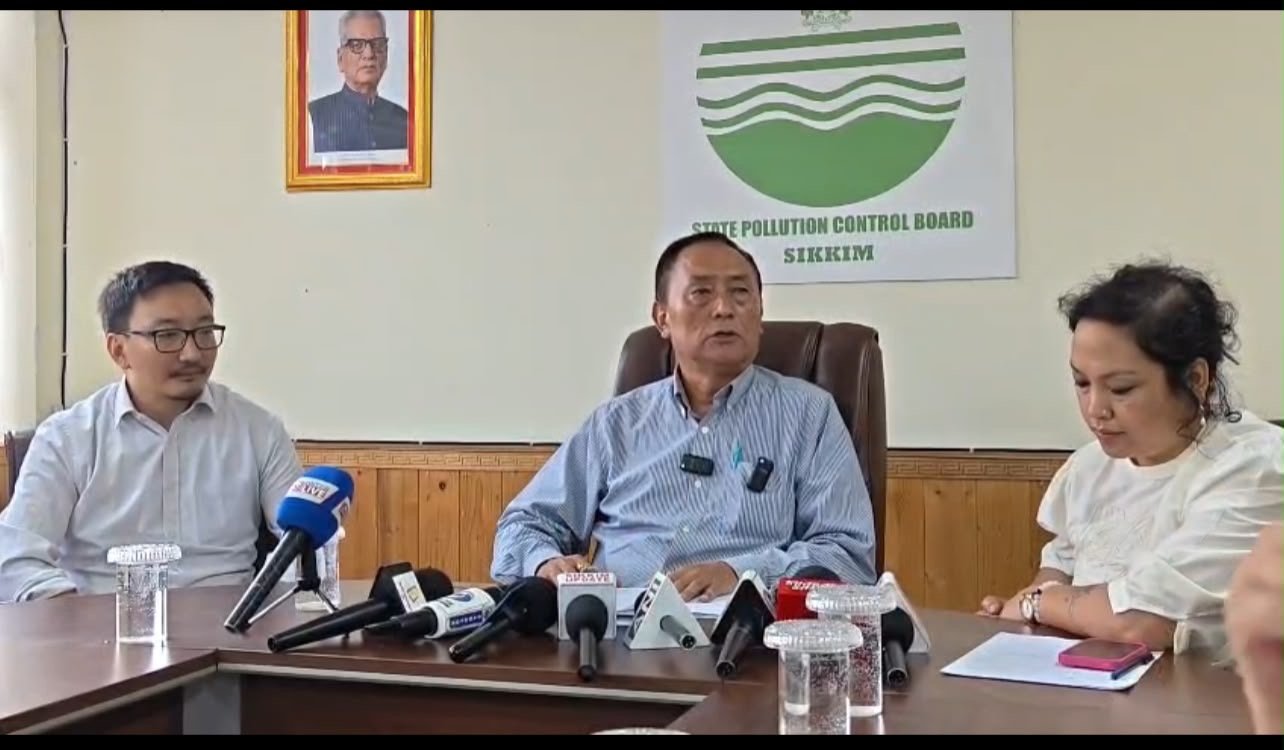
The Sikkim State Pollution Control Board (SPCB-Sikkim) has announced the implementation of the Sikkim Solid Waste Management Rules, 2026, aimed at strengthening waste management, segregation, processing and compliance mechanisms across the state.
According to a press brief issued by the SPCB-Sikkim, the rules have been introduced in compliance with directions of the Supreme Court of India in Civil Appeal No. 6174 of 2023 concerning the Bhopal Municipal Corporation matter.
The new framework extends waste segregation to four categories—wet, dry, sanitary and special-care waste. It also places greater accountability on Bulk Waste Generators (BWGs) and strengthens requirements relating to waste processing, certification and compliance.
The rules provide for mechanisms including online reporting and verification, environmental compensation under the Polluter Pays Principle, scientific recovery and utilisation of waste, and greater integration of waste pickers into the formal waste-management system.
The SPCB noted that the framework takes into account Sikkim’s difficult terrain, limited land availability and challenges associated with transportation and waste disposal, particularly in hilly areas.
Who will be treated as Bulk Waste Generators?
Under Rule 3(i) of the Sikkim Solid Waste Management Rules, 2026, entities such as residential, commercial and industrial establishments may fall under the BWG category if they meet specified criteria, including:
Buildings with a floor area of 20,000 sq. metres or more;
Water consumption of 40,000 litres per day or more; or
Generation of 100 kg or more of solid waste per day.
The press brief further states that the implementation of the rules will be a collective responsibility of households, institutions, commercial establishments, government offices, Bulk Waste Generators, waste workers and local bodies.
The SPCB-Sikkim said the new rules are intended to support more effective implementation of solid-waste management while promoting scientific waste treatment and a circular-economy approach in the state.