Friday, May 8, 2026
Home Blog Page 17

Yuksam-Tashiding hosts marathon run under ‘Mero Rukh Mero Santati’ Initiative

0
" Yuksam-Tashiding marathon run"

As part of the ongoing 50th year of statehood celebrations, Yuksam-Tashiding under Gyalshing district organized a Half Marathon today under the theme “Mero Rukh Mero Santati”, an initiative of the Government of Sikkim envisioned by the Hon’ble Chief Minister, Mr Prem Singh Tamang(Golay).

The marathon aimed to promote a healthy and active lifestyle while raising awareness about environmental conservation and discouraging substance abuse among youth.

The event was flagged off from Yuksam Helipad at 8:00 AM by Advisor to state medicinal plants board Mr NB Limboo, in the presence of Zilla Adhakshya Gyalshing Mr Ds Limboo, Range Officer KNP/T Mr Tenzing W Bhutia, and other dignitaries.

Over 200 runners from various parts of Sikkim and neighboring states participated in the marathon, which concluded at Gerethang Bazar with a prize distribution ceremony.

The event was jointly organized by registered local NGOs from the Gerethang-Labing GPU, in collaboration with the Forest & Environment Department and the Commerce & Industries Department, Government of Sikkim.

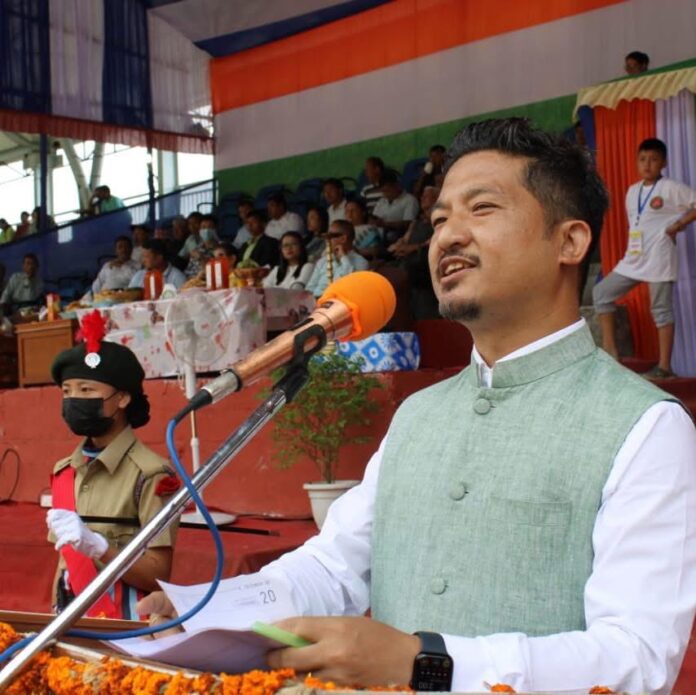
Minister for Tourism & Civil Aviation and Commerce & Industries Department, and Area MLA, Mr Tshering T Bhutia, graced the occasion as the Chief Guest and also participated in a plantation drive conducted as part of the event.

In the women’s category, Ms Priya Tamang from Kalimpong secured the first position, followed by Ms Sapna Patel from Gangtok and Ms Bandana Limboo from Kalimpong, who placed second and third, respectively.
In the men’s category, Mr Brahma Lall from Rajasthan clinched the top spot, while Mr Bikash Bhujel from Kalimpong and Mr Prince Raj Mishra from Bihar secured second and third places, respectively.

Speaking on the occasion, Minister Mr Tshering T Bhutia congratulated the winners and participants, and commended the efforts of the organizing teams and supporting departments. He emphasized the importance of sports and fitness for both mental and physical well-being, and elaborated on the Mero Rukh Mero Santati scheme, under which every parent of a newborn is encouraged to plant 108 trees. The government supports this initiative by providing a one-time fixed deposit in the child’s name to assist with future educational expenses.

He also expressed concern over the rising screen time, online gaming addiction, and increasing instances of drug abuse among youth. The Minister highlighted the alarming trend of substance abuse and assured that the state government is taking stringent measures to curb the menace. He urged the younger generation to focus on constructive pursuits and meaningful contributions to society. Furthermore, he outlined various youth-centric development and welfare schemes launched by the state government.

The winners were felicitated with certificates, medals, and cash prizes by the Minister.

Also present at the event were Advisor to the Chief Minister Mr GM Lepcha, Advisor to the State Medicinal Plants Board Mr NB Limboo, Deputy Commandant of 72 BN SSB Yuksam Mr Meghnath Routh, Assistant Commandant Mr Jon Lenthang, Marathon Man of Sikkim Mr Amar Subba, Zilla and Gram Panchayat members, officials from the Forest Department, SSB personnel, representatives from local NGOs, Students, and the general public.

Report from DIO Gyalshing

IAF Jaguar Trainer Jet Crashes Near Churu, Rajasthan — Two Pilots Killed

0
IAF Jaguar Trainer Jet Crashes

A routine training mission turned fatal on Wednesday afternoon when an Indian Air Force (IAF) Jaguar trainer aircraft crashed in an agricultural field near Bhanoda village in Churu district, Rajasthan, claiming the lives of both pilots onboard.

The incident took place around 1:25 p.m. during what the IAF described as a routine training mission. The aircraft went down in an agricultural area, but fortunately, no civilian casualties or damage to property were reported.

In a brief official statement, the Indian Air Force confirmed the loss of lives and expressed deep condolences to the families of the deceased pilots. The IAF also announced that a Court of Inquiry has been ordered to investigate the cause of the crash.

Eyewitnesses in the village said they heard a loud explosion and saw debris burning in the field. Locals rushed to the site immediately. Soon after, police personnel, fire services, and ambulances arrived and cordoned off the area.

Local police confirmed that body parts were discovered near the wreckage. The administration acted swiftly to secure the site and begin formal procedures.

Rajasthan Chief Minister Bhajanlal Sharma and Governor Haribhau Bagade expressed their grief over the incident. The Chief Minister posted his condolences and stated that emergency services had been mobilized without delay to handle the aftermath.

The Jaguar aircraft, a long-serving part of India’s Air Force fleet, has seen multiple incidents in recent years, raising concerns about the aging platform. Despite ongoing upgrades, the aircraft continues to be part of IAF operations, especially for ground-attack and training missions.

Sikkim Police Destroys Cannabis Plants in Pakyong

0
Cannabis plants in Pakyong

As part of its intensified ‘Drug-Free Sikkim’ campaign, Sikkim Police has taken a significant step towards curbing drug cultivation and use in Pakyong district. Acting on the initiative, the Rorathang Police Outpost conducted a focused operation to destroy illegally grown cannabis plants spread across Titribote Tar and Bengthang Pachekhani areas.

The campaign, guided by the core motto “Safety and Service,” aims to make Pakyong a drug-free zone. The recent crackdown not only targeted illegal cultivation but also helped raise awareness about the dangers of drug abuse among the local community.

Police officials have reiterated their commitment to continuing such operations in the future, with the larger goal of ensuring public safety and fostering a healthier, addiction-free society.

Sikkim Tops Northeast in SDG Progress as Front Runners

0
:Sikkim Tops Northeast
: Sikkim Tops Northeast

Sikkim has emerged as a leading performer in the North Eastern Region District Sustainable Development Goals (SDG) Index 2023-24, with all six of its districts—Gangtok, Mangan, Namchi, Gyalshing, Pakyong, and Soreng—earning the prestigious ‘Front Runner’ status. This places Sikkim among an elite group of northeastern states, alongside Mizoram and Tripura, to have achieved this distinction.

The SDG Index, released on July 7 by NITI Aayog in collaboration with the UNDP and the Ministry of Development of the North Eastern Region (MoDoNER), evaluates district-level progress across 16 thematic areas. These include infrastructure, gender equality, health, education, and environmental sustainability.

What sets Sikkim apart is not only its high performance but also the balanced nature of its development. The difference in scores between the lowest-ranked district, Gyalshing (71.14), and the highest, Gangtok (76.64), is a mere 5.5 points—highlighting equitable progress across the state. In comparison, Mizoram shows a 14-point gap between its top and bottom-performing districts.

Officials attribute this achievement to the leadership of Chief Minister Prem Singh Tamang, under whose governance the state has pursued inclusive and sustainable development policies aligned with both national and global SDG frameworks. Consistent implementation of initiatives in healthcare, education, rural upliftment, and environmental conservation has driven Sikkim’s steady progress across all districts.

12 SHG Women Appointed to Key Governance Roles in Sikkim

0
Women Appointed to Key Governance Roles in Sikkim

The Sikkim government has appointed 12 women leaders from Self Help Groups (SHGs) to key positions—11 as chairpersons and one as Officer on Special Duty (OSD). This marks the first time that SHG members have been directly inducted into state-level roles, reflecting a broader effort to promote community-led development.

The announcement was originally made during the State-level SHG Bharosa Sammelan held at Jorethang Ground on March 3, 2024. The event was organized by the Rural Development Department (RDD) in collaboration with the Sikkim Rural Livelihood Mission (SRLM).

At the Sammelan, Chief Minister Prem Singh Tamang declared the government’s intent to create 12 new posts for women leaders drawn from SHGs across all districts. These posts include chairpersons and advisors for various departments, aiming to strengthen participatory governance and acknowledge the role of women in local economic transformation.

Among the newly appointed leaders is Ongkit Lepcha, now Chairperson of the Horticulture Department, and Chumila Bhutia, who will lead the Public Health Engineering Department. Lilly Rai takes charge of the Agriculture Department, while Nim Chiki Sherpa assumes the role in the Commerce and Industries Department.

Bidya Biswakarma has been appointed to head the Cooperation Department, and Khus Maya Tamang will lead the Water Resources Department. Similarly, Kala Pradhan has been given charge of the Department of Food Processing Industries, and Doma Lepcha will oversee the Animal Husbandry & Veterinary Services Department.

The Sikkim Consumer Cooperative Society will now be chaired by Shanti Limboo, while Mingma Lhamu Sherpa will lead efforts in Capacity Building, Skill Development Training, Youth Empowerment, and the Self-Reliant Board. Anuradha Gurung has taken over the Fisheries Department.

The post of Officer on Special Duty (OSD) in the Department of Panchayati Raj has been entrusted to Indra Kala Chettri, completing the group of empowered SHG leaders.

According to the Rural Development Department, the appointments are part of a broader strategy to recognize the contributions of women-led SHGs in promoting self-reliance and socio-economic development in rural areas. Officials noted that this initiative sets a precedent for how women from marginalized and community-based collectives can play a direct role in policy-making.

The selected SHG leaders are expected to serve as bridges between the administration and rural communities, bringing their grassroots experience into decisions on development, livelihoods, and local governance.

This policy move aligns with Sikkim’s ongoing efforts to empower women and promote inclusive growth, especially in the post-COVID recovery phase where local economies have leaned heavily on SHG activity for resilience and regeneration.

Sikkim Observes ‘Mother Earth Day’ with 7-Minute Statewide Vehicular Halt

0
Mothers Earth day in Sikkim

Sikkim today successfully observed ‘A Day for Mother Earth’ with a coordinated seven-minute halt of vehicular movement across the state. From 11:00 AM to 11:07 AM, vehicles remained stationary as a symbolic gesture to raise awareness about climate change and environmental protection.

The annual initiative, first launched in 2019 by Chief Minister Prem Singh Tamang (Golay), aims to inspire collective responsibility toward preserving nature. Emergency and essential service vehicles were exempted during the pause.

Traffic police across the state ensured smooth implementation, while citizens and various stakeholders actively supported the cause. The event served as a reminder of the urgent need to address global warming and promote sustainable practices.

Sikkim once again demonstrated its commitment to environmental stewardship through this meaningful observance.

The Hidden Healing Power of Banmara Leaf

0
"Banana leaf'"

For many, the name Chromolaena Odorata may not ring a bell. Commonly known as Akintola leaf in parts of Africa and Banmara in Nepal and India, this plant is often dismissed as an unwanted weed. However, hidden beneath its wild reputation lies a long history of traditional healing and natural health benefits that modern medicine is only beginning to understand.

Belonging to the Asteraceae family, Chromolaena Odorata is a fast-growing shrub with oval-shaped, jagged-edged leaves. Its texture is somewhat rough compared to other common plants, and it typically blooms during the summer season. While it thrives at altitudes between 1000 to 2800 meters above sea level, in countries like Indonesia, it flourishes even in lowlands with elevations around 500 meters, especially in areas that receive plenty of sunlight.

In agricultural circles, Chromolaena Odorata is often regarded as a threat. Its aggressive growth pattern can interfere with crop cultivation and lead to reduced yields for farmers. As a result, this plant is frequently uprooted and discarded. Yet, very few realize that what is often thrown away can actually serve as a powerful herbal remedy—both for plants and people.

The Natural Chemistry of Healing

Chromolaena Odorata is rich in medicinal compounds such as phenol, alkaloids, triterpenoids, tannins, flavonoids, and limonene. These bioactive elements give the plant its anti-inflammatory, antimicrobial, and antioxidant properties. Traditionally used in various cultures as herbal medicine, this plant has been a go-to remedy for generations, long before the widespread availability of synthetic drugs.

People used to plant and grow these leaves around their homes and in community gardens, relying on their healing qualities for everything from minor ailments to serious health conditions. Today, as natural and alternative medicine is seeing a global resurgence, Chromolaena Odorata is slowly reclaiming its place in herbal health practices.

Cyst and Reproductive Health

One of the most notable benefits of Chromolaena Odorata lies in its effectiveness against cysts. Women who struggle with this condition often use the leaf in tea or infusion form, helping to manage symptoms naturally. In addition, it’s widely used to support overall reproductive health, particularly in women. Regular consumption of the brewed leaf water is believed to help maintain the reproductive organs and prevent complications.

Pain Relief and Inflammation Control

For individuals dealing with body aches or back pain, this plant offers a natural form of relief. Drinking half a glass of its extract in the morning and evening for a week has been reported to significantly reduce pain and inflammation. Its soothing properties make it a safe alternative to over-the-counter painkillers.

Preventing Cervical Cancer and Diabetes

Cervical cancer remains a major concern for women’s health, especially in developing regions. Chromolaena Odorata, when taken regularly in tea form, is thought to have preventive benefits due to its antioxidant-rich composition. Additionally, it helps regulate blood sugar levels, making it useful in the prevention and management of diabetes.

Relief from Vertigo and Ulcers

Vertigo is a disorienting condition that can disrupt daily life or even become life-threatening if ignored. Herbalists recommend drinking the plant’s extract at the onset of symptoms to reduce dizziness and stabilize the senses. Similarly, those suffering from ulcers may find long-term relief through consistent use of the leaf infusion. Its natural soothing properties help reduce acidity and promote healing of the stomach lining.

Heart Health and Cholesterol Management

Chromolaena Odorata also contributes to cardiovascular wellness. Regular consumption of the plant helps maintain heart function, prevent blockages, and reduce cholesterol levels. Those with a diet high in fats or seafood may especially benefit from drinking the tea after meals to counter the effects of cholesterol build-up.

Blood Pressure and Uric Acid Support

Hypertension is another widespread health issue that can lead to more serious complications. The leaf is often used in traditional medicine to lower blood pressure naturally. Its diuretic and vasodilatory effects help manage blood flow and ease the burden on the heart. Additionally, the same brew has shown positive effects in reducing uric acid levels, offering a gentle solution for people dealing with gout or related joint pain.


From Weed to Wonder Herb

Despite being labeled as an invasive species or agricultural nuisance, Chromolaena Odorata is a powerful reminder that nature often hides its best gifts in plain sight. With its rich nutritional profile and long list of healing properties, this plant deserves recognition not only as a traditional herb but also as a valuable addition to modern natural health practices.

As the world moves toward more sustainable and holistic wellness, the forgotten wisdom of plants like Chromolaena Odorata may be exactly what we need to reconnect with natural healing. Whether you know it as Akintola, Banmara, or simply that wild plant at the roadside—its benefits speak louder than its reputation.

Two Decades of Torture and Deaths of Tibetan Political Prisoners Under Chinese Rule

0
"Tibetan political prisoner"

The Human Rights Desk of the Central Tibetan Administration (CTA) released a powerful and sobering report titled “Torture Deaths of Tibetan Political Prisoners (2000–2025)”. The report documents the brutal deaths of Tibetan political prisoners under Chinese custody and includes names, stories, and patterns of systematic abuse.

The 2025 report identifies dozens of Tibetans who were tortured to death, denied medical treatment, or died shortly after release due to conditions sustained in prison. Among the victims are monks, nuns, writers, and ordinary citizens—many of whom were arrested for expressing loyalty to the Dalai Lama, resisting Chinese policies, or simply defending their Tibetan identity.

Notable cases include:

  • Tenzin Nyima, a monk from Dza Wonpo Monastery, arrested for participating in peaceful protests in 2019. He died in January 2021 after being severely tortured and denied medical treatment.
  • Jigme Gyatso, a former political prisoner and respected activist, passed away in July 2020 after years of suffering from untreated injuries sustained during imprisonment.
  • Lobsang Tenzin, a young monk sentenced to death in 1988, died in prison in 2015. His death was never formally acknowledged by the Chinese government.
  • Tashi Phuntsok, who died from untreated illness developed during his sentence in Drapchi Prison.

The report is organized into sections such as Beaten to Death, Denial of Medical Treatment, Died Post Prison Release, Illness from Prison, Execution, and Erasing Evidence. Many victims fall into multiple categories of suffering, underscoring the depth of China’s cruelty.

In one harrowing account, the family of Lobsang Yeshi was not even allowed to collect his body after his death in custody. Instead, authorities cremated his remains without consent, erasing evidence of abuse.

Despite signing the UN Convention Against Torture in 1988, the Chinese government has consistently violated its obligations. The report accuses Beijing of weaponizing its legal system to suppress peaceful dissent, treating calls for basic rights and cultural preservation as national security threats.

“Torture in Tibet is not an exception—it is policy,” states the CTA’s report. “The methods of physical, psychological, and medical abuse are deliberately used to break the spirit of Tibetan resistance.”

The CTA calls on the international community to raise its voice and apply pressure. “We must remember their names,” said the report’s author, Dawa Tsering, “and refuse to let their deaths be forgotten. Justice demands not silence, but action.”

Although access to Tibet remains tightly restricted, testimonies from former prisoners, families, and confidential sources inside Tibet continue to expose a deeply disturbing reality. The report is both a tribute to the fallen and a plea for justice—calling on human rights organizations, UN bodies, and democratic governments to hold China accountable.

As Tibetans inside Tibet mark the memory of these victims through quiet prayers and symbolic resistance, the report ensures that their suffering is not in vain. It serves as a record of truth in an era of censorship, and as a stark reminder of the urgent need for international intervention.

Tibetan spiritual leader Dalai Lama, turned 90 today

0
Leader Dalai Lama
Leader Dalai Lama

Tibetan spiritual leader and world-renowned religious figure, His Holiness the 14th Dalai Lama, turned 90 years old on Sunday, 6 July 2025.

Following the inauguration ceremony in the morning, the Central Tibetan Administration hosted the official 90th birthday celebration of His Holiness the Dalai Lama at the courtyard of Thekchen Choeling Tsuglakhang, attended by a large gathering.

Dalai Lama Posted 90th Birthday Message on his Social media handle:

On the occasion of my 90th birthday, I understand that well-wishers and friends in many places, including Tibetan communities, are gathering for celebrations. I particularly appreciate the fact that many of you are using the occasion to engage in initiatives that highlight the importance of compassion, warm-heartedness, and altruism.

I am just a simple Buddhist monk; I don’t normally engage in birthday celebrations. However, since you are organizing events focused on my birthday I wish to share some thoughts.

While it is important to work for material development, it is vital to focus on achieving peace of mind through cultivating a good heart and by being compassionate, not just toward near and dear ones, but toward everyone. Through this, you will contribute to making the world a better place.

As for myself, I will continue to focus on my commitments of promoting human values, religious harmony, drawing attention to the ancient Indian wisdom which explains the workings of mind and emotions, and Tibetan culture and heritage, which has so much potential to contribute to the world through its emphasis on peace of mind and compassion.

I develop determination and courage in my daily life through the teachings of the Buddha and Indian masters such as Shantideva, whose following aspiration I strive to uphold.

As long as space endures,
As long as sentient being remain,
Until then, may I too remain
To dispel the miseries of the world.

Thank you for using the opportunity of my birthday to cultivate peace of mind and compassion.

Tashi Deleg and with prayers,

Dalai Lama

Indian Prime Minister Shri Narendra Modi extended his greetings to His Holiness the Dalai Lama on his 90th birthday.

Sikkim’s Chief Minister Shri PS Golay took to his Facebook page to convey his warmest greetings to His Holiness. CM Golay posted:

With profound reverence and humility, I, on behalf of the people of Sikkim, extend my warmest greetings and heartfelt wishes to His Holiness the 14th Dalai Lama on the sacred occasion of His Holiness’ 90th birth anniversary.

A beacon of peace, compassion, and spiritual wisdom, His Holiness’ gentle strength, humility, and unwavering commitment to the path of compassion have touched countless lives across the globe, transcending boundaries of religion, nationality, and culture. Through His Holiness’ teachings and example, the seeds of kindness have been sown and the spirit of humanity awakened in millions. We remain deeply inspired by His Holiness’ dedication to promoting a universal message of love and understanding, a true religion of human kindness.
On this auspicious day, I offer my sincerest prayers for His Holiness’ long life, good health, and continued spiritual guidance. May the light of His Holiness’ wisdom always illuminate our path, and may His enduring presence continue to bless the world with peace, compassion, and hope for generations to come.

As part of the global celebration of His Holiness the 14th Dalai Lama’s 90th birthday, Twitter users from around the world have poured in their wishes since this morning.

Likewise, Chief Ministers of other Indian states, state ministers, and ambassadors also took to their official Facebook and Twitter accounts to shower heartfelt greetings on His Holiness.

As always on July 6th, Tibetans inside Tibet, despite the draconian surveillance and restrictions on every aspect of their lives, commemorate His Holiness the Dalai Lama’s birthday through symbolic and creative gestures.

His Holiness, born as Tenzin Gyatso on 6 July 1935 to a farming family in a small hamlet in Taktser, Amdo, northeastern Tibet, is the spiritual leader of Tibet.

At the age of two, the child — then named Lhamo Dhondup — was recognized as the reincarnation of the 13th Dalai Lama, Thubten Gyatso. The Dalai Lamas are believed to be manifestations of Avalokiteshvara or Chenrezig, the Bodhisattva of Compassion and the patron saint of Tibet. Bodhisattvas are enlightened beings who have postponed their own nirvana in order to be reborn and serve humanity.

His Holiness is currently residing in Dharamshala, India.

High Interest Rates Threaten Jobs and Stability in Bangladesh’s SME Sector

0
" Bangladesh’s SME Sector"

Small and medium enterprises (SMEs), the lifeline of Bangladesh’s economy, are increasingly at risk due to rising interest rates that are stifling credit access and threatening millions of jobs. With over 1.18 crore SMEs contributing around 30% of the country’s GDP and employing 2.4 crore people—70% of whom are based outside Dhaka—the sector now finds itself under serious pressure.

Despite government claims of supporting SMEs, lending rates remain disproportionately high. While agriculture and large industries access loans at around 12%, SME interest rates range from 13% to 15%. According to Bangladesh Bank, the average SME lending rate in April 2024 stood at 12.49%, higher than agriculture (11.98%) and large industry (12.45%).

Banks attribute the elevated rates to high operational costs, limited rural outreach, and risk management challenges. City Bank’s Deputy Managing Director Kamrul Mehedi cited additional processing and servicing costs as key reasons for the rate gap, especially in rural areas.

Loan disbursements are declining. In the October–December quarter of FY2024-25, SME loans fell by 3.49% year-on-year. BRAC Bank’s Abdul Momen admitted that interest rates of 13–15% reflect an attempt to balance affordability and operational feasibility. However, processing fees remain a major burden—up to 10% for small loans compared to nearly zero for large corporates.

SME Foundation Chairperson Mushfiqur Rahman acknowledged the systemic hurdles, including strict collateral policies and limited outreach. Though programs offering 9% interest loans and stimulus packages have helped, broader intervention is essential.

Experts warn that without immediate measures to reduce borrowing costs and expand rural access, SMEs will struggle to survive—endangering economic stability and millions of livelihoods across Bangladesh.