Saturday, May 9, 2026
Home Blog Page 36

Where Did ₹2,000 Crore Go Missing from the Power Department?

0
"Sikkim Power department"

A recent audit by the Comptroller and Auditor General of India (CAG) has exposed large-scale financial mismanagement and corruption in the Sikkim Power Department between 2017 and 2022. The report highlights that over ₹2000 crore, including ₹820.08 crore from power trading, was not deposited into the state’s Consolidated Fund and was instead misused for unauthorized expenses.

According to the CAG report, Sikkim earned ₹3410.08 crore in revenue from domestic sales, royalties, and power trading during the five-year period. However, only ₹1488.92 crore (44%) was deposited into the state treasury. The remaining ₹1921.16 crore was used directly by the department without legislative approval, violating constitutional provisions.

Funds were allegedly misused to repay loans, cover operational costs, and pay staff salaries. The department borrowed ₹225.07 crore at 12% interest to cover trading losses, even though fixed deposits earning 7% interest were available. This led to an extra interest burden of ₹8.32 crore.

Sikkim’s power trading activity resulted in a total loss of ₹249.76 crore between 2017 and 2022 due to poor market strategy. The purchase price of power increased from ₹3.52 per unit in 2017-18 to ₹4.71 per unit in 2021-22, but the selling price in the market remained lower, causing consistent losses.

Between 2017-18 and 2021-22, Sikkim incurred a total trading loss of 249.76 crore due to poor market strategy and mismanagement. The state purchased surplus power at a higher rate and sold it at a loss in the power exchange.

  • In 2017-18, Sikkim purchased power at ₹3.52/unit but sold it at ₹2.10/unit, leading to a loss of 1.42/unit.
  • In 2019-20, the purchase price was ₹3.95/unit, while the sale price was ₹2.28/unit, resulting in a loss of ₹1.67/unit.
  • In 2021-22, the purchase price rose to ₹4.71/unit, but the sale price remained at ₹4.24/unit, causing a loss of 0.47/unit.
    The total loss from power trading over the five years amounted to 249.76 crore.

  • On same Report, ₹820.08 crore earned from power trading was not deposited into the state’s consolidated fund but was used directly by the department without legislative approval.

The report also points to cases of favoritism. Akshay Ispat and Ferroy Alloys Pvt. Ltd. received a refund of ₹0.32 crore despite contractual violations, resulting in a total discrepancy of ₹376.94 crore. Sikkim Manipal University was billed under a lower tariff category, causing a revenue loss of ₹2.69 crore.

PDS failed to recover ₹6.55 crore in unpaid dues from Lanco and Jal Power Corporation despite repeated defaults. No legal action was taken, allowing these companies to avoid payment.

The report also highlighted that the Power Department violated the Sikkim Government Guarantee Act, 2000, by issuing unauthorized financial guarantees worth ₹600 crore without state legislature approval. Improper bookkeeping led to ₹92.27 crore being unaccounted for.

CAG has recommended strict action against officials involved in financial mismanagement, improved transparency in power trading, and restructuring of high-interest loans. The findings have raised serious concerns about the financial handling of Sikkim’s power sector and called for immediate corrective measures.

The CAG report directly holds the Power Department officials responsible for financial mismanagement and unauthorized use of funds. Poor budget planning, signing of excessive power purchase agreements (PPAs), and failure to adjust power requirements based on actual consumption contributed to these losses. The department also failed to implement corrective measures even after warnings from internal audits.

Sikkim Leads Northeast in Foreign Tourist Arrivals with Record Numbers

0

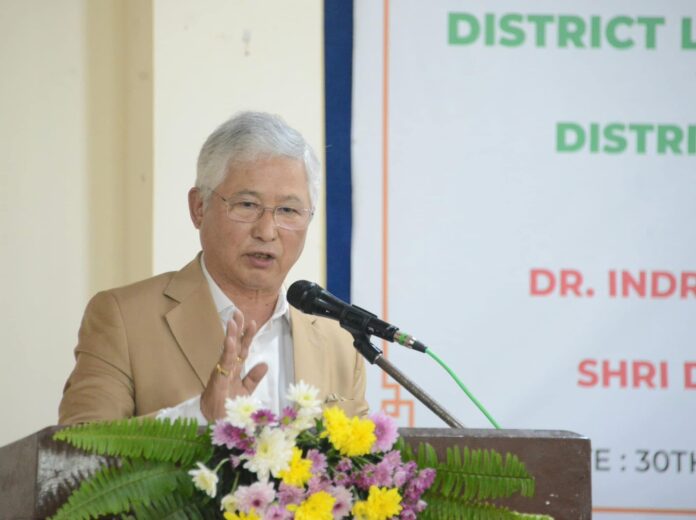
Sikkim has emerged as the top destination for foreign tourists in the Northeast, welcoming a record-breaking 1.62 lakh international visitors over two years. According to data presented by the Union Tourism Minister in response to a parliamentary question by Sikkim Lok Sabha MP Indra Hang Subba, Sikkim registered 68,645 foreign tourists in 2022 and 93,908 in 2023 — the highest among the Northeastern states.

The surge in foreign arrivals follows the easing of COVID-19 restrictions, reflecting Sikkim’s successful tourism revival strategy. MP Indra Hang Subba credited the increase to the state government’s proactive efforts under Chief Minister Prem Singh Tamang, who spearheaded campaigns to promote Sikkim as a safe and attractive destination. Strategic partnerships with the Travel Agents Association of Sikkim and other tourism stakeholders helped rebuild tourist confidence.

Tourism remains a key pillar of Sikkim’s economy, supporting the livelihoods of around 18% of the state’s population. Recognizing its significance, the state government has allocated substantial funds in the 2024-25 budget for tourism infrastructure and road connectivity improvements. Measures include enhanced operations at Pakyong Airport and the maintenance of National Highway 10 to ensure smooth access for tourists.

Sikkim’s rich cultural heritage, scenic landscapes, and adventure tourism options have bolstered its appeal among international travelers. The state’s focus on sustainable tourism, combined with improved infrastructure and safety standards, has positioned it as a premier travel destination in the region.

Officials anticipate a further increase in foreign arrivals in the upcoming summer season, supported by ongoing efforts to strengthen air and road connectivity and promote Sikkim’s unique tourism offerings globally.

Badminton Association of Sikkim (BAS) Holds First Executive Body Meeting

0
" Badminton Association of Sikkim "

The first Executive Body Meeting of the newly elected Office Bearers and Executive Body Members of the Badminton Association of Sikkim (BAS) was held today 11th of March 2025 under the leadership of President-elect Shri Jacob Khaling.

The meeting served as a platform for crucial discussions regarding the mission, vision, and core objectives of BAS, emphasizing the association’s commitment to fostering the growth of badminton in Sikkim. Key deliberations included aligning organizational goals with core values to ensure the holistic development of the sport and its players.

A significant part of the meeting was dedicated to event planning and activities, where discussions focused on upcoming tournaments, training programs, and grassroots development initiatives. Responsibilities for organizing and executing these events were assigned to respective committee members to ensure efficient implementation.

Furthermore, strategies for communication and public relations were explored, with emphasis on enhancing internal and external communication channels, strengthening branding, and increasing media outreach to promote the association’s initiatives. Efforts to establish a stronger digital presence were also discussed.

To boost engagement within the badminton community, the executive body also deliberated on membership development strategies, including ways to enhance member participation and provide greater benefits to players and stakeholders associated with BAS.

The meeting concluded with a renewed commitment from all executive members to work collectively towards the promotion and development of badminton in Sikkim. The association is set to announce its upcoming events and initiatives soon.

Sikkim’s Hydropower War: Tsheten Tashi Challenges Teesta III Disinvestment in Court

0
"SIBLAC Calls for Constitutional Defense"

A legal and political storm has erupted over the Sikkim government’s decision to disinvest its majority stake in the Teesta III Hydropower Project. Tsheten Tashi Bhutia, Chief Advisor of the BJP state cadre, has filed a writ petition in the Sikkim High Court challenging the sale of a 60.08% stake in Sikkim Urja Limited (SUL) to Greenko Energies, a renewable energy firm.

The petition, filed on February 24, argues that the decision was “arbitrary and unreasonable.” Bhutia claims the state government ignored revival strategies proposed during a meeting with the Union Minister of Power and the Sikkim Chief Minister in December 2023, which included claiming insurance, recovering ₹3,500 crore in outstanding dues from Punjab and Haryana, and securing a loan moratorium.

Bhutia questions why the government opted for disinvestment rather than pursuing these alternatives. He also raises concerns over the lack of an expert committee to assess the project’s value, calling the ₹4,000 crore capital infusion demand unjustified.

The decision to rebuild the dam, which was severely damaged by a glacial lake outburst flood (GLOF) in October 2023, has drawn criticism from environmentalists. Despite seismic risks and incomplete assessments of spillway capacity, the centrally-appointed Expert Appraisal Committee (EAC) approved the reconstruction on January 10, 2024. Activists argue that the environmental risks have been overlooked.

Chief Minister Prem Singh Tamang defended the disinvestment, stating that Greenko’s acquisition was necessary to prevent long-term financial instability. He blamed the previous government for agreements that left the state with no choice but to transfer the stake.

The controversy has heightened political tensions in Sikkim, with the BJP state unit urging Prime Minister Narendra Modi to halt the project’s clearance until a thorough environmental study is conducted. The next court hearing is set for March 18, where the case will be heard alongside a similar petition by former SDF leader M.K. Subba.

The dispute underscores the fragile balance between economic development and environmental sustainability in Sikkim’s hydropower sector.

Sikkim CM Prem Singh Tamang Revokes Promotions of 19 Nurses

0
"Sikkim CM Prem Singh Tamang"

Sikkim CM Prem Singh Tamang Revokes Promotions of 19 Nurses for Poor Duty Performance

In a clear message signaling no compromise in the healthcare sector, Chief Minister Prem Singh Tamang announced the revocation of conditional promotions given to 19 senior nurses to the position of Assistant Nursing Superintendent (ANS). The decision comes after concerns that these nurses had not performed their duties satisfactorily.

Speaking at the foundation-laying ceremony for Sikkim Global Technical University in Rongbul, Singtam Ward, South Sikkim, the Chief Minister stated that these nurses had failed to meet the required standards in their duties, leading to the decision to withdraw their promotions.

He emphasized that the government would not tolerate negligence in healthcare services and would take firm actions against any such lapses.

Sikkim CM Invited to 8th North East Youth Festival

0
"North East Youth festival"

Raju Basnett, Minister for Sports and Youth Affairs, Education, and Law and Parliamentary Affairs, along with Secretary Yangchen D. Tamang and senior department officials, met with the Chief Minister of Sikkim at Mintokgang on March 10, 2025.

During the meeting, the delegation formally invited the Chief Minister to attend the 8th North East Youth Festival, scheduled from March 17 to 20, 2025. The opening and closing ceremonies will be held at Paljor Stadium, while various competitive and non-competitive events will take place at MG Marg, Nar Bahadur Bhandari Government College, and Chintan Bhawan.

Secretary Yangchen D. Tamang provided updates on key sports and youth development initiatives led by the department under the Chief Minister’s guidance. She also highlighted upcoming activities planned for the Golden Jubilee Celebration of Sikkim’s Statehood under the theme “Sunaulo, Samariddha Ani Samarth Sikkim.”

Senior officials, including Chief Engineer Milan Pradhan, Additional Director Dr. R. B. Biswakarma, and Deputy Directors Palior Lepcha, Karma D Bhutia, and S. B. Subba from the Sports and Youth Development Board, also attended the meeting.

Sikkim RAMS Program Launched to Boost Road Management Efficiency

0
"Sikkim RAMS program launched"

The Sikkim Road Asset Management System (RAMS) program was launched at Royal Plaza in Gangtok, aiming to improve the management and maintenance of road infrastructure in the state. The initiative focuses on utilizing modern technology and structured planning to enhance the efficiency and sustainability of road maintenance.

During the workshop, experts discussed the program’s core objectives, strategies for implementation, and the expected long-term impact on road management. The project is set to streamline data collection, optimize resource allocation, and support better decision-making in infrastructure development.

The implementation of the RAMS program has been made possible through the technical assistance of M/s LEA Associates South Asia Pvt. Ltd., whose contributions have been crucial to the project’s success.

UDD Minister Cracks Down on Illegal Business in Namchi

0
"Namchi Illegal Business Crackdown"

Bhoj Raj Rai, Minister for Urban Development Department (UDD), led an inspection drive in Namchi town to assess business compliance, encroachments, and sanitation standards. The initiative aimed to enforce urban regulations and ensure a cleaner, well-organized town.

Accompanied by MLA Satish Chandra Rai (11-Namchi Singhithang), UDD Secretary Yogita Rai, and other officials, the minister inspected shops, residential areas, and public spaces. Businesses operating without valid permits were shut down, and encroachers were served notices to vacate unauthorized spaces within 15 days. Unauthorized hawker stalls at Namchi Plaza were also cleared.

The inspection extended to Kazitar Children Park, the Food & Civil Supplies Department, and the SNT Department, where the team interacted with staff and reviewed facilities. Sanitation conditions in various parts of the town were also assessed.

Authorities emphasized that these measures aim to maintain urban order and improve public infrastructure in Namchi.

Pro-Monarchy Sentiment Grows in Nepal as Former King Returns

0
"Nepal former king returns"

Thousands of supporters gathered at Tribhuvan International Airport to welcome Nepal’s former king, Gyanendra Shah, as he returned from western Nepal. The rally, estimated at around 10,000 people, reflected growing discontent with the country’s political system, with chants of Come back, king, save the country echoing through the streets.

Protesters called for the reinstatement of the monarchy, blaming Nepal’s political instability, corruption, and economic struggles on the republic system. Riot police were deployed to manage the peaceful demonstration, restricting access to the airport.

Gyanendra Shah ruled as a constitutional monarch before seizing absolute power in 2005, a move that led to mass protests and his eventual removal in 2006. Nepal abolished its 240-year-old monarchy in 2008, but frequent government changes—13 administrations in 17 years—have fueled nostalgia for royal rule.

Despite the rising pro-monarchy sentiment, political analysts see little chance of the monarchy’s restoration, viewing the movement as a reaction to dissatisfaction with governance rather than a viable shift in Nepal’s political future.

Sikkim Judicial Academy Hosts Mental Health, Drug Awareness Programme

0
"Drug awareness Programme"

The Sikkim Judicial Academy, in collaboration with the Sikkim State Legal Services Authority, organized a one-day orientation programme on “Mental Health, Substance Abuse, and Drug Addiction: Prevention and Intervention” at its premises in Gangtok. The event aimed to raise awareness and provide insights into mental health challenges, suicide prevention, and drug addiction among judicial officers, government stakeholders, advocates, and students.

The programme featured Dr. Satyajit Ash, Consulting Psychiatrist from Kolkata, and Professor Sujit Sarkhel, Head of the Institute of Psychiatry, Kolkata, as resource persons. They addressed critical issues such as Sikkim’s high suicide rate and the growing concern of substance abuse in the state.

Speaking at the event, the Chief Justice of the High Court of Sikkim highlighted the complexities of suicide laws and the need to balance decriminalization with accountability. He also emphasized the importance of responsible media reporting on suicides and urged media houses to act with sensitivity.

The resource persons provided valuable insights into suicide prevention, including early warning signs, first-aid techniques, and the role of social engagement in intervention. They also explained how drug addiction affects the brain, the risk factors such as family conflict and peer pressure, and the importance of professional help in rehabilitation.

The programme underscored the critical role of healthcare professionals, NGOs, and the media in tackling these pressing social issues and promoting mental well-being in Sikkim.