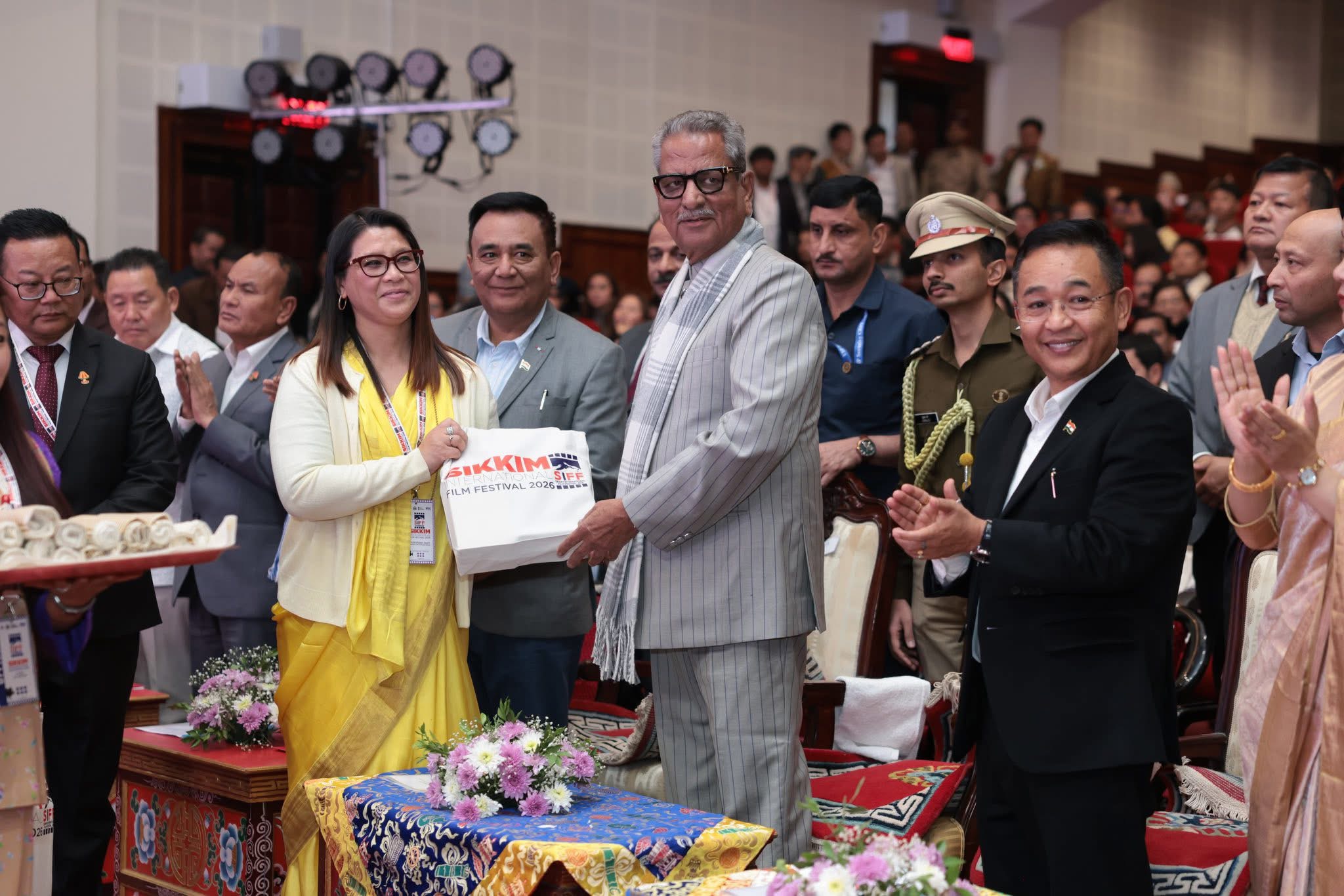
The sikkim state successfully hosted its first-ever Sikkim International Film Festival from March 19 to 22, marking a significant step in promoting cinema, culture, and tourism. The four-day festival brought together filmmakers, artists, and creative voices from across India and beyond, positioning Sikkim as an emerging hub for film production and cultural exchange.
The successful of the festival reflects the visionary leadership of Chief Minister Prem Singh Tamang, whose consistent support and forward-looking approach played a crucial role in turning the idea into reality. His vision to develop Sikkim as a center for Nepali and regional cinema is expected to generate new opportunities in the creative economy, boost tourism, and create employment for local youth.
Equally noteworthy was the leadership of Annapurna Allay, Secretary of the Information and Public Relations Department. Demonstrating the true spirit of Nari Shakti, she ensured smooth planning, coordination, and execution of the festival. Her role stands as an example of women’s leadership in governance and their growing influence in shaping major state initiatives.
The festival began with a grand inaugural ceremony at Manan Kendra, attended by Governor Om Prakash Mathur, Chief Minister Prem Singh Tamang, his spouse Krishna Kumari Rai, along with MLAs, senior officials, and distinguished guests. The ceremony featured vibrant cultural performances that showcased Sikkim’s rich traditions and diversity, setting the tone for the festival.
A major highlight was the red carpet event that brought glamour and national attention to the state. Renowned filmmaker Imtiaz Ali, along with several producers, artists, influencers, and filmmakers, attended the festival, adding credibility and visibility to the event on a larger scale.
A total of 29 films were screened during the festival, including regional, national, and international entries. Out of these, 10 screenings were held at Manan Kendra and 19 at INOX, West Point Mall, providing audiences with a diverse cinematic experience. A special attraction was the screening of a historic documentary on Sikkim by legendary filmmaker Satyajit Ray, which connected the state’s cultural past with its cinematic present.
Beyond film screenings, the festival also focused on industry development and knowledge sharing. Workshops and panel discussions held at Chintan Bhawan explored various aspects of filmmaking, storytelling, and production. These sessions provided valuable insights and learning opportunities for aspiring filmmakers and industry stakeholders.
Additionally, B2B meetings and networking sessions enabled filmmakers, producers, and investors to connect and explore future collaborations. Such initiatives are seen as important steps toward building a sustainable film ecosystem in Sikkim and encouraging investment in the sector.
The festival also highlighted Sikkim’s immense potential as a film tourism destination. With its scenic landscapes, unique culture, and peaceful environment, the state offers an ideal backdrop for film shoots. Events like SIFF are expected to attract filmmakers and tourists alike, contributing to economic growth and generating employment opportunities for local communities.
The festival concluded on March 22 with a closing ceremony and certificate distribution attended by key dignitaries. In her address, Annapurna Allay expressed gratitude to Chief Minister Prem Singh Tamang for his unwavering support and reiterated the government’s commitment to developing Sikkim into a major hub for Nepali cinema. She also revealed that proposals have been submitted to position the state as a film sponsorship and production center in India.
The first edition of the Sikkim International Film Festival stands as more than just a cultural event—it is a defining milestone in the state’s journey. It reflects the power of visionary governance, collaboration, and women-led leadership in Department. With this achievement, Sikkim has set a strong benchmark for the future, sending a powerful message that Nari Shakti is not just about empowerment, but about leadership, transformation, and shaping history.