Thursday, May 7, 2026
Home Blog

Assam-Mizoram Row: A brief analysis from a Regional, Geo-Political & Security Perspective

0
Assam Mizoram Clash
Assam Mizoram Clash
“You can change friends, not neigbours.”- Former PM Late AB Vajpayee.

Assam as the elder sister:

The above-mentioned quote was said by former PM Late Atal Bihari Vajpayee Ji. During the 2003 India-Pakistan bilateral summit held in Agra. This particular quote can be apt with the ongoing border dispute between the NE states of Assam & Mizoram. Assam is the gateway to the entire NE region land route-railway & road transport. It is laden with a lot of responsibilities as the elder sister among the seven sister states. The recent dispute between the Assam and Mizoram, if escalates again, can have a greater geopolitical and security implications.

Ethnic overlap:

The flow of Burmese refugees in Mizoram following the recent military coup in Myanmar highlights the question about the global migrant crisis. The fate of the uprooted refugees from a conflict zone in a foreign land. Mizoram however shares an approximately 500 km long porous border with the Chin state of Myanmar. It is the home of the majority Kuki-Chin speaking communities of Myanmar.

Thus, also acts as the sign for the sense of linguistic and ethnic belongingness, as the Mizo language is a part of the Kuki-Chin language family. These refugees from Myanmar welcomed by the Mizo hospitality, considering the ethnic overlapping. Further exemplified by news report (June this year) said the allocation of funds by Mizoram for the refugee on humanitarian grounds. However, rehabilitating several refugees automatically doubles the state’s resources which also includes land. Also, speculated that the recent border dispute between the two states over land might be having an angle, determined from this perspective from Mizoram’s side.

Assam border concerns:

Assam already has boundary dispute with the neighbouring states of Meghalaya, Nagaland and even Arunachal Pradesh. It is now facing problems with Mizoram. This led to a violent incident, witnessed the death of Assam Police jawans along with many jawans being injured.

Assam and Mizoram:

Let‘s examine the geopolitical and security dimensions of the crisis between the two states. The People’s Republic of China (China/PRC), an emerging hegemon of the 21st century has got a significant number of stakes in India’s NE region. From claiming Arunachal Pradesh as their territory of South Tibet to supporting the last remnants of the NE insurgents against the Indian state. Thereby acting as an invisible foreign hand in destabilizing the region. China’s role and influence can’t be ignored, as its footprints are already expanding the South East Asian region. It is India’s destination in the “Act East initiative” and its route is obviously via the NE region of India. Enhancing the Act East initiative means synchronising the overall development of the NE region from infrastructure to connectivity, seen a pace since 2014. This includes the Kaladan Multi-modal project too where Mizoram is a major stakeholder.

Consequences:

A deteriorated state of the relationship will lead to Assam not being able to extract benefits from Mizoram and vice versa. Disturbance along the Assam-Mizoram border can further ignite the other states to demand their territorial claims over the boundary issue. In 2017 Hindustan Times reported the statement by the Chinese state media saying ‘rising Hindu Nationalism’ hijacked India’s China Policy.

Conclusion:

Considering the ideological leanings of the current ruling party in Assam, it will be not wrong if we consider the China factor here. It may be having a diabolical agenda of creating instability in India’s NE region. With motive to disrupt the ongoing developmental works in the region, by covertly provoking certain mischievous elements. If the crisis escalates again in future, it will be detrimental to both sides, considering the dissatisfaction by the people of Assam.

Above all, in January 2019, massive demonstrations against the ‘Citizenship Amendment Bill 2016’ (Now CAA) took place in Mizoram which even witnessed signs that said “Hello China..Bye Bye India”.

Slogans like these only mean providing an upper hand and leverage to the adversarial nation of China. They can take enormous advantage of it for their nefarious agenda about which I mentioned above. If similar outbreak of a similar or crisis resurfaces then external actors will indirectly or covertly fulfil their expansionist objective. Therefore, a peaceful settlement framework under the aegis of New Delhi is a must. So, that it prevents the domestic crisis/issue from being used by India’s adversaries.

Also, Read| IIT Bombay allows Afghani students to join classes
Assam- Mizoram Border Dispute, 6 killed

0
Assam Mizoram Land dispute

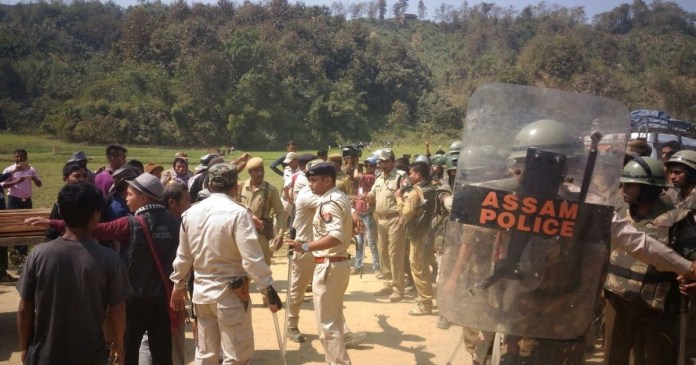
An unfortunate incident occurred in North-East India yesterday evening when both the police forces of Mizoram and Assam clashed over at Lailapool of Cachar district, which has been known as a flashpoint of inter-state border clashes for decades. This time, it took an extremely barbaric turn when alleged Mizo assailants loaded with Light machine guns ( seen in different videos) fired on the Assam side leaving 5 jawans of Assam police dead on the spot and injuring around 65-75 more people.

IPS Vaibhav, SP, Cachar was shot too after which he was admitted to the ICU of Silchar Medical College. He may be flown to Mumbai for higher treatment. Meanwhile, the PSO of DC, Cachar was shot at to which he succumbed.

Both Assam Govt and Mizoram Govt have narrated their version of the story. But, Assam CM Himanta Biswa Sarma strongly condemned the inhumane, undemocratic move of Mizoram Police and has talked with Mizoram CM over the incident. While CM Sarma thinks that this issue can be solved over discussions after satellite imaging surveys, he has also allowed Assam Police to retaliate and open fire from now on.

Chief Minister Himanta Biswa Sarma, on Monday, urged Chief Minister of Mizoram Zoramthanga to investigate this matter saying why civilians from his states were holding sticks and trying to incite violence on the Assam-Mizoram border.

He said, “Honble Zoramthanga Ji, could you please investigate why are civilians from Mizoram holding sticks and trying to incite violence? We urge civilians to not take up law and order on their own hands and permit peaceful dialogue to take place between governments.”

The Assam Govt has announced 50 lakh compensation for the family of every Jawan deceased in this unfortunate incident that rocked the Nation and has promised Govt a job for a person in the family of the deceased. He has also declared to raise a Commando- Batallion of 3000 soldiers for the protection of Barak Valley.

Also Read – Expert claim data leaks, Clubhouse denies

Enhanced rainfall activities over Sikkim during the period 28th June to 2nd July

0
"Rainfall in Sikkim"

On Sunday, Meteorological Department (IMD) said the Sikkim will witness heavy rainfall as the southwest monsoon will be covered in the Sikkim region.

Advancing further, the Southwest Monsoon covered the Sikkim region, nearly four days after its normal date.

Special Weather Bulletin Gangtok Said “Monsoon is advancing very well. It has advanced to Sikkim and parts of West Bengal 4 to 5 days in advance. The monsoon flow is strong and southwesterly winds have picked up on a large scale”

And around Sikkim- Rongli, Chungthang: 3 each; Shipgyer, Dentam: 2 each; Gangtok, Mazitar, Khanitar, Namthang, Damthang, Gyalshing: 1 each has Chief rainfall amount(in cm) recorded.

Current Meteorological Condition is saying that The northern Limit of southwest monsoon (NLM) continues to pass through Lat. 26°N / Long. 70°E, Barmer, Bhilwara, Dholpur, Aligarh, Meerut, Ambala and Amritsar. The trough at mean sea level now runs from East Uttar Pradesh to northwest Bay of Bengal across Jharkhand and Gangetic West Bengal

IMD has classified that the progress is going to slow over the next two days, i.e 28th June.

According to Weather Forecast Due to the expected shifting of the trough of low-pressure area north-wards and strong moisture incursion from the Bay of Bengal, rainfall activities over all the districts of Sikkim very likely to be enhanced during the period 28th to 02nd July 2021. During this period, heavy to very heavy rain (07-20 cm) is very likely to occur at isolated places over the state, especially all over East and North Sikkim.

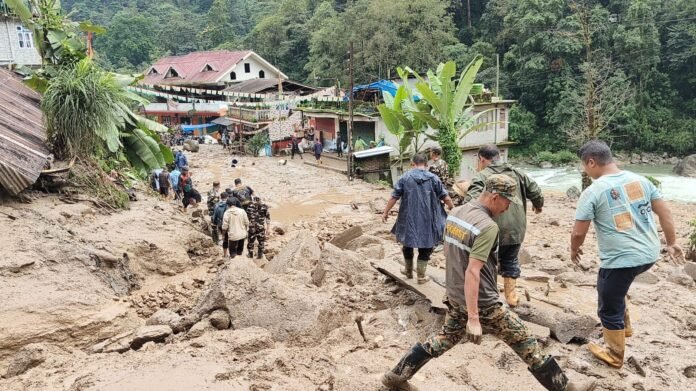
Sikkim has been witnessing heavy rainfall since last week causing heavy damage in Gangtok areas due to landslides. It’s also reported that landslide appeared in Some parts of North Sikkim which also caused east and north connecting bridge.

Also Read – Sikkim recorded 170 new covid cases and 00 New Death

Sikkim to get Sikkim House in Mumbai, relief for medical visitors

0

On 31st January 2021, the Honourable CM of Sikkim PS Golay has announced Sikkim will have a Sikkim house in Mumbai soon.

Speaking with The Sikkim Today team in January 2021 in West Sikkim, Chief Minister PS Golay has approached Maharashtra Government for the construction of a Sikkim house in Navi, Mumbai on which the Maharastra govt agrees to accept this.

This house will be 6 km from the nearest airport and 2 km from Tata memorial hospital which be will easy for Sikkimese patients to get connected nearby.

Earlier lots of people from Sikkim who used to go to Mumbai for treatment but can’t find a reasonable place to stay and the Chief minister thought this Sikkim house will be accessible for those who are going to Mumbai for medical treatment.

Yesterday in Sikkim legislative assembly, Honourable Chief minister said ” Maharashtra government has approved our proposal to construct Sikkim House Navi Mumbai near the Tata Memorial Hospital which is one of the top hospitals in the country”

Land measuring 4000 square meter which is almost 1 acre has been allotted for which Rs 11 crore 97 lakhs has already been paid and taken in possession, said HCM in the Assembly.

This will ease the financial burden on our people travelling to Mumbai for treatment and also assist them in other matters,” Chief Minister P.S. Golay in his Budget speech on Monday.

Earlier, the patient from Sikkim used to stay in Hamro Chhahari which was launched years back by the Nepali community from overall which cost only 300/per day Room. But getting a room in Hamro Chhahari is also very difficult for many patients.

Protective Wall Binding Teesta Collapses Posing Threat For Erosions.

0

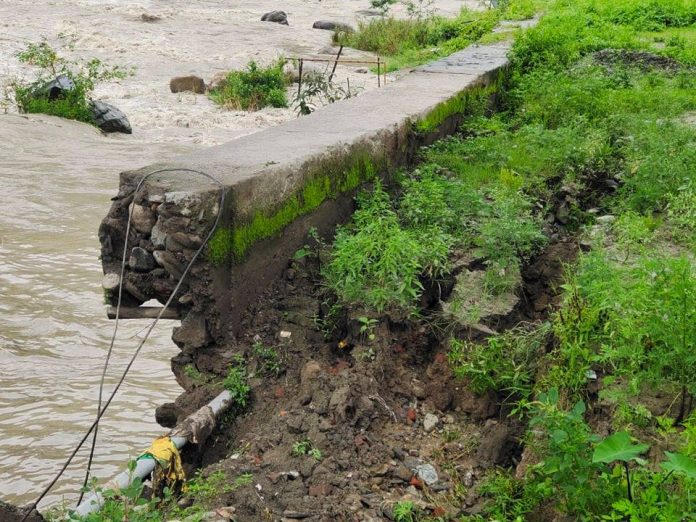
The recent incessant rains in the state have transformed small streams into raging torrents and increased the water volumes of big Rivers like Teesta. The sudden rise in water level is an alarming bell for a few disasters in making. A portion of the protective wall guiding the flow of the Teesta has been washed away. A complete washout is evident if not taken care of and we are only in the first week of June.

The illegal quarrying, sand mining and breaking up of river boulders is the main reason for rivers to change courses and pose a threat. If this issue is not addressed at the earliest, the under-construction via-duct might be damaged.

Also, the settlements near the river belts are always at a threat during every monsoon. Most of the river belts in Sikkim have been plundered by sand mafias and river boulders broken down by stone breakers to feed them into the illegal crusher plants mushrooming in every nook and corner along the riverside. Sikkim is inviting a catastrophe and this will be man-made and not natural.

NSE Launches Electronic Gold Receipts (EGRs) to Strengthen India’s Gold Ecosystem

0

The National Stock Exchange of India Limited (NSE) has launched Electronic Gold Receipts (EGRs) as a new trading segment—marking an important step towards making India’s gold market more transparent, efficient, and organised.

With this launch, NSE aims to bridge the long-standing gap between physical gold and financial markets by offering a secure, regulated, and technology-driven platform for trading gold.

Electronic Gold Receipts (EGRs) are digital certificates that represent ownership of physical gold. The actual gold is safely stored in SEBI-accredited vaults, while investors can hold and trade it electronically through their demat accounts. Each EGR is fully backed by real gold, ensuring trust and authenticity.

With this move, NSE aims to build a transparent and efficient gold trading ecosystem, enabling better price discovery, wider participation, and increased confidence among stakeholders such as jewellers, refiners, traders, and institutional investors.

In a key milestone, NSE also successfully converted a 1000-gram gold bar into an Electronic Gold Receipt, demonstrating how physical gold can be seamlessly transformed into a secure, tradable digital asset. This highlights the operational readiness of the EGR framework and its ability to support efficient, delivery-backed gold trading.

Shri Sriram Krishnan, Chief Business Development Officer (CBDO), NSE, said:
“The introduction of Electronic Gold Receipts at NSE marks a pivotal evolution in how India interacts with its most cherished asset. By leveraging NSE’s robust technology and liquidity framework, we are democratizing access to gold, enabling investors across the nation to trade with unprecedented transparency and confidence. We believe that by creating a seamless, secure, and digital pathway for gold investment, we are positioning gold as a modern, integrated asset class within our capital markets, ultimately reducing dependence on fragmented benchmarks and fostering deeper financial inclusion.”

By enabling electronic holding, assured quality, and easy conversion between physical and digital gold, EGRs make it possible for investors to participate in the gold market—even in smaller quantities. This brings greater flexibility and liquidity, similar to other financial instruments held in demat form.

The National Stock Exchange of India Limited, established in 1994, is India’s largest stock exchange by turnover and the world’s largest derivatives exchange by trading volume (FIA 2025).

PM Modi Calls Sikkim ‘Heaven of the East’, Highlights Tourism & Connectivity at 50th Statehood

0

Prime Minister Narendra Modi on Tuesday celebrated Sikkim’s 50th statehood anniversary in Gangtok, describing the state as the “Heaven of the East” while praising its natural beauty, peaceful environment, and strong cultural harmony.

He began the day on a light and engaging note by playing football with local youngsters, sharing moments that reflected his connection with the people before moving on to official programmes. Later, he addressed a large gathering at Paljor Stadium, where the golden jubilee celebrations were held with great enthusiasm.

Congratulating the people of Sikkim, the Prime Minister highlighted the state’s remarkable journey over the past five decades. He praised its commitment to preserving nature while achieving steady development. Referring to Sikkim’s rich biodiversity, he made special mention of its orchids, saying that anyone who has not seen them “has not seen anything,” underlining the state’s immense tourism potential.

PM Modi also appreciated the unity among the people, noting that Sikkim stands as an example of harmony where diverse communities come together, especially during such important celebrations. He expressed happiness at being able to attend the event, recalling that an earlier visit had to be cancelled due to bad weather.

The Prime Minister’s visit followed a grand celebrations on Monday evening, when thousands of people lined the streets of Gangtok during his roadshow. The atmosphere was vibrant, with citizens waving the national flag and welcoming him with traditional music and cultural performances.

Emphasising development, PM Modi spoke about the importance of strengthening infrastructure in the region. He highlighted the Sevoke–Rangpo railway project as a key initiative that will connect Sikkim to the national railway network, making travel easier and boosting tourism and economic opportunities.

Reaffirming the Centre’s commitment, the Prime Minister assured continued support for Sikkim’s growth and development. As the state marks 50 years of statehood, his visit added to the celebrations, reflecting both pride in the past and confidence in the future.

NSE Investor Base Crosses 13 Crore; Assam and North East Among Fastest-Growing Regions

0

The investor base on the National Stock Exchange of India (NSE) has crossed the landmark 13 crore (130 million) unique investors as of April 27, 2026, reflecting the rapid expansion and deepening of India’s capital markets. NSE, India’s largest stock exchange by turnover, continues to play a pivotal role in driving financial inclusion and investor participation across the country.

The total number of client accounts registered with the Exchange has reached 25.7 crore, highlighting growing investor engagement across segments. Over the past five years (FY21–FY26), the investor base has expanded at a robust CAGR of 26.4%, significantly higher than the 15.2% growth recorded in the previous five-year period. This acceleration has been supported by increased digital access, simplified onboarding processes, and sustained investor awareness initiatives.

A key highlight of this growth story is the rising participation from the North Eastern region, which has emerged as one of the fastest-growing markets for investor inclusion. States such as Mizoram (8.7x), Arunachal Pradesh (7.9x), and Assam (6.9x) have recorded multi-fold growth in investor base since FY21, reflecting the expanding reach of capital markets into Tier 2, Tier 3, and Tier 4 cities.

Assam alone now accounts for approximately 51.5 lakh (5.15 million) registered investors, underscoring the state’s growing contribution to India’s evolving retail investor landscape. This surge highlights increasing financial awareness, improved digital access, and the success of investor education initiatives in bringing first-time participants into the formal capital market ecosystem.

The broad-based nature of this growth is evident, with states beyond the top 10 contributing 27% of the total investor base, signalling a clear shift towards emerging regions such as the North East. The region continues to stand out, led by strong multi-fold growth across states like Mizoram (8.7x), Arunachal Pradesh (7.9x), and Assam (6.9x). The investor profile is also evolving, with a median age of 33 years, nearly 40% below 30, and one in four investors being women, reflecting deeper and more inclusive participation.

India’s capital markets continue to deliver steady value, with benchmark indices generating annualised returns of 10.8% (Nifty 50) and 13.3% (Nifty 500) over the past five years. The market capitalisation of NSE-listed companies has grown at a CAGR of 18%, reaching ₹460.6 lakh crore, contributing significantly to household wealth creation.

With investor presence now spanning 99.85% of India’s pin codes, the democratisation of capital markets is clearly underway. The strong and sustained momentum in the North East underscores its emergence as a key growth frontier, reflecting rising financial awareness, improved access, and increasing participation from first-time investors across the region.

The National Stock Exchange of India (NSE), established in 1994, is India’s largest stock exchange by trading volume and a global leader in derivatives trading.

Indian Army conducted a Mega Veterans Rally Strengthening Connect with Ex-Servicemen Community

0

Spearhead Division of Spearcorps organised a large-scale Veterans Rally on 26 April 2026, in close coordination with the State and District Administrations of Assam and Arunachal Pradesh. The event witnessed an overwhelming participation of over 1,500 veterans, Veer Naris, serving soldiers, Next of Kin (NOKs) and dependents, reflecting the strong bond between the Armed Forces and its veteran fraternity.

The primary objective of the rally was to reach out to veterans and address key concerns, including pension disbursement anomalies, land and legal matters and other challenges faced by veterans and their families.

The Hon’ble Governor of Arunachal Pradesh, Lt Gen KT Parnaik (Retd), graced the occasion as the Chief Guest and addressed the gathering. Representatives from Rajya Sainik Board Itanagar, Zila Sainik Welfare Offices of Dibrugarh and Lakhimpur, PCDA Guwahati, ECHS, Record Offices, along with officials from state and district administration, government agencies and various banks present at the venue actively assisted veterans in resolving grievances and provided necessary guidance and support.

Veterans were also sensitised about resettlement schemes, second career avenues and re-employment opportunities facilitated by the Army Welfare Placement Organisation (AWPO). A comprehensive medical camp was organised to cater to the healthcare needs of attendees.

On this occasion, Veer Naris, Veer Matas, Veer Putris, special children and distinguished veteran achievers were felicitated by the Chief Guest in recognition of their resilience and contributions.

In his address, the Hon’ble Governor highlighted the invaluable contributions of veterans and the supreme sacrifices made by soldiers in service to the nation. He also spoke on pension-related issues, welfare schemes and lauded the wholehearted support of the civil administration in successfully conducting the rally.

Adding vibrancy to the event, a cultural programme was presented by students of Sainik School Ruksin and NCC cadets, showcasing patriotic fervour and youthful energy.

The rally proved to be a significant initiative in addressing routine challenges faced by veterans and Veer Naris. It provided a direct platform for interaction with authorities and reinforced the commitment of the Army and civil administration towards the welfare of the veteran community.

The event concluded on a highly successful note, leaving a lasting positive impact on all participants and further strengthening the bond with the veteran fraternity.k

Sikkim Delegation Meets Union Minister, Seeks Centre’s Support for “Mission Siri”

0

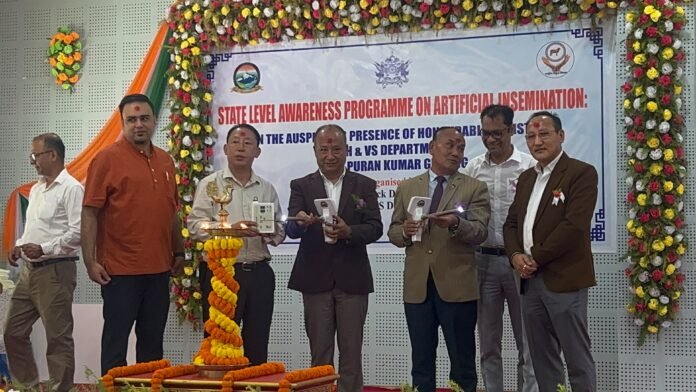
A high-level delegation from the Government of Sikkim, led by Minister for Animal Husbandry & Veterinary Services, Agriculture, Horticulture and Fisheries, Puran Kumar Gurung, called on Union Minister for Fisheries, Animal Husbandry & Dairying, Rajiv Ranjan Singh (Lalan Singh), at his official residence in New Delhi.

The delegation also included Dr. K.T. Bhutia, Principal Director of the Animal Husbandry & Veterinary Services Department, and Dr. Pratik Sharma, Chief Executive Officer of the Sikkim Livestock Development Board.

During the meeting, the Sikkim delegation submitted a Demi-Official (DO) letter addressed to the Union Minister, duly signed by Chief Minister Prem Singh Tamang. The letter outlined a proposal for “Mission Siri,” a flagship conservation initiative aimed at the preservation and promotion of Siri cattle, an indigenous breed significant to the region.

The project is proposed to be implemented by the Sikkim Livestock Development Board under the centrally sponsored Rashtriya Gokul Mission (RGM). The initiative seeks to strengthen breed conservation, improve genetic quality, and enhance the livelihood of farmers dependent on livestock in the state.

The discussions were held in a cordial and constructive atmosphere, with the Union Minister giving a patient hearing to the issues and proposals presented by the delegation. He appreciated the state government’s efforts to conserve indigenous cattle breeds and emphasized the importance of such initiatives in strengthening rural economies and sustainable agriculture.

Assuring full support from the Government of India, the Union Minister expressed confidence in the successful implementation of “Mission Siri.” The meeting concluded on a positive note, reflecting strong cooperation and commitment between the Centre and the State towards advancing livestock development and conservation efforts in Sikkim.

Sikkim Likely to Have 11 Women MLAs by 2029 Under Nari Shakti Vandan Adhiniyam

0

For decades, women in Sikkim have been visible in rallies, grassroots movements, and party work for very long, but largely missing where it matters most: the Legislative Assembly. That imbalance may soon be forced to change.

In the before 2024 Sikkim Assembly, women’s representation remained minimal, with only a handful of women MLAs (around 2–3) in a 32-member House. The numbers tell a clear story—political space has long been dominated by men, despite women forming a crucial part of the electorate and party machinery.

Now, with the Nari Shakti Vandan Adhiniyam in place, the equation is set to shift dramatically. The law mandates 33% reservation for women in both Lok Sabha & State Assembly, which could push Sikkim to 10–11 women MLAs once implemented—nearly a fourfold jump from current levels.

With reservation becoming inevitable after delimitation, parties will be compelled to rethink strategies, promote women candidates, and invest in leadership beyond tokenism. The coming political cycle could witness a new class of women leaders stepping forward—not as substitutes, but as contenders.

In over two decades, only two women have ever reached the Deputy Speaker’s chair in Sikkim—and none have ever been Speaker.

Women play a decisive role in Sikkim politics. Take Kala Rai, for example—rising from the grassroots after years of struggle, she is now an MLA and a leading force behind Nari Shakti in her party.

From Sushma Swaraj to Nirmala Sitharaman, Mamata Banerjee to Rekha Gupta, and Mayawati—each of them struggled for years before rising to positions of power and going on to lead from the state to the national level.

Women’s political representation has indeed come a long way since the turn of the century.

7 women ministers in the Union Council of Ministers NDA (Modi 3.0 government That’s roughly ~10% representation. If the spirit of 33% reservation reflects in governance, India could see over 20 women ministers by 2029—compared to just 7 today.

Sikkim CM PS Golay has welcomed and backed the bill, calling it a bold and historic step.

On April 17, Deputy Speaker Raj Kumari Thapa, along with MLAs Kala Rai and Pamin Lepcha, accompanied by women representatives from across Sikkim, announced a major women-led rally scheduled to be held in the state capital.

The rally aims to celebrate and express gratitude for the Nari Shakti Vandan Adhiniyam, which provides 33% reservation for women in the Lok Sabha and State Legislative Assemblies. The legislation was passed under the leadership of Prime Minister Narendra Modi.

They termed the Act a landmark step towards strengthening women’s participation in governance and decision-making, marking a new phase of gender equality and empowerment in the country.

(Written by Roshni Sharma Bhattarai, Editor, The Sikkim Today)

Gauhati High Court Upholds Sikkim’s COI Policy, Overturns Earlier High Court Ruling

0

The Gauhati High Court has upheld the Sikkim Government’s policy on the issuance and use of the Certificate of Identification (COI), setting aside a previous judgment of the Sikkim High Court that had struck down key restrictions.

The Division Bench comprising Chief Justice Ashutosh Kumar and Justice Arun Dev Choudhury delivered the judgment on April 8, 2026, in connection with a writ appeal filed by the State of Sikkim. The appeal challenged the 2020 decision of the Sikkim High Court, which had declared certain provisions in government notifications as unconstitutional.

At the center of the case were notifications issued in 1995, 1996, and a clarification in 2006, which restricted the use of COI for a particular category of individuals—mainly those whose parents were in government service before December 31, 1969—to employment purposes only. The earlier Sikkim High Court ruling had termed these restrictions arbitrary and violative of fundamental rights.

However, the Gauhati High Court disagreed, stating that the earlier judgment failed to consider Sikkim’s unique constitutional and historical context. The Court emphasized the importance of Article 371-F, which grants special protections to the State and preserves laws that existed prior to its merger with India in 1975.

The Bench observed that the classification among different categories of COI holders was not arbitrary but based on long-standing legal and administrative frameworks, including the Sikkim Subjects Regulation, 1961, and subsequent government rules. It further noted that such distinctions were part of a consistent policy aimed at safeguarding the interests of original Sikkimese residents.

The Court also referred to earlier Supreme Court rulings that upheld preferential treatment for local residents in public employment, reinforcing the legality of the State’s approach.

Importantly, the judgment reaffirmed that policies limiting COI benefits for certain groups to employment purposes were valid and in line with historical practices. It also underscored that continuity of pre-merger laws was essential to ensure a smooth transition and maintain socio-economic balance in the State.

With this ruling, the Gauhati High Court has restored the State Government’s authority to regulate COI issuance and usage, overturning the earlier relief granted by the Sikkim High Court. The verdict is likely to have implications for identity, employment rights, and administrative policies in Sikkim.

Sikkim High Court Rejects Plea of Women Married to Non-Sikkimese

0

The Sikkim High Court has dismissed a writ petition filed by over 100 Sikkimese women married to non-Sikkimese men, challenging restrictions on property rights and the non-issuance of Certificate of Identification (COI) to their children.

The case, Puspa Mishra & Others vs State of Sikkim, was heard by a Single Bench of Justice Meenakshi Madan Rai, with the judgment pronounced on April 6, 2026.

The petitioners had contested a 2018 government notification and sought directions to grant COI to their children, ensure eligibility for government employment, and secure inheritance rights over immovable property. They argued that the denial of such rights was discriminatory and violated constitutional guarantees under Articles 14, 15, 16, 19, and 21.

However, the Court rejected these arguments, holding that Sikkim’s unique historical and constitutional framework—protected under Article 371-F—continues to govern such matters. It observed that laws in force prior to Sikkim’s merger with India in 1975 remain valid and protected.

Referring to the Sikkim Subject Regulation, 1961, the Court noted that a Sikkimese woman marrying a non-Sikkimese does not retain the same status as a Sikkim Subject, which impacts the rights of her children, including eligibility for COI.

On the issue of alleged gender discrimination, the Court held that while equality is a fundamental right, reasonable classification is permissible in law. It ruled that the distinction between Sikkim Subjects and non-Sikkimese is based on historical and legal considerations and does not violate constitutional provisions.

The Court also clarified that children of such marriages are not entitled to COI under existing rules, but may obtain Residential Certificates (RC), which provide access to various state benefits, including education and certain property rights.

Concluding that the matter falls within the domain of legislative policy, the Court dismissed the petition, stating that any changes must be made through appropriate legal or legislative measures.

Military Engineer Services Honoured with Prestigious CIDC Vishwakarma Awards 2026

0

The HQ CWE Tezpur, under the aegis of CE Siliguri and Gajraj Corps, proudly announces that Ms. Nazneen Banu, Commander Works Engineer (CWE) of Tezpur and a distinguished IDSE officer, has been honoured with the esteemed Construction Industry Development Council (CIDC) Vishwakarma Award 2026.

In a moment of immense pride for the team, the 155 Base Hospital (Phase-III), Tezpur, under GE (South), has been recognized with the prestigious award for “Best Health Infrastructure.” This recognition underscores the department’s outstanding commitment to providing state-of-the-art healthcare services to the armed forces.

Additionally, the CIDC Vishwakarma Achievement Award for Public Officer was conferred upon Ms. Nazneen Banu, IDSE. Her dedication and exemplary service of over two decades in the Military Engineer Services (MES), along with her deputation to the Ministry of Culture, Government of India, have set a benchmark for excellence.

These awards highlight the unwavering commitment of the MES to nation-building and the holistic development of defence infrastructure.

The award was presented by Shri Nitin Gadkari, Hon’ble Union Minister, at the Dr Ambedkar International Centre, Delhi, on April 10, 2026.

Sikkim Sets Up 24×7 LPG Control Rooms Across Districts Amid Supply Concerns

0

The Government of Sikkim has established a centralized State Control Room in Gangtok along with district-level control rooms in all six districts to monitor and regulate LPG distribution. The move comes amid concerns over supply disruptions due to the current geopolitical situation.

According to the Food & Civil Supplies Department, the control rooms will operate round-the-clock to ensure smooth distribution, prevent black marketing, and address public grievances. A regulated refill system has been introduced, allowing domestic LPG refills every 25 days in urban areas and 45 days in rural regions.

Priority in commercial LPG supply will be given to essential services such as hospitals and educational institutions. Authorities have also mandated strict enforcement of the Essential Commodities Act, 1955, along with daily reporting from district units to the State Control Room.

Oil companies including IOCL, HPCL, and BPCL will coordinate with the government to maintain uninterrupted supply. Officials have assured swift action against malpractice and emphasized that the system will remain in place until further notice.