Wednesday, August 26, 2026
Home Blog Page 57

ISRO Celebrates Successful Chandrayaan-3 Mission Under the Leadership of PM Shri Narendra Modi

0

India is a land of profound insights where ancient wisdom shines bright. This beautiful country is a treasure trove of knowledge and home to some of the earliest civilizations in the world. It has a rich history of scientific and technological innovation, dating back to thousands of years. India’s ancient scientific, Vedic, and cosmic civilization is a source of great inspiration and pride for Indians. Its contributions to science, medicine, philosophy, and spirituality have enriched our understanding of the universe and our place in it.

Wow! The Chandrayaan-3 soft landing on the south pole of the Moon is a historic achievement for India and a major milestone in space exploration. All Indians are feeling an immense pride & their spirits soaring higher in the depth of lunar expanse, indeed a dream come true for 140 crore Indians. When the triumph was achieved, the symphony of ISRO’s potential, innovation & teamwork resounded marvelously across the globe.

India made history by becoming the first country to soft land its spacecraft Chandrayaan-3 on the south pole of the Moon. Ths successful moon mission is a milestone feat in the field of space exploration and it is a testament to the ingenuity and dedication of the scientists and engineers at the Indian Space Research Organisation (ISRO). 

As per the sources, the Lunar South Pole also known as the “dark side,” is the most sought after captivating region due to its unique features & completely unexplored since existence, particularly, a  challenging place to land, as it is covered in craters and has a thin atmosphere. Despite this, the ISRO team overcame all  challenges and successfully landed the Chandrayaan-3 lander on the south pole surface of the Moon at 6.04 pm IST on 23 August 2023. India is the only country to do so. This mysterious hidden belt is thought to be rich in water ice, which could be a valuable resource for future space exploration. The Chandrayaan-3 is predicted to revolutionize our deep understanding of the Moon.

Now with this unbelievable breakthrough, India has entered into the Space Elite Club. Additionally, Chandrayaan-3 accomplishment will open up India’s space economy to a significant level. ISRO’s remarkable feat has opened up a new horizon of opportunities for several start-ups and companies involved in sectors such as space tech, aerospace, defense and R&D. ISRO’s success has potential to boost the space economy and ‘Make in India’ campaign.

In the realm of space exploration, the Indian Vedic texts do provide a fascinating glimpse into the ancient Indian understanding of the cosmos. 

The Vedas are revered as sacred scriptures and contain a vast array of knowledge across various subjects, including cosmology, space travel and the celestial realm.

The Rig Veda, the oldest of the Vedas, mentions the sun, moon, stars, and planets. It also describes the solar system and the universe. The Rig Veda mentions that the sun is the center of the solar system and that the planets revolve around it. It also describes the 27 nakshatras, (lunar mansions), which are used in Vedic astrology. The Upanishads, another ancient Vedic text, go even further in their discussion of space and cosmology. They talk about the different layers of the universe or parallel universe and the nature of time and space. It also reminds us that India has a long and rich history of scientific exploration and sophisticated understanding of space and planets thousands of years ago. 

There are many passages in the Vedas that could be interpreted as describing space travel. Through Astrophysics/space travel process, our ancient sages freely used to move from Earth to far-off planets like Brahma loka (about 26 thousands light years away from earth, possibly in the distant Galaxies), Pitriloka, Devaloka which had different time speeds than Earth as described in the Bhagavatapurana IX 3.29-36 and the Vishnupurana IV 1.20-39.

Interestingly, the Rig Veda is the first one to acknowledge the existence of the Solar System. While history credits Nicolaus Copernicus for proposing the heliocentric model of our solar system, it was the Rig Veda that first mentioned the central placement of the sun and other planets orbiting it in the solar system- Rig Veda 1.164.13.

Additionally, the secret mantra ‘Hanuman Chalisa’ precisely calculates the  distance between Earth and the Sun.

“Yug sahasra yojana par bhanu,

leelyo taahi madhura phal jaanu” 

According to Indian Rig Veda 10.22.14, it figured out gravity before the west did. Further, way before Isaac Newton explained gravity, ancient Indian scholars had already figured out how it worked. 

Likewise, the ancient Indian sages already knew about the speed of the Light & they also figured out the exact length of  a year. Indian sages were the first ones to measure the circumference of Earth & also the value of pi. More surprisingly, the ‘Mahabharata’ mentions the concept of cloning &  test tube babies etc.

Interestingly, the Vedas offer a unique perspective on the cosmos. In Vedic verses, secrets of the cosmos were found, they are full of symbolism and metaphor, and it is important to approach their descriptions with an open mind and a willingness to see beyond the literal meaning. The Vedic view of the cosmos is both scientific and spiritual. It is based on a deep understanding of the natural world, but it also goes beyond the physical realm to explore the metaphysical and spiritual dimensions of reality. The Indian wonders of ancient wisdom can coexist alongside the marvels of contemporary scientific progress. Both offer valuable insights into the nature of the universe, and both can help us to live more meaningful and fulfilling lives.

Big congratulations to the Indian Space Research Organisation (ISRO) and all the scientists and engineers who made this achievement possible. This is a proud moment for India and a shining example of our growing capabilities in space technology.

In this grand feat, we must bestow credit to our hon’ble Prime Minister Shri Narendra Modi for his vision and incessant support for the space program. He has made it a priority to make India a leader in space exploration, and this achievement is a testament to his commitment. His inspiring words, advocacy and encouragement for exploration have helped to keep the team motivated like a beacon of hope during the challenging times.

At the outset, heartily congratulating all the scientists & team Chandrayaan, ISRO, for achieving the momentous feat, hon’ble PM Modi expressed the Chandrayaan successful mission would “propel India’s journey beyond the Moon’s orbit”, the Sun and Venus were on ISRO’s agenda. Soon, ISRO will launch the ‘Aditya L-1’ mission for in-depth study of the Sun. Through the Gaganyaan mission, the country is diligently preparing for its first human spaceflight mission. India is repeatedly proving that the “sky is not the limit.” he said. Hon’ble PM Modi has announced that the point where Chandrayaan-3 landed on the Moon, will be called ‘Shivshakti’. He also announced that India will celebrate August 23 as ‘National Space Day’ to mark successful touchdown of Chandrayaan-3 mission’s lander.

Indeed, under PM Modi’s vibrant rule, India has evolved into a significant global player in defense, R&D, space science and technology. India’s space programme has grown steadily, achieving significant milestones. The successful Chandrayaan-3 lunar mission has put India in a leading position in the global space race and has made India a major player in the international space community. I am proud to be an Indian to see my country making such great strides in the field of space science and technology. Now, with pride in our hearts, every Indian stands tall and confident under the leadership of hon’ble PM Shri Narandra Modi, India will continue to achieve outstanding feats in the years to come & will continue to be a leader in science and technology. 

The successful Chandrayaan-3 mission is a major landmark in the history of Moon exploration. It is a reminder of the power of human ingenuity and the potential for discovery that lies beyond our own planet. The Chandrayaan-3 has already started its findings, now the whole world is excited to see what the Chandrayaan-3 mission will discover in the years to come,  hope it will certainly make a myriad of amazing discoveries that will amaze and inspire mankind.

(This Article is Originally Written By Manoj Joshi.
Of Gangtok; Sikkim can be contact at Mob; 8918422242)

Pakistan: A Failed Nation, Failed Its Minorities

0
" Pakistan: A Failed Nation"

Isn’t democracy already dead in Pakistan and the rule of the bigots surpassed the state? Why does Pakistan always have to prove that it’s no more a land of the pure but a land of radicals and extremists who are vehemently intolerant of other faiths and beliefs? 

Even the birth of Pakistan was based on religious intolerance and the establishment of a secular state is a pipe dream to date. The two-Nation theory propounded by the guardians of Pakistan at the core was flawed and assurances made by Jinnah to its minorities were hollow. Since then, there have been instances of discrimination, violence, and social marginalization against religious and ethnic minority groups in Pakistan. These issues can be attributed to a complex interplay of factors, including historical legacies, socio-economic disparities, political dynamics, and the influence of extremist ideologies

The recent attacks on Christians and their places of worship in Pakistan are yet another example of Pakistan sliding into the pit hole of Islamist radicalisation. Religious minorities had seen no prosperity since the inception of the bigot state. The segregation was aggravated when General Zia took over Pakistan in 1979 making the minorities on the verge of political and social extinction. Zia-ul-Haq put an end to debate, discussion and imposed arbitrary and coercive Islamization over the masses. He silenced secular voices and changed school curricula to pass on his bigoted worldview to the next generation. Alas! Pakistani leaders like Zia succeeded in spreading a radical version of Islam where no one except the believers of Islam has a right to live let alone practice or preach their religion.

Since then, its top-down Islamization of Pakistan continues to have an impact on every problem tearing Pakistan apart, including sectarian conflict, terrorism, and breaches of human rights. As a result of Pakistan’s increasing radicalization and racial supremacy, along with the religious minorities Hindus, Christians, and Sikhs ethnic and linguistic minorities like Ahmadiyya, Baloch, Kashmiris, and Shia are no longer able to breathe in Pakistan. It appears that Pakistan is on the verge of Collapse due to various kinds of socio-economic issues and conflicts and to counter its disintegration, such constructed acts of violence take place time and again.

Blasphemy is just an olive branch of the radical version of Islam that is used as a tool at the hands of radical forces to either humiliate, threaten or persecute religious minorities. Blasphemy laws in Pakistan, the persecution of minorities and their places of worship are indeed important and concerning issues that have attracted significant attention and criticism both within the country and internationally. It has been criticized for being overly strict, open to abuse, and disproportionately affecting religious minorities.

The Jaranwala incident in Pakistan which sparked on the pretext of blasphemy made Christian minorities more prone to violence and atrocities. After the reports of the alleged desecration of the Holy Quran spread across the masses, making the Muslim community outrageous about the incident resulting in the ensuing unrest. The incident witnessed attacks by the mob on the religious Christian minority, pillaging Christian homes, Churches and desecration of the Holy Bibles. A mere allegation or a rumour of Blasphemy in Pakistan can make mobs bloodthirsty and destructive to such a level that it undermines its ow legal institutions. At least 20 Churches and 86 houses of Christians were burnt down by the mob in Pakistan. One thing that made this episode very evident is that in Pakistan, vigilantes predominate above the state and minorities remain in the abyss. If Pakistani authorities had prioritized societal growth and education instead of encouraging radical and extremist thought processes in Pakistani youth, things may have turned out better. Vigilante Islamic extremists are infamous for entrapping religious minorities into blasphemy and Pakistani authorities and its judicial system have failed to contain such repeated attacks. Even after continued condemnation from around the world, the attacks on the Christian minorities are continued with impunity from the State. Late at night on 22 August 2023, a few days after the Jaranwala incident, Tehreek-e-Labbaik (TLP) extremists attacked Christians and burnt Churches in Madina town, Faisalabad, Pakistan.

No one else but the Pakistani state itself is one of the main forces behind the oppression and persecution of minorities, in addition to the existence of an anti-Christian mindset among Jihadists, radicals, Islamist groups, and fanatics. Pakistan is undoubtedly a case of a failed state because the failure of the Pakistani state to defend the rights of its minorities is not due to a lack of capacity, but because of a lack of political will. In fact, one must categorize Pakistan’s persecution of Christians as an instance of state-sponsored terrorism. From the capital to the provinces, in both urban and rural regions, there is systematic discrimination against Christians, Hindus, and Sikhs throughout Pakistan.

Though violent attacks on Christians and other minorities by radical Islamists are quite regular in Pakistan, they frequently go unreported and the offenders escape punishment. Remember it’s not the rule of law but the rule of the murderous mob that prevails over Pakistan. Even if the security agencies are not personally biased against Christians, they are frequently too intimidated by the Islamic extremists and too afraid to assist the victims and instead quietly sit behind while watching the attacks as a mute spectator 

Religious extremists have also previously burned down and vandalized churches and prosecuted minorities on charges of blasphemy. 

Some of the recent violent attacks and hate crimes on the minorities of Pakistan are:

• One of the most prominent cases was that of Asia Bibi, a Christian woman who was accused of blasphemy in 2009 after a dispute with Muslim coworkers. She was convicted and sentenced to death. Her case gained international attention, leading to calls for her release. After years of legal battles, her conviction was overturned by the Pakistani Supreme Court in 2018. However, she faced threats and had to leave Pakistan to seek asylum in a Western country.

• Rimsha Masih, a young Christian girl, was accused of blasphemy in 2012 for allegedly burning pages containing Quranic verses. The case generated outrage and concern about the treatment of minors in such cases. Ultimately, the charges against her were dropped due to lack of evidence.

• In 2011, Salman Taseer, the Governor of Punjab, was assassinated by his own bodyguard for advocating for AsiaBibi. His son, Shaan Taseer, continued his father’s advocacy and faced threats and harassment who was later forced into exile due to safety concerns. 

• Around 3000 radicals stormed into Churches, damaged them, and attacked the local Christians in Sangla Hill in November 2005.

• Stephen Masih, a Pakistani Christian from Sialkot District, was detained for over two years for allegedly committing blasphemy. Pakistan also sentenced a young Christian man Shahzad Masih to execution by hanging over a false allegation of blasphemy. On November 22, 2022, a court reportedly sentenced Masih to death. 

• A teacher was assassinated earlier this month in Turbat, Baluchistan’s southernmost province, after being accused of blasphemy during a class.

• In Nankana’s rural area in February of this year, a defendant was dragged and kidnapped from a police station by the mob and executed for allegedly defiling Quranic pages.

The prevalence of hate crimes committed against religious minorities demonstrates how these people’s freedoms and rights are being trampled upon merely because they hold a different set of beliefs. Outside intervention is absolutely necessary to protect the religious minority communities from such atrocities that pose a threat to basic human rights and freedom because the Pakistani authorities have demonstrated to the world that they are unable to protect the rights, dignity, and freedom of their citizens.

Sikkim-Owned PSUs Facing Alarming Crisis: CAP Raises Concerns

0
"CAP Raises Concerns"

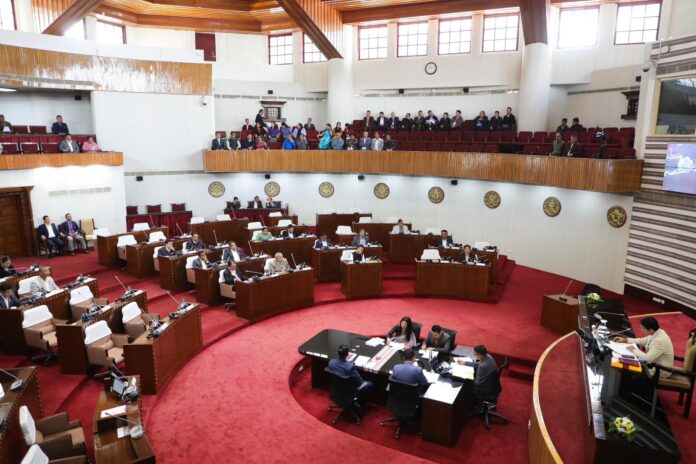
The recent press conference held at the Citizen Action Party’s (CAP) headquarters in Sikkim shed light on a deeply concerning issue: the precarious financial state of the state-owned Public Sector Undertakings (PSUs). Ganesh Rai, the leader of CAP, took the stage to reveal the distressing findings from the Comptroller and Auditor General (C&AG) of India’s audit of these entities, raising serious questions about their sustainability and impact on the state’s economy.

Ganesh Rai’s address to the media highlighted that the audit report, presented during a session at the Sikkim State Legislative Assembly, painted a disheartening picture of the PSUs’ financial health. These entities, established with the intent of driving economic growth and generating employment opportunities, have instead become a significant drain on the state’s resources. The accumulated losses of these PSUs for the fiscal year 2019-20 amounted to an astonishing Rs 2266.62 Crores.

Ganesh Rai emphasized the critical role that PSUs play in a state’s economic landscape. He pointed out that they are meant to contribute to revenue generation and employment opportunities, which in turn support the government’s developmental activities. However, the recent audit findings have highlighted a starkly different reality. Notably, a few PSUs managed to achieve negligible profits, while others suffered severe losses. This disparity in performance raises concerns about the effectiveness of the management and operations of these entities.

The audit report drew attention to several specific PSUs that are on the verge of closure due to their accumulated losses. Among these entities are Teesta Urja Limited (now renamed as Sikkim Urja Limited), Sikkim Power Investment Corporation Limited (SPICL), Sikkim Power Development Corporation Limited (SPDC), and SIDICO. The accumulated losses for these PSUs have eroded their capital to such an extent that they face an uncertain future. The audited figures show that the total outstanding loan till 2019-20 reached Rs 13468.47 Crores, the net loss for the same period was Rs 438.76 Crores, and the total capital employed was Rs 15054.90 Crores.

The state’s goal to promote developmental activities hinges on having a robust financial base, and the performance of PSUs has a significant impact on that objective. CAP’s press conference highlighted the urgency for the government to undertake measures to improve the financial health of these PSUs. This could involve restructuring, effective management strategies, and exploring opportunities for profit generation to mitigate the current losses.

The Sikkim government’s decision to levy a fine of Rs 5,000 for feeding monkeys has been seen as an effort to address the increasing instances of human-monkey conflict. However, this move also underscores the need for thoughtful conservation and wildlife management practices, especially considering the delicate balance between humans and animals in the region.

The CAP’s press conference raised a larger concern about the financial sustainability of state-owned enterprises and their ability to contribute positively to the state’s growth trajectory. As the government assesses its approach to PSUs, a comprehensive strategy to rejuvenate their financial health and operational efficiency could prove crucial to steering these entities away from further losses and potential closures.

Sikkim Government Launches Award Program to Honor Road Laborers

0
"Award program Launch"

The Sikkim state government has unveiled a commendable initiative aimed at acknowledging the remarkable efforts of road laborers who contribute to the maintenance, cleanliness of the state’s roads. Recognizing their pivotal role in enhancing the state’s beauty and infrastructure, a prestigious award program has been introduced, with each awardee set to receive Rs. 50,000.

Sikkim is renowned for its captivating landscapes and well-maintained roads, and this program seeks to appreciate the unsung heroes behind this achievement. Criteria for selection will encompass aspects such as road cleanliness, consistent maintenance, unwavering dedication to duty, and innovative approaches to road upkeep and beautification.

The awards will be presented to deserving laborers during the Labor Day celebrations. As said by chief Minister of Sikkim PS Golay in Tharpu Yesterday.

“I announced a significant initiative to recognize and award road laborers who have displayed outstanding dedication in maintaining the cleanliness, beauty, and the condition of the state’s roads. Sikkim is known for its picturesque landscapes and well-maintained roads and I thank them for their tireless efforts”, writes CM Tamang in his Social Media Page.

This gesture reflects the state government’s commitment to valuing the tireless contributions of these laborers, underscoring the crucial role they play in elevating the overall aesthetic and functionality of Sikkim’s roads. The initiative symbolizes gratitude for their dedication and stands as a testament to the harmonious collaboration between citizens and the government in shaping the state’s landscape.

Tshering Wangchuk Lepcha Appointed Advisor to Boost Sikkim Homestay Tourism

0
"Tshering Wangchuk Lepcha "

A promising new chapter unfolds as Shri Tshering Wangchuk Lepcha, the Additional Political Secretary to Honorable Chief Minister Shriman Prem Singh Tamang (Golay), assumes the mantle of Advisor to the Homestay Association of Sikkim (HAS). This strategic move, unveiled during HAS’s executive meeting at Dawnhill Nam Nang, Gangtok on Wednesday, underscores Sikkim’s resolute march towards rural empowerment and tourism expansion.

The gathering witnessed the convergence of esteemed figures, including Shri Jigmee Bhutia, HAS President, Shri Pintso Gyatso Bhutia, General Secretary-i of HAS, Shri Gyatso Lepcha, General Secretary-ii of HAS, as well as a consortium of stakeholders and dignitaries. Shri Tshering Wangchuk Lepcha’s appointment as Advisor drew from his robust background, notably his founding roles in several distinguished non-governmental organizations across Sikkim.

Shri Jigmee Bhutia, in his warm welcome, heralded Lepcha as a bridge-builder between the organization and the Sikkim Government, a testament to Lepcha’s community-centric ethos. The assemblage traversed a spectrum of pressing issues, delving into homestay policy frameworks, tourism promotion, homestay identity preservation, and more. The impending mega homestay project and the burgeoning influence of social media influencers also took center stage in the discourse.

Ren Pinsto Gyatso Bhutia, the General Secretary-i, illuminated the annals of HAS, recounting its commendable past initiatives and achievements. Newly appointed Advisor Shri Tshering Wangchuk Lepcha, stepping into his role with grace, expressed profound gratitude and unveiled his vision for transforming homestays into rural empowerment engines.

Lepcha’s vision converged with Chief Minister Shriman Prem Singh Golay’s ambition of cultivating an “Atmanirvan Sikkim” (self-reliant Sikkim). He exhorted HAS to play a pivotal role in realizing the government’s mega homestay project, advocating for synergy to steer clear of pitfalls that plagued previous undertakings.

The meeting’s conclusion resonated with optimism, reflective of shared commitment towards nurturing sustainable rural tourism and safeguarding local heritage. Shri Tshering Wangchuk Lepcha rallied for a grand homestay promotional gala in Gangtok, a platform to showcase the allure and authenticity of homestays, seeking the Chief Minister’s blessings for the endeavor.

As Shri Tshering Wangchuk Lepcha’s guiding influence merges with the Homestay Association of Sikkim’s zeal, a harmonious trajectory towards robust rural tourism development and realization of the Chief Minister’s vision unfolds. The executive meeting culminated on a note of aspiration, resonating with promise and potential.

India Achieves Historic Moon Landing with Chandrayaan-3: A Triumph of Precision

0
"Historic Moon Landing with Chandrayaan-3"

In a landmark achievement, India has carved its name into the annals of space exploration by successfully executing a soft landing on the lunar surface’s hitherto uncharted territory, the South Pole. The culmination of the Chandrayaan-3 mission marked a momentous occasion for the nation, with Prime Minister Narendra Modi extending his heartfelt congratulations to the citizens and the dedicated team of space scientists at the Indian Space Research Organisation (ISRO).


The history-making event was not without its challenges, especially during the nerve-wracking final minutes of the mission. These minutes, often referred to as the “20 or 17 minutes of terror,” proved to be the make-or-break phase, where the Vikram lander had to autonomously navigate, ignite its engines at precise moments, and gently touch down on the lunar surface. This cautionary approach stemmed from the setback experienced during India’s second lunar mission, Chandrayaan-2, when the Vikram lander’s landing attempt failed at the final moment.
The crucial phase began approximately 20 minutes before landing when ISRO initiated the Automatic Landing Sequence (ALS). This process empowered the Vikram lander with the capability to independently identify a suitable landing site, calculate the precise coordinates, and execute a soft landing with the aid of its onboard computers and logic.


Chandrayaan-3’s triumphant touchdown on the Moon on August 23, 2023, at 6.04 PM IST was the culmination of a 40-day journey that commenced at the Sathish Dhawan Space Center in Sriharikota. During this period, the Vikram lander relied solely on its internal systems to ensure a safe landing. Mission controllers at ISRO’s ISTRAC closely monitored the progress, but it was the onboard systems of the lander that bore the weight of responsibility during this pivotal phase.


The Chandrayaan-3 mission serves as a poignant sequel to the Chandrayaan-2 mission of 2019, which faced the challenges of lunar surface interaction. The primary goal of Chandrayaan-3 was clear: to demonstrate ISRO’s capability to achieve a soft lunar landing—a feat accomplished by only a select few nations, including the United States, the Soviet Union, and China.


Chandrayaan-2 was a complex endeavor that marked a significant technological leap for ISRO. It comprised an Orbiter, Lander, and Rover, all working in unison to explore the enigmatic South Pole of the Moon. The mission’s objectives encompassed a comprehensive study of lunar topography, seismography, mineral composition, surface chemistry, thermal characteristics of the lunar soil, and the composition of the lunar atmosphere. The results of these studies promise to deepen our understanding of the Moon’s origins and evolutionary processes.


In achieving this historic milestone, India has taken a giant leap forward in the field of space exploration. The successful landing of Chandrayaan-3 represents not only a testament to India’s burgeoning capabilities in space technology but also a moment of pride for the entire world. As we look to the future, it is inevitable that the legacy of Chandrayaan-3 will inspire further scientific exploration and innovation, propelling humanity’s quest to unravel the mysteries of the cosmos.

Sikkim Campaign “Meri Mati Mera Desh” Pays Tribute to Sacrifices of Heroes

0
"Sikkim campaign tribute to sacrifices of Heroes"

In a nationwide initiative dedicated to the heroes who have made sacrifices for the country, the campaign “Meri Mati Mera Desh” was observed at the Manan Kendra Gangtok. The event was graced by the distinguished presence of the Governor and the Chief Minister. 

The campaign, which aims to honor the sacrifices made by heroes for the nation, unfolded at the Manan Kendra in the capital city. The Governor of Sikkim, Shri Laxman Prasad Acharya, was the Chief Guest, while Honorable Chief Minister Shri Prem Singh Tamang was present as the special guest. The event marked the first phase of the program, with the formal inauguration of the Shilapalakam, a symbol of heroism, within the premises of the Manan Kendra.

Following the inauguration, the national tricolor flag was hoisted, accompanied by a stirring performance of the national song by artists from the Department of Culture. Chief Secretary VV Pathak delivered a welcoming address, and the Governor administered the Pancha Prana oath to the attendees, reaffirming their dedication to the nation’s values.

The occasion also saw a presentation by the Department of Information and Public Relations on the “Har Ghar Trianga” campaign, a noble initiative aimed at fostering a sense of national pride in every household in Sikkim. The event also witnessed the launch of the pre-merger Central Acts Extension and Enforcement book prepared by the Law Department, as well as the inauguration of the “Amin Management System” by the Gangtok District Governor.

The “Meri Mati Mera Desh” campaign, inaugurated by the Governor and the Chief Minister, was further highlighted through a documentary prepared by the Department of Information and Public Relations. Additionally, the “Agriculture Research Management System” was launched, and the documentary “Veeron Ka Bandan” was presented, both showcasing the dedication to heroes.

As part of the program, a slogan writing competition on Total Fertility Rate (TFR) was organized by Sikkim Inspires under the Planning and Development Department. The cultural aspect was not left behind, as artists from the Department of Culture presented captivating performances, adding vibrancy to the event.

The “Meri Mati Mera Desh” campaign not only paid homage to the sacrifices of heroes but also unveiled various initiatives aimed at fostering unity, pride, and development across the state.

Supreme Court Dismisses SLP Against Sunil Saraogi’s Appointment

0

The Supreme Court of India has upheld the appointment of Shri. Sunil Saraogi as the head of Sikkim Urja Limited, dismissing a Special Leave Petition (SLP) filed against his appointment. The apex court’s decision solidifies the excellent work carried out by Shri. Saraogi and his team, contributing to the turnaround of Sikkim Urja Limited from loss-making to profit-generating.

The SLP, filed by Shri. Jit Bahadur Limboo, sought to challenge the legitimacy of Shri. Saraogi’s appointment, alleging an ‘unfair and detrimental motive’. The dismissal of the SLP by the Supreme Court reflects its endorsement of the transparency and effectiveness of the appointment process.

Under Shri. Saraogi’s leadership, Sikkim Urja Limited has witnessed a remarkable transformation. Since his appointment by Chief Minister Shri. Prem Singh Tamang (Golay), the company has not only turned its financial trajectory around from losses to profits but has also significantly reduced its debt burden. The company’s debt, which stood at Rs. 11,000 Crores, has been successfully trimmed down to Rs. 7,300 Crores, showcasing Shri. Saraogi’s prudent financial management.

The verdict has been met with praise from various quarters, including business leaders, government officials, and citizens alike, who view this decision as a nod to the positive impact Shri. Saraogi’s tenure has had on the Sikkimese society. The Hon’ble Supreme Court’s decision reinforces the importance of leadership continuity and uninterrupted progress, which are pivotal for the growth and development of the state.

As the legal battle concludes, Shri. Sunil Saraogi can now focus his undivided attention on further advancing Sikkim Urja Limited’s mission of sustainable energy generation and contributing to the state’s economic and social advancement.

SDF’s Vision on International Youth Day 2023

0
"International youth day "

On the occasion of International Youth Day 2023, the Sikkim Democratic Front (SDF) produced a thought-provoking celebration that highlighted the core concerns and aspirations of the state’s young population. The event, marked by ceremonial lamp lighting and the resonating national anthem, served as a testament to SDF’s commitment to encouraging growth among Sikkim’s youth.

The day began with Dominic Syangbo’s enlightening discourse on entrepreneurship and technology. Syangbo’s insights illuminated the potential for these avenues to drive economic vitality and innovation within Sikkim, serving as catalysts for job creation and self-reliance.

Bandhana Sharma’s speech on health emphasized the need for accessible healthcare services and elevated health awareness, enabling the youth to lead healthier lives and contribute effectively to society.

Addressing the fundamental issue of law and order, Susil Rai delved into the significance of Section 371F. His speech shed light on the delicate balance between preserving cultural identity and maintaining a robust legal framework in the state.

Puran Chettri’s perspective on Sikkim’s tourism underscored the potential of this sector to not only boost the economy but also provide the youth with a range of employment opportunities.

The speech on protecting Sikkim’s environment resonated through Sahil Chettri’s passionate advocacy. His discourse on environmental preservation conveyed the urgency of sustainable development, ensuring that the state’s natural beauty remains a treasure for generations to come. Aditya Pradhan’s insights on the budget were enlightening, summarising the fiscal policies that would impact the youth’s prospects and Sikkim’s overall progress.

Sumitra Rai’s impassioned plea for women’s and children’s safety highlighted the need for comprehensive measures that guarantee their security and well-being. Rinzing Norbu Bhutia’s discourse on youth in politics encouraged young individuals to actively engage in shaping Sikkim’s political landscape, infusing fresh perspectives and enthusiasm.

Pawan Chamling, the SDF party president, concluded the event with a powerful speech on the party’s vision against the incumbent government’s performance. Expressing confidence in forming the next government, Chamling cited concerns of deteriorating law and order and mounting corruption under the current Chief Minister’s tenure.

In his rousing conclusion to the International Youth Day celebration, Pawan Chamling, the SDF party president, not only highlighted the party’s vision for Sikkim’s youth but also drew a stark comparison to the current state of affairs under Chief Minister PS Golay’s leadership. Chamling astutely pointed out that the incumbent Chief Minister had been focusing excessively on criticizing SDF and himself, seemingly diverting attention from the pressing issues at hand.

Chamling, reminiscing about the journey of progress and empowerment, showcased his visionary approach to youth development. He proudly narrated how he had initiated the transformation by introducing the OFOJ (One Family One Job) scheme, providing 20,000 Sikkimese families with employment opportunities. This initiative not only tackled unemployment but also ignited hope and optimism among the youth. Chamling boldly stated that if SDF were to return to power, the party would further refine and expand the OFOJ to regulations, ensuring consistent benefits for the people.

In a shrewd analysis, Chamling specified a perceived fear within PS Golay’s approach to change. He hinted at the notion that the current Chief Minister appeared hesitant to adapt to the evolving needs and aspirations of Sikkim’s populace, potentially hindering the state’s progress. This not only projected Chamling’s understanding of the need for dynamic leadership but also questioned the efficacy of the current administration’s strategies.

Chamling’s speech served as a powerful declaration of SDF’s commitment to the well-being of Sikkim’s youth and the state’s overall advancement. Through his words, he underscored the party’s legacy of driving change, fostering empowerment, and propelling growth. The event not only celebrated International Youth Day but also showcased SDF’s proactive stance in shaping the future of Sikkim by recognizing the youth as pivotal agents of change and progress.

In a comprehensive display of concerns ranging from entrepreneurship to environmental sustainability, the SDF’s International Youth Day celebration epitomized its commitment to nurturing a well-rounded and empowered youth demographic. By addressing issues that directly impact the state’s development and future, the event reflected SDF’s determination to lead Sikkim into a prosperous and progressive era.

Celebrating Unity, Freedom, and Progress: Jan Unmukti Diwas in Sikkim

0
"Jan Unmukti Diwas"

On August 10th, the vibrant Rangpo ground in Sikkim was adorned with an air of jubilation and camaraderie as the state came together to celebrate a momentous event – Unmukti Diwas. This celebration marked the commemoration of the release of Sikkim’s Chief Minister, Prem Singh Golay, from incarceration in 2018.

Amidst a sea of supporters, the day encapsulated unity, solidarity, and a shared vision for the state’s progress.

The event’s significance was underscored by the tremendous turnout from all corners of the state, reflecting the deep admiration and backing the people have for their leader. CM Golay’s liberation symbolized the triumph of justice and the collective voice of the populace, transforming the occasion into a resounding testament to unity and the strength of collective aspirations.

Central to the event was Sikkim’s politics of inclusivity, a core facet of CM Golay’s leadership. The concept of “Team Sikkim” echoed the importance of cooperation and combined action, prioritizing advancement over personal interests. This philosophy resonates profoundly in Sikkim’s diverse landscape, where unity remains pivotal for progress.

In an inspiring turn, the event also highlighted the formal integration of numerous distinguished individuals into the Sikkim Krantikari Morcha (SKM) party. Their decision signified a shared dedication to the state’s growth and development, affirming the transformative power of political engagement and public service.

Among the attendees was Chief Minister PS Golay himself, embodying resilience and aspiration. His journey from incarceration to leadership stands as a beacon of hope, motivating countless individuals to believe in their dreams and contribute to a brighter future.

The celebration was a vivid embodiment of SKM’s inclusive political ethos, transcending divisions and fostering cooperation among diverse backgrounds. The amalgamation of individuals under the SKM banner conveyed a compelling message: that united effort forms the bedrock of Sikkim’s advancement.

Behind the scenes, the relentless dedication of volunteers and organizers ensured the event’s seamless execution, mirroring the shared objective of elevating Sikkim and embodying the essence of Unmukti Diwas – a collaborative endeavor for freedom, unity, and prosperity.
In summation, the Unmukti Diwas celebration on August 10th encapsulated Sikkim’s journey – from CM Golay’s release to the state’s collective aspirations.

It epitomized unity, tenacity, and shared values, illuminating the path to a united and prosperous future. As Sikkim strides forward, let the celebration inspire each citizen to work collectively for the greater good and to construct a brighter tomorrow.