The 2026 BRICS Summit in New Delhi has brought security issues into sharper focus, with member countries looking at ways to cooperate on terrorism, maritime safety, emerging technologies and regional conflicts. Yet, despite closer defence ties among some members, the grouping appears unlikely to evolve into a formal military alliance.
The summit takes place amid an increasingly unsettled international environment. Conflicts in Ukraine and West Asia have affected shipping routes, energy markets and global supply chains, giving security concerns a larger place in discussions that have traditionally centred on economics and development.
For India, the challenge is particularly delicate. New Delhi maintains a longstanding defence relationship with Moscow while simultaneously strengthening its strategic engagement with Washington, European countries and partners in the Gulf. The approach reflects India’s preference for maintaining freedom of action rather than joining competing power blocs.
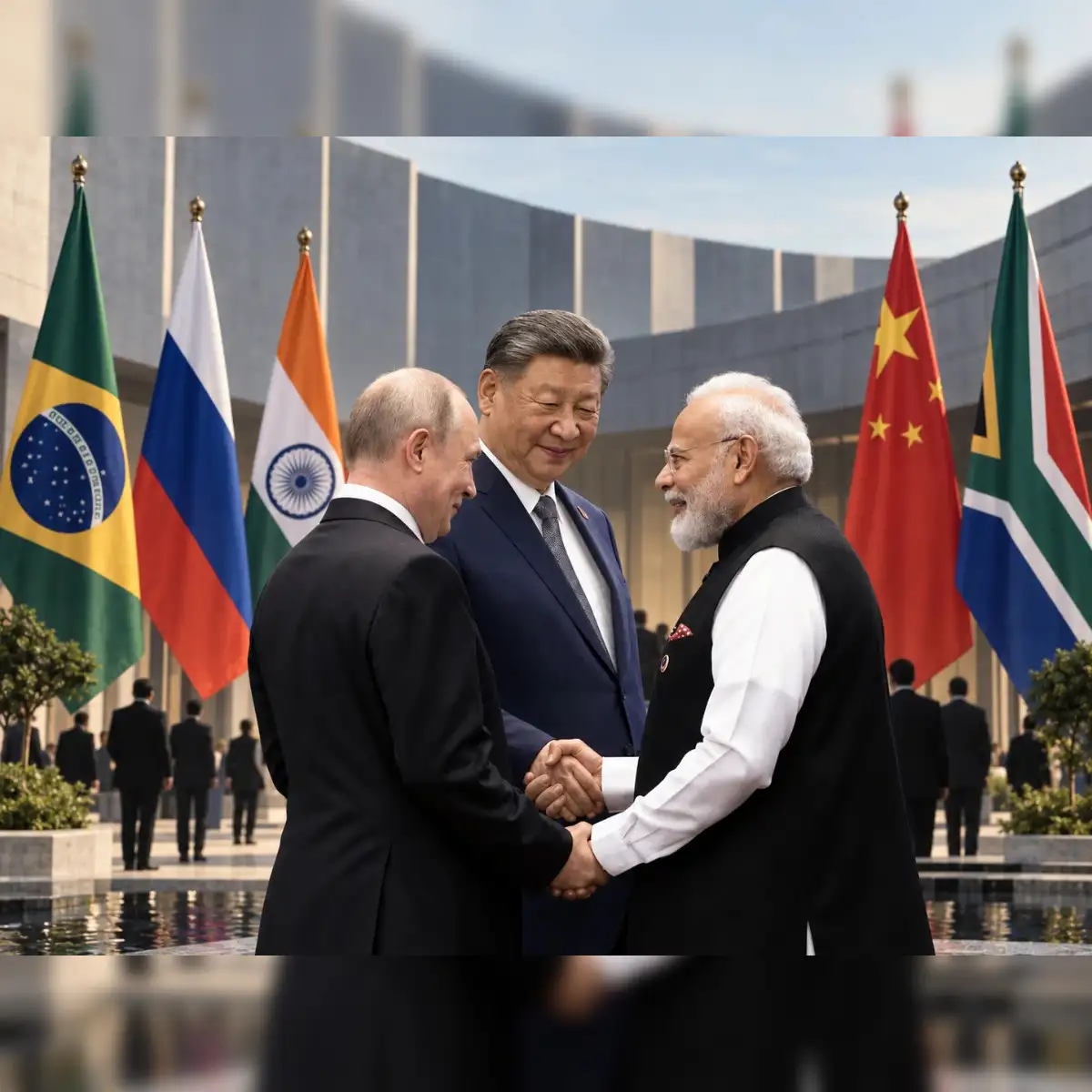
This balancing act was evident in Prime Minister Narendra Modi’s meeting with Russian President Vladimir Putin on September 11. The two leaders discussed bilateral defence cooperation and the effects of conflicts in West Asia and the Black Sea on maritime commerce and Indian sailors. Their talks also reaffirmed the broader strategic partnership between India and Russia.
Security cooperation within BRICS, however, has its limitations. The expanded grouping contains countries with contrasting geopolitical interests. India and China remain strategic rivals, while the Middle Eastern members have different priorities on regional conflicts. These differences make agreement on a common military doctrine extremely difficult.
Rather than creating a joint military structure, BRICS is increasingly concentrating on areas where cooperation is more achievable. Counter-terrorism, intelligence exchanges, cyber security, protection of critical infrastructure and the safety of international shipping offer potential avenues for collaboration.
Maritime security has gained particular importance for India. Recent conflicts have shown that attacks or instability in strategic waterways can quickly affect trade, fuel supplies and the wider global economy. India’s push for greater cooperation on the protection of seafarers and maritime trade therefore gives the BRICS security agenda a practical dimension.
Russia, meanwhile, has promoted a stronger role for BRICS in shaping an international system less dependent on Western institutions. Moscow has argued that the grouping can provide emerging economies with greater influence over global political and economic decisions, particularly at a time of rising tensions between Russia and Western countries.
China has also supported a broader role for BRICS, including closer cooperation in technology, finance, trade and global governance. Beijing’s position gives the grouping an additional strategic dimension, although India has remained cautious about allowing BRICS to be portrayed as an anti-Western coalition.
For New Delhi, the distinction is important. India wants BRICS to strengthen the voice of developing countries while preserving its own room for manoeuvre in international affairs. It continues to cooperate with Russia on defence and energy while deepening security and economic relations with the United States, Europe, Japan, Gulf countries and Israel.
The 2026 summit therefore reflects a gradual expansion of BRICS’ security role rather than the emergence of a collective defence organisation. The grouping has no common military command, mutual-defence commitment or unified strategic doctrine.
Its future security cooperation is more likely to develop through practical initiatives — including counter-terrorism, maritime protection, intelligence sharing, cyber security, defence technology and safeguarding critical trade routes.
The challenge will be maintaining cooperation among countries whose strategic interests frequently diverge. India-China tensions, differing positions over Ukraine and competing interests in West Asia could limit how far the members are prepared to go on defence matters.
For India, however, a flexible BRICS security framework could prove valuable. It allows New Delhi to work with Russia, China, Iran and other members on specific international security concerns without committing itself to a military bloc.
The New Delhi summit has consequently reinforced BRICS as a broader strategic forum. Its evolution is likely to be gradual: not a BRICS version of NATO, but a network in which countries cooperate selectively on security while retaining independent defence and foreign policies.