Thursday, May 7, 2026
Home Blog Page 5

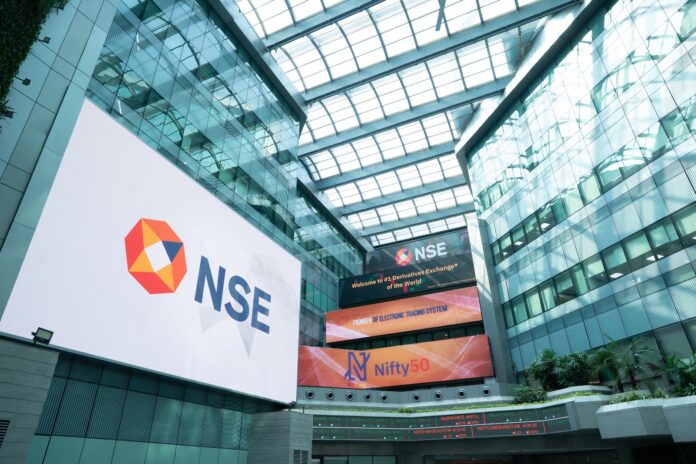
NSE Moves Closer to IPO, Approves Coal Exchange Plan

0

The NSE Board has taken key decisions related to its future plans.

As part of preparations for its proposed IPO, NSE has strengthened its governance framework by reconstituting a dedicated IPO (Initial Public Offering) Committee.

The composition of the re-constituted IPO Committee is as follows:

-Shri. Tablesh Pandey – Chairperson (Non-Independent Director)

-Shri. Srinivas Injeti – Member (Public Interest Director)

-Prof (Dr.) Mamata Biswal – Member (Public Interest Director)

-Justice (Retd.) Smt. Abhilasha Kumari – Member (Public Interest Director)

-Prof. G. Sivakumar – Member (Public Interest Director)

-Shri. Ashishkumar Chauhan – Member (Managing Director & CEO)

The NSE Board has approved the incorporation of a wholly owned subsidiary to set up a coal exchange, subject to regulatory approvals.

The proposed subsidiary may be named National Coal Exchange, Bharat Coal Exchange, or India Coal Exchange, as approved by the Ministry of Corporate Affairs.

The coal exchange will be incorporated in line with the Coal Regulations, 2025, notified by the Ministry of Coal. NSE has approved capital infusion of up to ₹100 crore in the proposed coal exchange subsidiary.

The National Stock Exchange of India (NSE) is India’s leading stock market platform and one of the world’s largest derivatives exchanges.

NSE MD & CEO Welcomes Union Budget 2026–27 for Balancing Growth, Fiscal Discipline and Future-Ready Reforms

0

The Managing Director and Chief Executive Officer of the National Stock Exchange of India (NSE), Shri Ashishkumar Chauhan, today shared his views on the Union Budget 2026–27, highlighting its strong emphasis on fiscal consolidation, infrastructure-led growth, deepening of financial markets, and strategic investments in future-oriented sectors.

Commenting on the Union Budget, the MD & CEO said:
“The Union Budget 2026–27—the first from the Kartavya Bhavan and the ninth consecutive budget by the Hon’ble Finance Minister—Nirmala Sitharaman reinforces the message that strong growth and fiscal discipline can advance together.

It stays firmly on the consolidation path, with the fiscal deficit easing from 4.4% to 4.3% of GDP and debt-to-GDP declining from 56.1% to 55.6%, keeping India on track toward the 50% ±1% target by FY31. This signals macro stability and policy credibility to investors and markets.

Infrastructure remains the central growth lever, with public capex rising about 12% to ₹12.2 lakh crore, aimed at crowding in private investment, boosting productivity, and reducing logistics costs. The budget also deepens financial markets through calibrated measures—higher STT on derivatives to curb excess speculation, PSU asset monetisation via REITs, introduction of bond index derivatives, and a stronger market-making framework for corporate bonds. Enhanced income exemption limit for Gift City (10 to 20 years) would make it more attractive for FPIs.

Urban finance receives a boost through renewed emphasis on municipal bonds, while regulatory reforms in foreign exchange and capital markets improve ease of doing business and global integration.

Allowing NRIs direct portfolio access to Indian equities taps long-term diaspora capital.

Crucially, the budget looks ahead, prioritising strategic and future sectors—semiconductors, AI, advanced manufacturing, bio-pharma, rare earths, tourism, and textiles—to drive innovation, exports, and high-quality jobs.

Overall, Budget 2026–27 combines fiscal prudence, infrastructure-led growth, market deepening, and future-ready reforms—laying a strong foundation for India’s trajectory towards Viksit Bharat 2047.”

The National Stock Exchange of India (NSE) is India’s leading stock exchange, operating a modern, fully automated trading platform with nationwide reach and playing a pivotal role in the development of India’s capital markets.

Air Marshal Devendra P Hirani Takes Over as Senior Air Staff Officer, Eastern Air Command

0

Air Marshal Devendra P Hirani assumed charge as the Senior Air Staff Officer (SASO) at Headquarters Eastern Air Command of the Indian Air Force on February 1, 2026. His appointment marks the induction of a highly experienced officer into a key operational and administrative role at the Command.

Commissioned into the Indian Air Force on December 15, 1990, Air Marshal Hirani is a Qualified Flying Instructor with nearly 5,000 hours of flying experience on a wide range of helicopters and trainer aircraft. He is an alumnus of the National Defence Academy and has undergone advanced professional military education at the Defence Services Staff College, the College of Defence Management, and the National Defence College in Dhaka, Bangladesh.

During his distinguished career, Air Marshal Hirani has commanded a training unit as well as important frontline air bases in the Northern Sector. He has also held several critical staff appointments at Headquarters Integrated Defence Staff, Air Headquarters, various Command Headquarters, and Headquarters Army Officer Commanding (Jammu, Kashmir and Ladakh). He has served as an inspector with the Directorate of Air Staff Inspection.

The Air Marshal has also represented India on the global stage, having been deputed to the Democratic Republic of Congo as part of a United Nations Peacekeeping Mission. Prior to assuming his current responsibility, he served as Assistant Chief of the Air Staff (Personnel, Airmen and Civilians).

In recognition of his meritorious and distinguished service, Air Marshal Devendra P Hirani was awarded the Vishisht Seva Medal in 2015 and the Yudh Seva Medal in 2022.

Air Marshal Inderpal Singh Walia Takes Over as AOC-in-C, Eastern Air Command

0

Air Marshal Inderpal Singh Walia assumed charge as the Air Officer Commanding-in-Chief (AOC-in-C) of the Eastern Air Command (EAC), Indian Air Force, on February 1, 2026. His appointment comes under the spirit of ‘Har Kaam Desh Ke Naam’, reflecting continued commitment to service and operational excellence.

An alumnus of the National Defence Academy, Air Marshal Walia was commissioned into the fighter stream of the Indian Air Force on June 11, 1988. He is a highly experienced fighter pilot, qualified on multiple aircraft platforms including the MiG-21, MiG-23, MiG-27, Jaguar and Su-30 MKI, with over 3,200 hours of accident- and incident-free flying to his credit.

Over a distinguished career spanning more than three decades, he has held several key command and staff appointments. He has commanded a MiG-27 Squadron, led the prestigious Tactics and Air Combat Development Establishment (TACDE), and served as Air Officer Commanding of a frontline air base. A Fighter Strike Leader and Instrument Rating Instructor and Examiner, he has also undergone the Advanced Command and Staff Course in the United Kingdom and the National Defence College in Bangladesh.

Air Marshal Walia has served as Defence Attaché at the Indian Embassies in Japan and South Korea and held important appointments including Air Commodore at the Directorate of Air Staff Inspection, Assistant Chief of Air Staff (Training) at Air Headquarters, and Air Defence Commander at Headquarters Western Air Command. Prior to his current role, he was the Senior Air Staff Officer at Headquarters Eastern Air Command.

In recognition of his exemplary service, he was awarded the Vayu Sena Medal in 2008 and the Ati Vishisht Sena Medal in 2018. He succeeds Air Marshal Surat Singh, who superannuated on January 31, 2026, after rendering 39 years of dedicated service to the nation.

Authorities Flag Ecological Risk as Illegal Magur Fish Movement Detected in East Sikkim

0

The Fisheries Department, Pakyong District has stepped up monitoring and field action after detecting repeated violations linked to illegal fish imports and the sale of banned species across parts of East Sikkim.

Officials said intensified checks at Rangpo—Sikkim’s main entry point—led to the detection of undeclared fish consignments and the illegal movement of live Thai Magur. Night-time inspections of fish-transport vehicles were carried out to track supply routes and verify whether consignments met safety and regulatory standards.

Thai Magur (Clarias gariepinus), an invasive species prohibited under government guidelines, remains banned due to its impact on native aquatic life. The department noted that unauthorised trade in such species not only undermines biodiversity but also carries food safety concerns and revenue losses for the state.

Parallel inspections were conducted at fish vending points in Rangpo, Majhitar, Singtam, IBM and nearby areas. Vendors operating without valid approvals were instructed to regularise documentation, while outlets found selling banned Magur species faced seizure and safe disposal of stock. Officials reiterated compliance requirements related to hygiene, storage, icing and waste handling.

The department also highlighted a recurring concern where live Magur fish are purchased for ritual release during religious observances. Authorities cautioned that releasing invasive species into rivers disrupts fragile ecosystems and harms indigenous fish populations. To address this, awareness efforts are being reinforced, and locally available native species such as Katley and Bhitti are being promoted as alternatives for ceremonial purposes.

River patrols were carried out in coordination with local protection committees across stretches including Rangpo, Reshi Khola, Rorathang, Kumrek and surrounding areas. While some cases of unlicensed fishing and gill net use were identified, officials observed improved compliance in other zones, along with visible recovery of native fish species—an indication that conservation measures are beginning to show results.

4000 electric buses, Buddhist circuits to be developed across six North-Eastern states

0

In Budget 2026, Finance Minister Nirmala Sitharaman unveiled a focused push to position the North-East as a major spiritual and cultural tourism destination, announcing a new scheme to develop Buddhist circuits across six North-Eastern states. The initiative spans Arunachal Pradesh, Sikkim, Assam, Manipur, Mizoram, and Tripura, with the aim of strengthening pilgrimage tourism while preserving the region’s deep-rooted Buddhist heritage.

The scheme focuses on conservation of temples and monasteries, development of pilgrimage interpretation centres, improved connectivity, and upgraded pilgrim amenities to support year-round tourism.

Complementing this cultural push, the Budget also announced 4,000 electric buses for the North-East, reinforcing sustainable mobility and last-mile access for tourists and locals alike. Together, these measures signal a dual strategy, heritage-led tourism growth paired with green infrastructure, positioning the North-East as both spiritually significant and future-ready.

50-Year-Old Worker Killed After Mudslide at Makha Road Project

0

A road widening project near Makha Outpost is under investigation following the death of a labourer in a sudden landslip on the morning of January 30, 2026.

The deceased has been identified as Harka Bahadur Sanyasi (Chettri), around 50 years old, a resident of Sudunglakha under Rhenock. He was engaged in shuttering work at the site when a collapse of soil and debris occurred at approximately 9:55 am, burying him at the spot. The project was being carried out by Shivalik Buildtec Pvt. Ltd.

According to police sources, safety norms were allegedly ignored at the worksite despite earlier warnings issued by Makha Outpost In-Charge ASI Hari Prasad Adhikari. Labourers were reportedly working without proper safety gear when the incident took place.

Rescue operations were immediately initiated using heavy machinery, but the labourer was retrieved lifeless from under the debris. Preliminary findings point towards negligence by the project authorities, including Project Manager Kailash Chand Jat, for failing to ensure mandatory safety precautions.

An Executive Magistrate has been informed to conduct inquest proceedings. The post-mortem examination was carried out at the District Hospital, Singtam. Further investigation into the incident is currently underway.

NSE Chairperson Hails SEBI No-Objection for IPO as Key Milestone

0

Mumbai, January 30, 2026: The Chairperson of the National Stock Exchange of India (NSE), Shri Srinivas Injeti, today hailed the Securities and Exchange Board of India’s (SEBI) no-objection certificate (NOC) for the Exchange’s proposed Initial Public Offering (IPO), marking a significant regulatory milestone in NSE’s growth journey.

Commenting on the development, the Chairperson said: “We are delighted to receive SEBI approval for our IPO — a significant milestone in our growth journey; with SEBI’s approval, we embark on a new chapter of value creation for all our stakeholders, and this approval also reinforces confidence in NSE being an integral part of the Indian economy and a beacon of Indian capital markets.”

The receipt of SEBI’s no-objection certificate enables NSE to proceed with the next steps towards its proposed public listing, in accordance with applicable regulatory requirements.

As India’s leading stock exchange and a critical pillar of the country’s financial market infrastructure, NSE continues to focus on strengthening governance standards, enhancing transparency, and supporting the long-term development of India’s capital markets.

Bharat Rang Mahotsav 2026 to Be Organised in Largest-Ever Global Edition

0

The National School of Drama (NSD) has announced that the 25th edition of Bharat Rang Mahotsav (BRM) 2026, the world’s largest international theatre festival, will be held on an unprecedented scale from 27 January to 20 February 2026, spanning 40 locations across India and one country in each of the seven continents.

As per a press release issued by the NSD Sikkim Centre, the landmark edition will feature 277 theatre productions, including 238 Indian plays and 12 international productions. Notably, 33 productions directed by women will also be showcased, underlining the festival’s commitment to inclusivity and representation. The productions have been selected through a rigorous screening process involving 817 national and 34 international applications.

Performances will be staged in 228 languages and dialects, reflecting India’s rich cultural and linguistic diversity. The festival will also present 19 university productions and 14 local productions, while expanding its linguistic canvas to include Maithili, Bhojpuri, Tulu, Urdu, Sanskrit, Tai Khamti, Nyishi, along with several tribal and endangered languages.

Several new centres have been added to BRM 2026 for the first time, including Ladakh, Andaman & Nicobar Islands, Lakshadweep, Daman & Diu, Aizawl, Tura, Nagaon, Mandi, and Rohtak. The festival will feature curated events such as Adirang Mahotsav, Jashn-e-Bachpan, Bal Sangam, Poorvottar Natya Samaroh, Puppet Theatre Festival, Dance Drama Festival, Classical Drama Festival, and the Micro Drama Festival.

The 25th edition of Bharat Rang Mahotsav (BRM 2026), organised by the National School of Drama (NSD), will be held from 27 January to 20 February. The festival will showcase 277 theatre performances, including 238 Indian and 12 international productions, presented in 228 languages across 40 locations in India—including Sikkim—as well as one venue on each continent.

NSD Sikkim Director Souti Chakraborty stated that the final lineup was selected from 817 national and 34 international entries. The programme also includes 19 university productions, 14 local performances, and 33 plays directed by women, reflecting the festival’s diverse and inclusive approach.

BRM 2026 will pay tribute to eminent historical figures and legendary theatre personalities, while also presenting performances by transgender communities, sex workers, senior citizens, and other underrepresented social groups for the first time. Folk art and street theatre performances, seminars, workshops, and master classes will further enrich the festival.

The Sikkim chapter of BRM 2026 will be held from 1st to 4th February 2026 at the NSD Studio Theatre, Gangtok.

UGC to Be Abolished, HECI to Replace It: Education Reforms Trigger Nationwide Debate

0

The Government of India has initiated a major overhaul of the higher education regulatory framework, setting in motion the process to abolish the University Grants Commission (UGC) and repeal the UGC Act, 1956. In its place, a new regulatory body—the Higher Education Commission of India (HECI)—is set to be established, marking one of the most significant reforms in India’s education sector in decades.

Amid this transition, the UGC notified the University Grants Commission (Promotion of Equity in Higher Education Institutions) Regulations, 2026 in the Gazette of India on January 13, 2026, in compliance with a deadline set by the Supreme Court of India. However, the notification sparked widespread protests and sharp reactions across the country, particularly among sections of students and the general category community.

The controversy centred on the formation of a 10-member Equity Committee under the new regulations, where 50 per cent of the members are from reserved categories, while the remaining members include vice-chancellors, assistant professors, eminent citizens, and student representatives—who may belong to the general category. Critics alleged potential bias and misuse of authority, triggering mistrust and intense political discourse.

Supporters of the regulations, however, argue that the uproar is based on assumptions and exaggeration. They contend that questioning the integrity of committee members solely on the basis of caste undermines the very principles of equality and justice. Observers have pointed out that such distrust also casts aspersions on constitutional authorities and academic leaders drawn from diverse backgrounds.

Against this backdrop, the government has moved forward with structural reforms under the National Education Policy (NEP) 2020. The proposed Viksit Bharat Shiksha Adhishthan Bill (VBSAB), 2025, approved by the Union Cabinet in December 2025, aims to replace UGC, AICTE, and NCTE with HECI.

The HECI will function through four verticals: regulation (NHERC), accreditation (NAC), funding (HEGC), and academic standards (GEC). The reform seeks to reduce bureaucratic interference, end the “inspection raj,” and grant greater autonomy to higher education institutions.