Saturday, October 17, 2026
Home Blog Page 17

Divorced Woman Raises Concern Over Job Application Forms in Sikkim

0

A divorced woman from Sikkim has raised concerns over the insensitivity of government job application forms that continue to restrict “Marital Status” options to only two categories — Married or Unmarried.

The applicant, who recently applied for a government post, expressed her frustration, saying the system fails to recognize the independent identity of divorced women. “I am not unmarried — I was married for four years, so no authority can issue me an unmarried certificate. But I am also not married anymore. Why should I still claim to be married to my ex-husband who is already remarried?” she asked.

She pointed out that such limitations create unnecessary hurdles for divorced women. “If I am unmarried, I need my father’s documents; if I am married, I need my husband’s. Do I not have an identity of my own? What is the point of owning a Certificate of Identification if it just sits laminated in my briefcase?” she questioned.

The woman also criticized the state’s repeated emphasis on Nari Shakti and Women Empowerment, calling it symbolic rather than practical. “We celebrate women’s empowerment days, hold programmes and campaigns, but in real policies like this, where is the recognition of women and their rights?” she said.

Her grievance highlights the urgent need for reforms in government documentation and job application forms to include additional categories such as Divorced and Widowed. Advocates say this change is necessary to ensure fairness, dignity, and equal recognition for all women in Sikkim.

Sadar Police Station Named Best in Sikkim for 2024

0

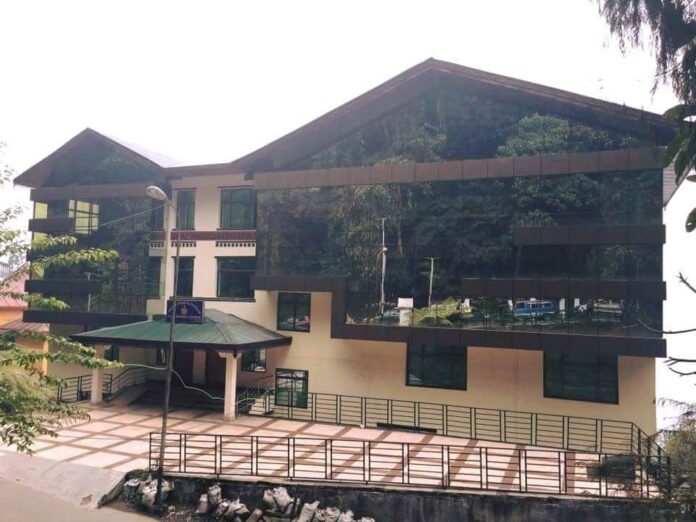
Sadar Police Station in Gangtok has been ranked the best police station in Sikkim for 2024 under the annual “Ranking of Police Stations” released by the Ministry of Home Affairs, Government of India.

The Ministry’s ranking exercise evaluates police stations across the country based on crime prevention, investigation standards, disposal of cases, infrastructure, and public feedback. Sadar Police Station topped the list for Sikkim, highlighting its effective law enforcement, citizen-friendly service, and professional policing.

Officials stated that the recognition reflects the dedication and commitment of the Sadar PS team in maintaining law and order, ensuring public safety, and building trust within the community.

The Ministry of Home Affairs launched the annual ranking initiative to encourage healthy competition among police stations and strengthen the overall policing system in India. In 2024, Sadar Police Station joins 35 other top-ranked police stations across states and Union Territories that have been recognized for excellence.

Pop-Up Rain Gun Sprinkler Irrigation System Inaugurated at Sikkim Cricket Ground

0

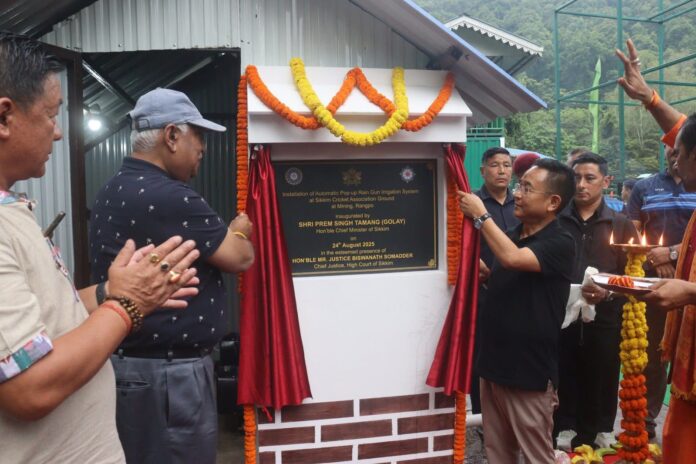
The Sikkim Cricket Ground, also known as Mining Ground, has taken another big step in modern cricket infrastructure with the inauguration of an Automatic Pop-Up Rain Gun Sprinkler Irrigation System.

The facility was inaugurated by Shri Prem Singh Tamang (Golay), Hon’ble Chief Minister of Sikkim, in the presence of Justice Biswanath Somadder, Hon’ble Chief Justice of the High Court of Sikkim, along with cabinet ministers, MLAs, senior government officials, and members of the Sikkim Cricket Association (SICA).

Advanced Irrigation for Better Ground Management

The automatic sprinkler system is designed to improve ground maintenance and ensure efficient water usage. A total of 16 underground pop-up sprinklers have been installed, which water designated areas and retract back into the ground, leaving no obstacles on the playing surface.

Six small sprinklers cover the pitch area, while ten large sprinklers irrigate the outer field. Two automated control stations manage the system, ensuring balanced coverage across both high-use zones and the outfield. This technology will help SICA maintain the ground in top condition for state, national, and BCCI-approved tournaments.

CM XI vs CJ XI Exhibition Match

To mark the occasion, a special exhibition cricket match was played between CM XI, led by the Chief Minister, and CJ XI, captained by the Chief Justice. The friendly match highlighted the camaraderie between the executive and judiciary, making the inauguration a memorable event for Sikkim cricket.

SICA’s Vision for Sikkim Cricket

Speaking at the event, Shri Tika Subba, President of SICA, said: “This irrigation system is a great step forward for Sikkim cricket. It makes ground maintenance easier and more efficient. We are thankful to the Hon’ble Chief Minister for inaugurating the facility and supporting our efforts.”

The Sikkim Cricket Ground has already seen major upgrades in recent years. In 2022, it became a first-class venue with the support of the Board of Control for Cricket in India (BCCI) and has since hosted Ranji Trophy matches and other national competitions. In May 2025, floodlights were inaugurated, enabling day-night matches and extended practice sessions.

About Sikkim Cricket Association

Founded in 1987, the Sikkim Cricket Association (SICA) is the governing body of cricket in the state. It became a BCCI Associate Member in 1992 and a Full Member in 2018. Headquartered at the Sikkim Cricket Ground, Rangpo, SICA manages cricket development across all levels, including grassroots programs, state-level leagues, and national tournaments like the Ranji Trophy, Vijay Hazare Trophy, and Syed Mushtaq Ali Trophy.

With continuous infrastructure upgrades and strong backing from the Government of Sikkim and BCCI, the state is emerging as a rising hub for cricket in Northeast India.

BTR Gorkha Samaj Marks Foundation Day with Awards; Raju Dhakal Among Honourees

0

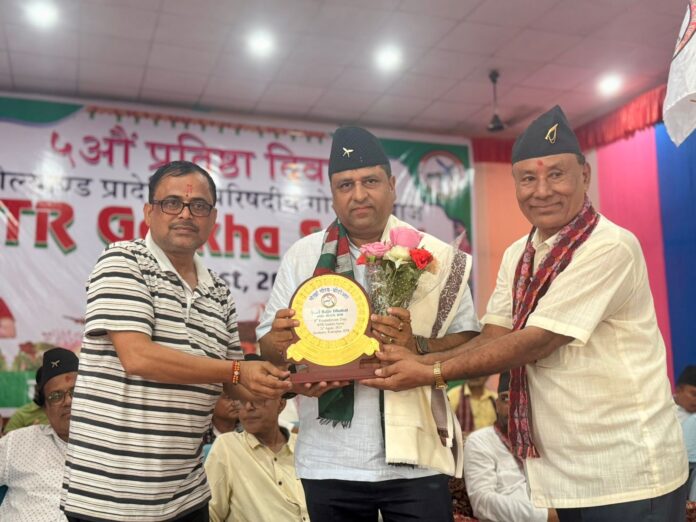
The Central Committee of BTR Gorkha Samaj celebrated the 34th Nepali Language Recognition Day alongside its 5th Foundation Day and 1st Convention with a special ceremony held at Saralpara in Kokrajhar district. The event brought together community members and dignitaries including MLA Lawrence Islary, former ministers Chandan Brahma and former deputy chief executive member Kampa Borgoyary, and leaders from various organisations.

As part of the celebration, the society conferred the Gorkha Gaurav Samman on distinguished personalities across different fields.

Cultural Contributions: Senior activists Shanta Sirpali and Ram Rai

Journalism: Veteran journalists Krishnaraj Sangraula and Nand Budhathoki

Politics: MCLA Madhav Chettri and Raju Dhakal, General Secretary of Assam Gorkha Sammelan and OSD to CEM BTR Pramod Boro

Among the awardees, Raju Dhakal’s recognition stood out, with speakers highlighting his role in raising issues such as the D-voter problem, biometric data exclusions, land rights, and Gorkha representation in Assam’s political landscape. Alongside policy advocacy, his involvement in health, education, and welfare programmes has been widely acknowledged.

The awards, presented by the Central Committee of BTR Gorkha Samaj, were described as a tribute to individuals whose work has strengthened the cultural identity, democratic values, and social upliftment of the Gorkha community in the Bodoland Territorial Region.

Sikkim Minister N.B. Dahal Meets NHIDCL MD to Push Highway Development

0

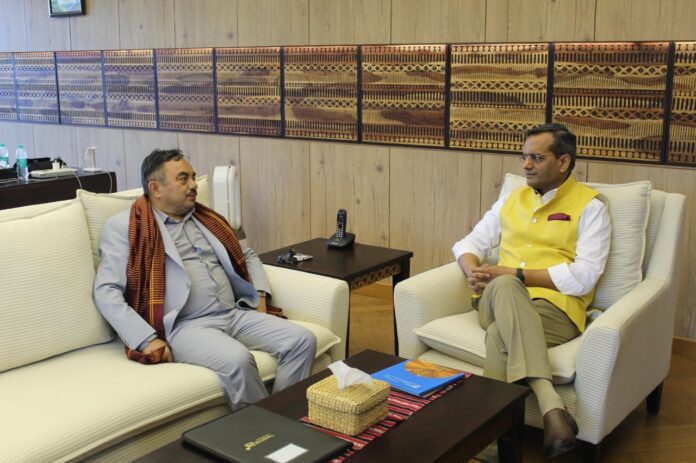
In a bid to accelerate Sikkim’s road connectivity, Shri N.B. Dahal, Minister for Roads and Bridges, met Dr. Krishan Kumar, Managing Director of NHIDCL, in the national capital today. Acting under the guidance of Chief Minister Shri Prem Singh Tamang, the Minister emphasized the urgent need for highway expansion and repair works critical to the state’s transport network.

Key discussions focused on the alternative highway from Melli to Singtam, a project already sanctioned by the Government of India, as well as the long-pending maintenance of the NH-10 stretch between Coronation Bridge and Rangpo, which serves as Sikkim’s vital lifeline.

Dahal also highlighted concerns regarding the Legship–Gyalshing alternative highway in West Sikkim, pointing out that a section of the road passes close to the Mahatma Sirijunga premises, requiring sensitive planning and execution.

The meeting signals Sikkim’s proactive approach to resolving connectivity challenges and ensuring smoother travel routes for both commuters and goods movement in the Himalayan state.

Senior Chinese Diplomat Liu Jianchao Detained in Surprise Move for Raising Questions 

0

In a development that has sent ripples through Beijing’s diplomatic circles, Chinese authorities have detained Liu Jianchao, a senior diplomat widely seen as a frontrunner for the role of China’s next foreign minister. According to multiple sources, the 61-year-old was taken in for questioning in early August, shortly after returning from a work trip to Singapore, South Africa, and Algeria. His home was also searched, though no official explanation has been provided.

Liu’s sudden removal marks the most high-profile diplomatic disappearance since former foreign minister Qin Gang’s dramatic ouster in 2023. Analysts suggest the move may be tied to President Xi Jinping’s continuing anti-corruption campaign, which has often overlapped with internal power struggles at the top of the Communist Party.

Oxford-educated and fluent in English, Liu has long been regarded as one of Beijing’s most polished communicators. Since 2022, he has led the Communist Party’s International Department, a body tasked with managing ties with foreign political parties. Foreign diplomats often praised him for his confident, approachable style and ability to engage spontaneously, a contrast to his more cautious predecessors.

His detention, however, leaves a significant gap in China’s diplomatic leadership at a time of mounting geopolitical pressures. Liu was widely expected to succeed Wang Yi as foreign minister, particularly after a high-profile 2024 visit to Washington that many saw as a trial run for the role.

“If true, Liu Jianchao’s downfall creates a deeper leadership vacuum in China’s foreign affairs,” said Wen-Ti Sung of the Atlantic Council.

For now, Liu’s profile remains on the Party’s website. But his unexplained detention underscores the opaque nature of Chinese elite politics—where even the country’s most promising diplomats can suddenly vanish.

China to Drop Tibetan Language from College Entrance Exams

0

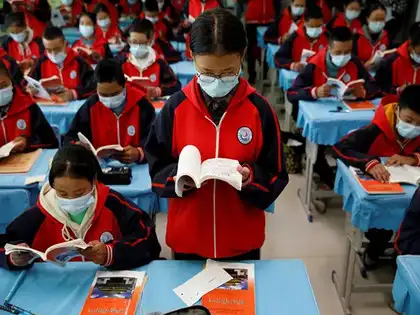
China has announced that the Tibetan language will no longer be a core subject in the country’s national college entrance examination, or gaokao, a move that has drawn sharp criticism from Tibetan groups and human rights organizations.

At a press briefing in Beijing, Gama Cedain, chairman of the Tibet Autonomous Region (TAR) government and the region’s deputy party secretary, confirmed that the reform is aimed at “standardizing” exams across provinces by prioritizing Chinese, mathematics, and foreign languages such as English, Russian, Japanese, French, German, and Spanish. He argued that the change would “improve Tibetans’ career prospects” and provide “fairer access to high-quality education.”

However, Tibetan activists say the reform undermines the cultural and linguistic identity of Tibetans, who already face restrictions on language use in schools and workplaces. Under the new rules, Tibetan will only be available as an optional subject for students applying to specialized fields such as Tibetan literature—meaning only a small minority of students will study it at higher levels.

“Once you no longer have the Tibetan language in your entry exam, it ceases to be a practical skill for employment or professional growth,” Dawa Tsering, director of the Dharamshala-based Tibet Policy Institute, told Tibetan Review. Critics fear the absence of Tibetan in mainstream examinations will discourage students from learning it, while also leading to teacher reassignments or redundancies.

The announcement comes amid what observers describe as a broader campaign of “sinicization” under Chinese President Xi Jinping. Similar policies have been implemented in other minority regions such as Inner Mongolia and Xinjiang, where local languages were sidelined in favor of Mandarin.

UN human rights experts have previously urged Beijing to safeguard Tibet’s linguistic and cultural heritage, warning that such policies risk eroding minority identity. Nonetheless, Beijing continues to frame these reforms as “modernization” and “integration” into the national mainstream.

The decision underscores the Chinese government’s determination to align education in TAR more closely with Han Chinese norms, raising concerns about the survival of Tibetan as a living, professional, and cultural language.

CM Launches MYUVY Scheme on World Entrepreneurs’ Day

0

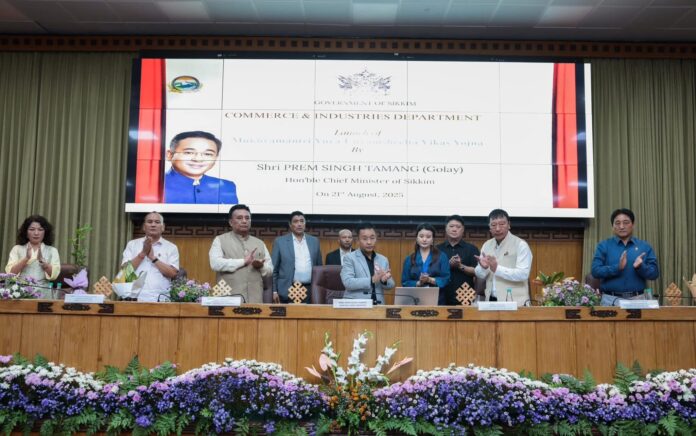
Chief Minister Prem Singh Tamang-Golay today attended the World Entrepreneurs’ Day 2025 celebrations at Chintan Bhawan, where he launched the Mukhyamantri Yuva Udhyamsheelta Vikash Yojana (MYUVY), a new initiative offering financial support of up to ₹5 lakh to promising young entrepreneurs.

Highlighting his government’s commitment to fostering innovation, the Chief Minister recalled several ongoing initiatives such as SEED Cell, Sikkim INSPIRES, and the Skilled Youth Startup Scheme. He encouraged the youth of Sikkim to embrace risk-taking, creativity, and self-employment, moving beyond the reliance on traditional government jobs.

As part of the program, cheques were distributed under MYUVY, CMDG, CMSEAS, and CMEAS schemes, reflecting the government’s continued focus on strengthening the entrepreneurial ecosystem.

The Chief Minister underlined that entrepreneurship is not just about building businesses but also about creating opportunities, driving sustainable growth, and shaping the future of Sikkim.

The Issue of Inclusion of 12 Left-Out Communities as Scheduled Tribes : Who is the real visionary?

0

In regard to the issue of 12 Left-Out communities for inclusion as Scheduled Tribes, we have till date seen two governments work on it. In the past, the government led by Shri Pawan Kumar Chamling spearheaded the issue with the center government and at present the government led by Shri Prem Singh Tamang (Golay) is seen working to bring the issue to it’s logical end. As an office bearer of All Sikkim Gurung (Tamu) Buddhist Association (ASGTBA), I bear witness to the efforts being put in by both the Chamling and Golay led governments and therefore think it is my solemn duty to compare the efforts of both governments and give credit to where it is due.

WHAT ARE THE TWO GOVERNMENTS EFFORTS IN PURSUING THE ISSUE OF 12 LEFT-OUT COMMUNITIES FOR TRIBAL STATUS

When it comes to accessing the role of the two governments in the issue of 12 Left-Out communities for inclusion as Scheduled Tribe, I need to be very truthful and not be partial at all. First, I need to understand the limited role a state government can play in this regard, as it is the central governments prerogative when it comes to providing recognition as Scheduled Tribes to the 12 Left-Out communities. However limited it may be, but I do feel that the state government does have a pivotal role to play in this regard.

Now let us look at what the Pawan Chamling led government did to take forward the issue of the 12 Left-Out communities for inclusion as Scheduled Tribe. Yes a resolution was passed in the Sikkim Legislative Assembly for inclusion of the 12 Left-Out communities as Scheduled Tribes, but was it enough? The answer is definitely a NO. Memorandums were also submitted to the central government on numerous occasions, but was that enough? The answer again is definitely a NO. So where did the Chamling government go wrong when it comes to the issue of inclusion of the 12 Left-Out communities as Scheduled Tribes. The blunder made by the SDF government led by Shri Pawan Kumar Chamling was that it asked the different communities to prepare their own ethnography reports. Yes, the ethnography reports of the 12 Left-Out communities submitted to the Office of the Registrar General of India (ORGI), National Schedule Tribe Commission (NSTC) and the central government were prepared by non-professionals engaged by respective associations themselves. This is mainly why it was out rightly rejected by the Office of the Registrar General of India (ORGI) citing many objections in it. Under Shri Pawan Chamling’s leadership the only document to support the cause of the 12 Left-Out communities was the Dr BK Ray Burman commission report, which mentioned that a particular tribe in Himachal Pradesh had been given a “territorial tribal” status and that keeping in mind Article 371F of the constitution the 12 Left-Out communities of Sikkim could be recognised as territorial tribes. Now, who on earth believes that the Office of the Registrar General of India (ORGI) would be convinced by the word of a wise old man and recognise the 12 Left-Out communities as tribals.

On the other hand, the master stroke played by the Sikkim Krantikari Morcha government led by Shri Prem Singh Tamang (Golay) was that it formed Sikkim State High Level Committee for inclusion of 12 Left-Out indigenous Sikkimeese Ethnic Communities in the List of Scheduled Tribes under the Constitution of India. The Sikkim State High Level Committee (SSHLC) consist of a team of experts led by Prof BV Sharma, Director, Anthropological Survey of India, Prof Mahendra P Lama, Economists and Senior Professor, JNU’s School of International Studies, Prof Virginius Xaxa, Former Deputy Director, Tata School of Social Sciences, Dr Satyabrata Chakrabarti, Former General Secretary, Asiatic Society and Former Deputy Director, Anthropological Survey of India, Prof (Dr) Nupur Tiwari, Director, Center for Tribal Research and Exploration, Prof Sarit Kumar Chaudhury, Dean of Faculty of Social Sciences, Rajiv Gandhi University, Shri Rangan Dutta, IAS, Former Senior Official of the Office of the Registrar General of India (ORGI) and Prof AB Otta, IAS, Senior Advisor, United Nations Children’s Fund (UNICEF), Advisor, Tribal Museum, Rashtrapati Bhawan.

The team of experts consisting of social scientists, former official of ORGI, retired bureaucrats, professionals of tribal studies etc aka Sikkim State High Level Committee (SSHLC) were tasked with the following ;

  1. Prepare a comprehensive ethnographic and anthropological report on the 12 Left-Out Sikkimeese communities viz Bhujel, Jogi, Gurung, Kirat Khambu Rai, Kirat Dewan (Yakha), Khas (Chettri-Bahun), Mangar, Newar, Sanyashi, Sunwar (Mukhia), Thami and Majhi.
  2. Meticulous spell out the grounds and substantive socio-cultural, historic – geographical, ecological and legal-constitutional justification as to why these 12 Left-Out Sikkimeese communities deeply qualify for the Scheduled Tribe status as per the provisions of the Constitution of India.
  3. Examine and elucidate the tri-junctional benefits/dividends that accrue from the inclusion of these 12 Left-Out communities in the list of Scheduled Tribes in terms of:
    ( i ) Socio-economic upliftment and cultural-ecological conservations of these and other tribes spread over the entire Indian himalayan region and more specifically in the Eastern Himalaya consisting of Sikkim and Darjelling hills.
    ( ii ) Significant enrichment of state level and national tribal heritage, cultural panaroma and development trajectory of the indigenous communities of the Eastern Himalaya and ( iii ) Substantive contributions to the consolidation of national interest projects including national security in the sensitive border and borderlands of India
  4. Make recommendations of the Government of Sikkim to the Government of India for the 12 Left-Out communities on a firm ethno-historical and geographical-ecology grounds; scientific-demographic and legal-constitutional basis and regional and national interest implications particularly in the context of State of Sikkim, Himalayan borders and borderlands.

The Sikkim state government has used its resources to help and assist the concerned communities to prepare a fool proof ethnographic report to further their cause. Now equipped with such a comprehensive ethnographic study report, prepared by experts known to the scientific community, how would the Office of the Registrar General of India (ORGI), National Schedule Tribe Commission (NSTC) and the central government react to it? There is no way that they could deny it or find objections in it. On the other hand, the Hon’ble Chief Minister of Sikkim, Shri Prem Singh Tamang (Golay) has agreed to meet other North Eastern states Chief Minister’s to seek their support on the issue and has directed Rajya Sabha and Lok Sabha Member of Parliaments to lobby for support of other North Eastern MP’s on the issue of inclusion of 12 Left-Out Sikkimeese communities as Scheduled Tribes.

This shows that unlike the previous government led by Shri Pawan Kumar Chamling, the present government under the leadership of Shri Prem Singh Tamang (Golay) is serious and sincere when it comes to spearheading the issue of 12 Left-Out communities for inclusion as Scheduled Tribes.


Originally Written

By Nav Raj Gurung
General Secretary,
All Sikkim Gurung (Tamu) Buddhist Association

Govt Tables Bills Mandating Removal of PM, CMs, Ministers After 30 Days in Custody

0

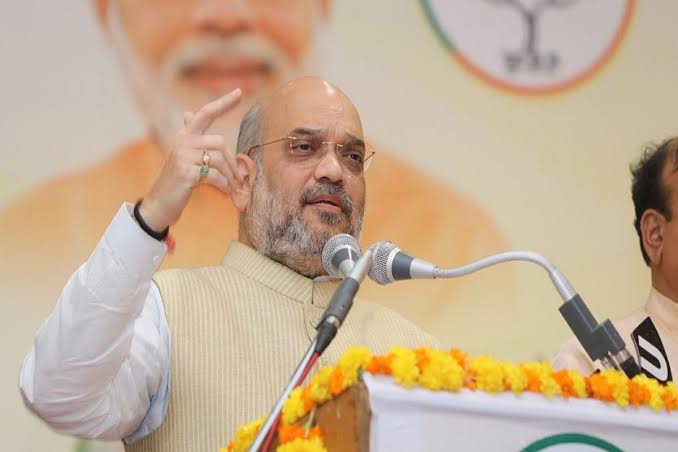
Union Home Minister Amit Shah on Tuesday introduced three landmark bills in Parliament seeking mandatory resignation or removal of the Prime Minister, chief ministers, and ministers at the Centre and in states/UTs if they remain under arrest or detention for 30 consecutive days on charges punishable with imprisonment of five years or more.

The Constitution (One Hundred and Thirtieth Amendment) Bill stipulates that the Prime Minister must resign by the 31st day of detention; failing which, he or she will automatically cease to hold office. Similar provisions apply to chief ministers under the Government of Union Territories (Amendment) Bill, 2025 and the Jammu & Kashmir Reorganisation (Amendment) Bill, 2025. Ministers in the Union and state councils will also be bound by the rule, with the President or Governor effecting removal on the advice of the PM or CM.

The move addresses a long-standing gap that allowed ministers to continue in office despite prolonged arrests. Shah said such situations undermine “constitutional morality, good governance, and public trust.” The bills are likely to be referred to a parliamentary panel for further scrutiny.