Friday, May 8, 2026
Home Blog Page 85

Inkclick, a Social Learning Platform collaborates with Kaleidoscope, a mental wellness institution to curate a holistic growth ecosystem for Students

0
"Social learning platforms"

●       As Inkclick’s exclusive mental wellness partner, Kaleidoscope aims to engage with 1700+ stakeholders in Phase 1 

●       Inkclick and Kaleidoscope bring counselling psychologists, students, parents and teachers together for an overall holistic development

New Delhi, August 16th 2021: Kaleidoscope, a unit of Dr. Bakshi’s Healthcare, with deep domain expertise in holistic wellness, has joined forces with Inkclick. It is a digital learning platform to offer growth and comprehensive mental health support to students, parents and educators. With an aim to create a completely new spectrum to the EdTech industry, Inkclick and Kaleidoscope intend to offer growth opportunities –on a single platform for the students who have been facing challenges in Covid-compromised world order. 

With this association, Kaleidoscope aims to offer mental health support to the students across age groups. Along with parents and teachers through a gifted team of clinical and counselling psychologists. The students will get to avail recorded and live courses around various aspects of mental wellbeing. While getting a chance to book a free consultation with expert child psychologists. 

Founder:

Dr JPS Bakshi, Founder of, Kaleidoscope stated, “We are happy to associate with Inkclick to create a platform 

that fosters a healthy childhood for the kids. While the pandemic has taken a toll on the emotional health of children due to lack of social interactions and limited understanding of the restrictions imposed on them, it has also radically altered conventional routines now that the entire family is confined indoors all the time. This collaboration –is an opportunity to address behavioural and emotional problems arising out of this difficult time to ensure inclusive growth for our kids.”

“It is unnatural for adults and children alike – peer interaction is healthy. Social distancing should not lead to social isolation”, he further added.

As per the Indian Psychiatry Society, there was about 20% hike in the number of mental illness cases by March 2020. Since 2020, the situation has become even worse. Students have been going through depressive thoughts, behavioural and emotional disorders, which have severely impacted their growth parameters. Considering these circumstances, Inkclick and Kaleidoscope will allow the students to combat mental health challenges. These include anger management, depression, anxiety and other concomitant emotions.

Co-Founder:

Parul Uppal, Co-Founder, Inkclick said, “We feel that overall personality development of students holds utmost importance since it eventually contributes to the progress of the society and the nation. We, at Inkclick are committed to focus on the growing years of students with its networking and learning propositions that brings the students, parents, teachers and institutes all under one roof . Through our partnership, we aim at providing a completely fresh outlook for holistic development of students while enhancing their talents in the age of digitalization. We intend to transform the base of education by focusing on mental wellness of students.” 

India has one of the largest student populations in the world, approximately 315 million. According to UNICEF, over 1.5 million schools closed due to the COVID-19 wave across the country. This directly impacted students and teachers. 

About Inkclick

Inkclick is India’s first digital social learning platform. It is backed with superior tech infrastructure, specialized faculty members, live interactive classes. Also, is currently one of the most affordable platforms with its no-subscription model. The feature that sets it apart from others is the social networking proposition. There students, parents, teachers and institutions can come together for knowledge sharing purposes. Additionally, the platform promotes vocational education at a national level via digital means. 

About Kaleidoscope

Kaleidoscope, a unit of Dr.Bakshi’s Healthcare, offers mental health support to individuals across age groups through a gifted team of clinical and counselling psychologists. A pioneer in the category, Kaleidoscope offers 100+ wellness programs across four categories – Child & Adolescent Care, Adult Care, Senior Care, and Professional Wellbeing, making it one of India’s largest portfolios of mental health services. With an expert panel of healthcare experts and experienced leadership, Kaleidoscope is on a journey to promote preventive health and holistic wellness through mental health initiatives that will redefine the future of healthcare in India.

***

For further information, please contact:

Nitisha Anand | nitisha@kairosmarcom.com | 8800541282

TALIBAN CAPTURES AFGHANISTAN

0
AFGHAN REFUGEE CRISIS

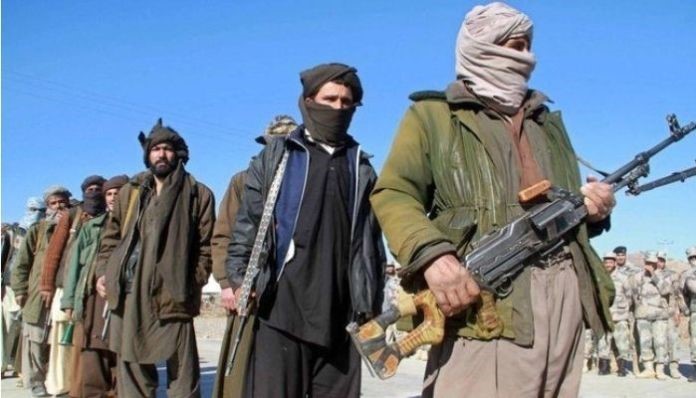
Afghan President Ashraf Ghani said on Sunday after fleeing the country that the Taliban had won. As the militants entered Kabul – nearly 20 years after they were ousted from power by a US-led invasion. Mr. Ghani left as the insurgents closed in on the capital. Then ultimately entering the city and taking over the presidential palace. To finally, sealing a nationwide military victory in just 10 days.

TALIBAN TAKEOVER

The Taliban have carried out a lightning sweep of the country. With government forces collapsing without the support of the US military, is finalizing its withdrawal in alignment with an August 31 deadline set by President Joe Biden. The insurgents’ imminent takeover triggered fear and panic in Kabul. Moreover, residents are fearful of the group’s hardline brand of Islam, which it imposed during its 1996-2001 rule.

WHAT ASHRAF GHANI SAYS?

“The Taliban have won with the judgment of their swords and guns, and are now responsible for the honor, property and self-preservation of their countrymen,” Mr Ghani said in a statement posted to Facebook, his first since fleeing. “They are now facing a new historical test. Either they will preserve the name and honor of Afghanistan or they will give priority to other places and networks,” he added, saying he left to prevent a “flood of bloodshed”. Mr. Ghani didn’t say where he had travelled to. However, leading Afghan media group Tolo news suggested he had gone to Tajikistan.

TALIBAN’S UPPER HAND IN NEGOTIATIONS

Diplomatic sources predict Ali Ahmad Jalali, a US-based academic and former interior minister, as the head of an interim administration in Kabul. But it is unclear what kind of an interim set-up the militants want. There is also no guarantee that the talks for a peaceful transition of power will succeed. “The best scenario is that the Taliban and the government reach an agreement and Kabul remains peaceful. That will pave the way for a ceasefire and future steps to resolve the conflict,” Nasrullah Stanakzai, a lecture at the University of Kabul, told DW. However, Raihana Azad, a member of the Afghan parliament, believes that even if negotiations succeed, there is no guarantee that the Taliban will “keep their word.” The Taliban were accused of not holding their end of the bargain after they sealed an agreement with the US in February 2020.

WILL THE US INTERVENE?

US President Joe Biden, faced severe criticism for withdrawing from Afghanistan so quickly, said the Afghan leaders need to defend their country. But if the Taliban attack Kabul, a city of more than 6 million people, there could be massive civilian casualties. Would the US then intervene in the conflict, if only to maintain peace in the Afghan capital?

“I think the US won’t back Ghani because the Afghan government is no longer in a position to defend Kabul,” Saidi said.

The US has come under heavy criticism for leaving Afghanistan in what many believe was a premature move. Without a proper peace deal between all the Afghan stakeholders.

The Taliban succeeded in capturing several territories. This came after Biden announced an unconditional withdrawal of US forces from the country in February.

American officials at the time said that Afghan forces could defend the country from the Taliban.

“We had urged the Afghan government and the international community for months to secure our city, but no one paid attention to our pleas,” Halima Sadaf Karimi, a lawmaker from the northern Jawzjan province, told DW.

BIG QUESTION

How did a government with 350,000 soldiers, trained and equipped by the best armies in the world, collapse so quickly?

The Taliban thought to number about 200,000 soldiers, armed mostly with the equipment they have seized from their enemies. They have taken all of Afghanistan’s urban centers in little more than a week, generally without much resistance.

The answer seems to be that what they lacked in brawn. They made up for in brains, determination and political shrewdness.

For the past year, diplomats in Doha had hoped that the Taliban could be compelled to negotiate with Mr. Ghani’s government. So that they agree to some sort of power-sharing agreement.

The insurgents realized it would be more profitable to negotiate with Mr Ghani’s underlings, city-by-city. Thereby simply pull the rug out from underneath him

Hence in Herat, a jewel of a city near the Iranian border, Ismail Khan, the warlord took the city back from the Taliban in 2001, after fighting for days, surrendered and was filmed, in captivity, pleading for “a peaceful environment”.

In Kandahar, the city at the heart of Afghanistan’s southern breadbasket and the birthplace of the original Taliban, the governor has pictured handing over to his Taliban counterpart. In Jalalabad, in the east, the Taliban marched in without firing a shot, after elders in the city negotiated a surrender.

Mazar-i-Sharif, a northern city that once served as a bastion of anti-Taliban resistance in the 1990s, folded similarly.

WHY AFGHAN FORCES SURRENDERED?

In each case, the militants have made wide-ranging promises, to “forgive” those who served in the American-backed government, in exchange for surrender. In Kandahar, former soldiers who surrendered given laisser passer documents that they can show at checkpoints. There, throughout Friday night the sound of gunfire echoed throughout the city. According to residents, firing was in the air in celebration.

WHAT DOES THE TALIBAN TAKEOVER MEAN?

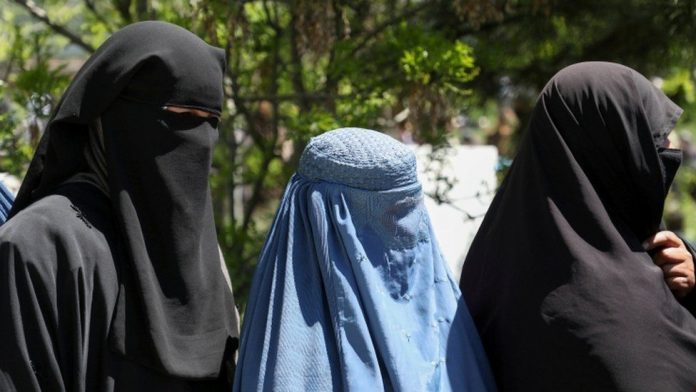
The Taliban’s political arm in Doha has claimed that they are no longer the bloody theocrats who ruled Afghanistan from 1996 to 2001. Accused criminals publicly executed at Kabul’s football grounds, including women stoned to death for adultery. For example, their negotiators have stressed that there is no rule in Islam against the education of women.

Yet, the disconnect between statements from Qatar and is being done by Taliban commanders in Afghanistan is now canyon-sized. In Herat, where 60% of the students at the university were women, they have reportedly already been ordered back to their homes. Female employees told to give up their jobs to male relatives.

KABUL IN CRISIS

At least five people killed at Kabul airport. Hundreds of people tried to enter planes leaving the Afghan capital on Monday. A horrific video surfaced on social media with a person falling off a loaded plane mid-air in Kabul. Locals said 2-3 people fell on their houses and died an immediate, tragic death.

People have been making desperate attempts to leave the war-torn country after the Taliban overthrew the Western-backed government in Afghanistan. All border crossings seized by Taliban fighters. The only way out of the country is through Kabul airport.

UNITED NATIONS STAND

United Nations Secretary-General Antonio Guterres on Monday (August 16, 2021) said that he is ‘deeply concerned’ about the situation in Afghanistan. Further, he urged the Taliban to exercise utmost restraint. 

“I’m deeply concerned about the situation in Afghanistan and urge the Taliban and all others to exercise utmost restraint to protect lives and ensure humanitarian needs can be met. The UN remains determined to contribute to a peaceful settlement and promote human rights of all Afghans,” Guterres said.

“All abuses must stop,” the UN Chief expressed adding that the international humanitarian law and human rights. Especially, the hard-won gains of women and girls.

JAISHANKAR IN US

External Affairs Minister S. Jaishankar travelled to New York for a visit from August 16-19 to chair two sessions of the UN Security Council. Subjected on peacekeeping and terrorism.

The visit was scheduled earlier but is expected to see him participate in consultations on the developing situation in Afghanistan as well. He will also have bilateral meetings with Foreign Ministers of other UNSC members on the sidelines of the two sessions.

CONCLUSION:

Even the best possible outcome, where the Taliban’s leadership decides to show it is serious about reform, looks bleak.

For sure, Afghanistan’s government has made only fitful progress in raising the quality of life for ordinary Afghans. Even in cities, where it has had far more control than in the countryside.

Conclusively, its corruption has been deep and galling, and no doubt part of the reason the Taliban were able to conquer the country so effectively.

MISTAKING ECONOMICS

0
ECONOMICS

There is a fascinating thing about human beings that they can relate to any subject. One such subject is economics.

Economics as a subject is often mistaken and restricted to books only. However, when it comes to applying it practically people often get confuse.

Economics is vast and intriguing. So, it certainly contains “types”. One such type is behavioural economics.

As the name suggests, behavioural economics contains hues of psychology and economics to understand how and why people behave the way they do in the real world.

BEHAVIORAL ECONOMICS HELP YOU TO CHOOSE WELL, TO CHOOSE YOUR HEART OUT

Suppose you are doing well in your life, in terms of money, in terms of a lavish lifestyle, in terms of having a perfect family and suddenly an idea of startup pops up in your mind you want to comment the things of your own now you don’t want to resume your 9 to 5 job you want to work on your own but how?

What exactly do you need?

The only thing you need is a push either internally or externally. Push in behavioural economics is a nudge.

According to Hallsworth “Nudge is about changing the presentation of choices for people so they’re more likely to choose one option rather than the other.”

Briefly, Nudge is a push that we need to choose the best of the best.

Given are the following examples where nudge is being used and you might miss to notice:-

1. It is assumed and accepted that sales contain a relationship with advertising that means the more you advertise the more sales you can pitch. But, Zara is an exceptional case here. It only spends 0.3% of sales on advertising. Never produces too many products of a single design. It creates the “fears of paucity” in the minds of the customer which makes them take quick decisions to buy their favourite designs as they know they will go out of stock soon.

And the perceived fear of something is particularly motivating as we are loss averse.

What this means is that we find losses roughly twice as painful as gains are pleasurable.

2.There is a high possibility that people will choose a medium cup of coffee/beverage/cold drink at a cafe. This is the Goldilocks Effect. In a study at a McDonald’s outlet, people were asked to choose between a range of different drink size options. Regardless of the size options offered, 80% of them always chose the medium size option. This happens because we assume the middle option is the typical option. We will always go with the option that requires less effort to think about.

3.If I say playing music can increase your sales, Shall you believe in it? You have to.

An experiment in the UK tested playing music from different countries in a wine shop. The research found that French wine easily outsold German wine when French music was playing and vice-versa.

4. Do you think that just obviating the symbol of currency can pitch your sales?

As peculiar it sounds, as interesting the application is.

Only thinking about spending money can make you experience a kind of physical pain. If you were to be put into a brain scanner right now and we played a game where you lost your money, the part of the brain that would light up is the same part that feels physical pain.

Many restaurants and cafes adapt this strategy to welcome more and more customers.

5. If I say when supermarkets double the size of trolleys, sales will increase as much as 40%?

As humans, we like to go with the flow of a default setting.

Many renowned supermarkets for example- big bazaar, apna bazaar etc adapt this very strategy to attract millions of more customers.

CONCLUSION:-

Economics carries a bigger picture when it comes to its applications. In 2018 Richard Thaler won the Nobel prize in Economic Sciences for his gargantuan contributions to behavioural economics. He quoted “A nudge, as we will use the term, is any aspect of the choice architecture that alters people’s behaviour in a predictable way without forbidding any options or significantly changing their economic incentives.”

Humans are imperfect, they make irrational decisions most of the time, they make certain errors in every walk of their life, they are more complicated than they seem.

But what exactly do they need?

They always need a nudge, a push to come out of their comfort zone and choose the best from the given opportunities (costs).

NECESSITY OF FOREIGN LANGUAGE

0
"Foreign Language"

We live in a globalised world, speaking foreign languages would always be beneficial for mankind. Also learning new things or language(s) would never be waste. 

In this modernizing era, we should not limit ourselves to only one common language. The Internet has paved the way to connect with people from throughout the world. Learning a foreign language helps to improve our social skills as well as to build a new relationships with people of different cultures and heritage.

Talking about the foreign languages and schools, these two have not gone hand in hand. In India many public schools teach an extra language to its students but not as the main subject.

Should a foreign language be made the main subject in schools? 

No doubt, nowadays schools have foreign language in their syllabus. However, it starts from certain classes and is not a compulsory one. It is high time now that schools should understand the fact that foreign language is must for children in the coming days. 

The competition is exceeding day by day. Hence made it important for the youth to acquire knowledge of global languages. Global language not only enhances one’s social horizon but also gives the brain a boost.  

This foreign language opens up a path to employment opportunities. Further enables each person to stand out from the competition also make them understand the diverse culture.

Thus, the schools should step up by making foreign language compulsory in their curriculum and make students understand other’s perspectives about their own culture and traditions which will broaden their intuitive skills.

From which classes it should start?

Primary Schooling is the basic and the most important level from where all the learning starts. This is the stage from where we learn to write and read. So the appropriate level for learning a new foreign language will be from the very beginning. For understanding a new thing we try to know it from the starting so the same goes for the language. If we are learning a whole new language we should start it from the beginning.

As it is said ‘the younger the better’. This stage plays a crucial role in building and shaping a kid’s future. So teaching a new language from the primary level will consider a one step towards success in building one’s future.

Also Read- A NEW CURRICULUM ON ITS WAY: DESHBHAKTI CURRICULUM

INDIA’S APPROACH TO MARITIME ENVIRONMENT

0

Indian PM described the oceans as a common heritage for humankind and a lifeline for the future of the planet. In urging the global community to develop a common framework to deal with contemporary challenges, including maritime disputes and natural disasters, he outlined a far-sighted vision rooted in India’s culture, history and geography.

MARITIME TRADE:

  • Linked free and open trade to India’s civilizational ethos.
  • Reiterated the relevance of SAGAR (Security and Growth for All in the Region).
  • Indian Prime Minister urged the international community to develop a cooperative and inclusive framework for maritime security. It is essential for unimpeded trade and commerce.
  • Ninety per cent of global trade is conducted on the high seas. Thus, for this simple reason that it continues to be the most cost-effective mode of transport.
  • Disruption of sea lanes of communication has global repercussions.
  • The blockage in the Suez Canal earlier this year interrupted the flow of trade worth billions of dollars.

MARITIME DISPUTES:

  • The Prime Minister advocated the peaceful settlement of maritime disputes based on international law.
  • This idea is rooted in India’s values of peace and non-violence. India’s acceptance of the award by the Permanent Court of Arbitration in 2014 paved the way for India and Bangladesh to put aside their maritime dispute and forge even closer ties.

NATURAL DISASTERS AND THREATS:

  • Today, natural disasters and maritime threats posed by non-state actors have grown exponentially.
  • Indian PM called upon the global community to rally together to deal effectively with the ravages of cyclones, tsunami and maritime pollution.
  • India’s role as ‘first responder’ in the Indian Ocean, whether in thwarting piracy or providing relief
  • The election, on August 5, of the Director-General of Indian Coast Guard as the executive director of the Regional Cooperation Agreement on Combating Piracy and Armed Robbery against Ships in Asia (ReCAAP) Information Sharing Centre, Singapore. is an endorsement of India’s contributions.
  • India now has white shipping agreements with several countries.
  • The Indian Navy’s state-of-the-art Information Fusion Centre-Indian Ocean Region (IFCIOR) based in Gurugram hosts officers from the United States, Japan, France, Australia and the United Kingdom.

PLASTIC WASTE:

  • Oceans remain our lifeline. Yet, they have been overwhelmed by plastic waste which chokes all forms of marine life.
  • This, in turn, poisons the entire food chain and imperils the lives of millions.

CONCLUSION:

  • India stands for openness and transparency in the execution of projects, based on local priorities, with in-built fiscal viability and environmental sustainability.
  • The U.S., Japan and Australia are also promoting better standards for global infrastructure through the Blue Dot Network
  • More relevantly, India emphasizes the importance of the United Nations Convention on the Law of the Sea as the legal framework governing all maritime activity.
  • India’s natural interests stretch across both the Indian and Pacific Oceans as reflected in its inclusive Indo-Pacific vision

A NEW CURRICULUM ON ITS WAY: DESHBHAKTI CURRICULUM

0
DESHBHAKTI CURRICULUM

We Indians are famous for the word ‘Deshbhakti’. A new curriculum named ‘Deshbhakti Curriculum’ is to be added in Delhi schools academics. Yes, you heard it correct. 

Last year, Chief Minister Arvind Kejriwal announced to introduce this whole new curriculum in all schools from the upcoming academic year. However, couldn’t introduce amid the Covid-19 lockdown. The Deshbhakti Curriculum will provide students with basic constitutional values within the students.

DO STUDENTS NEED THIS? 

Our youth is our future. In today’s world, western culture influences our youth, they are leaving their roots behind. To adopt western culture is not wrong at all but leaving our own culture, our values are not appreciable. Hopefully, this curriculum inculcates patriotism in students. 

The word Patriotism does not only mean singing patriotic songs, performing dance on a patriotic theme. It means to respect our country, value our culture. It will be achieved with this curriculum. 

The major aim of the Deshbhakti curriculum is to teach students their responsibility towards their nation. To further facilitate them towards nation-building.

“The curriculum is in line with the National Education Policy (NEP) 2020. The major focus is to make students responsible citizens who contribute to nation-building and have pride in their country. The curriculum aims to ensure that the students are aware of their responsibilities towards the country and develop an appreciation for constitutional values, fundamental rights and imbibe the responsibility of being an Indian and are ready to sacrifice for the country,” the official added 

[THE INDIAN EXPRESS]

IMPORTANCE OF THIS NEW CURRICULUM:

Quality education means providing the students with the best education. Teaching them the aspects of education to make them global students. But the students are more interested in serving the other country than their own. 

Today, students are more into serving the developed countries which becomes their new agenda. Leaving your country behind is never the objective of public education. Having this new curriculum might solve the ‘brain drain’ problem. 

Many nations, such as South Korea and the United Kingdom, have been able to retain students in the country by having such a curriculum or mandatory military tenure for students. Singapore has a policy of waiving off tuition fees of meritorious Indian students if they work there for twice the duration of their course.

[THE INDIAN EXPRESS]

Delhi government’s step is appreciable. However, this should have been introduced much before. Our kids need to learn more about our culture, about all the sacrifices of our brave soldiers and leaders. Children are more likely to adopt things at a tender age. So, the feeling of patriotism is within from the very beginning. Conclusively, ‘Better late than never’ 

Also, read| Two men arrested for threatening attack on the JNU campus on Independence Day

Two men arrested for threatening attack on the JNU campus on Independence Day

0
Jawaharlal Nehru University, JNU

JNU:

Jawaharlal Nehru University (JNU) is a public central university located in New Delhi, India. Established in 1969 and named after India’s first Prime Minister, Jawaharlal Nehru. The university has special research focus on liberal Arts and Applied Sciences.

Alleged Attack:

The university has been the centre of news and this time it’s again in the headlines. In this regard, two men arrested on Sunday for allegedly threatening to attack Jawaharlal Nehru University on Independence Day. The video uploaded to Facebook. The two men identified as Vikas Sehrawat of age 30 and Raja Kumar. Both the men arrested are residents of Uttam Nagar. Vikas Sehrawat made a statement in the video.

The Police Statement:

According to the police, Sehrawat was arrested earlier for threatening senior leaders of the Delhi National Assembly and former MLA Alka Lamba in a video and using foul language. Moreover, he also told the police that he has been in contact with the Vishva Hindu Parishad (VHP) since 2018.

According to the sources Sehrawat has nothing to do with JNU. The video was only to seek attention. Kumar is the owner of the phone that uploaded the JNU video. “We received a PCR call from a JNU student at the Vasant Kunj (North) Police Station at 1:51 AM on Sunday, saying that a video had been uploaded to the Facebook page ‘Mahakal Youth Brigade’, claiming that the school team would be attacked,” Deputy Chief Police . 

Complaint filed as students reached the police station. The head of the Jawaharlal Nehru University Student Union (JNUSU) office wrote a similar complaint. Claiming that the video promoted discord and hostility, used inflammatory language, and publicly threatened bodily harm.

According to Article 153A, the case was registered in this matter for (promoting hostility between different groups based on religion, race, place of birth, etc.). Further, on 295A (deliberate and malicious acts designed to provoke religious feelings), 505 (remarks that cause public harm), and 506 (really Penalties for criminal intimidation) Indian Penal Code.

Also, Read| Indian Independence struggle and the role of women. Aims to provide equal opportunity to women in TST.

Indian Independence struggle and the role of women. Aims to provide equal opportunity to women in TST.

0
Independence day
Independence day

This Independence Day, we are going through a massive change in our approaches and
organizational structure.
• TST believes in women empowerment and henceforth it will be led by Women.
• Under the same empowerment strategy, TST will have 75% women employees

Mumbai, India — August 15, 2021 —The Sikkim Today, is a well-known news channel in the Sikkim region. It announced the massive change in our approaches and organizational structure which went/goes live on August 15th. The changes will give the same opportunity to women as men whether in the work field or society. The Sikkim today will also cover national news 24/7 just like we were doing for Sikkim. TST after requests from our viewers, will cover news in Hindi as well. The Hindi division headed by Hari Darshan.

The Independence Day Celebration:


The program started with a video where people expressed their feelings and thoughts about independence day. It began with a Welcome Note by Ms. Aadhya and then Ms. Arshey spoke about the journey of TST and progress till now. Team Introduction was done by Soumya, Patriotic song was sung by Tshering Lhamu Lepcha of Gangtok, Sikkim. Amongst the esteemed guests we had Mr. Man Bhadur Chettri , Chairman for Commerce and Industries Department government of Sikkim. Mr Man Bhadur Chettri is also Vyasnanda guruji of Heavenly Path, Lovism and Shoubhik Roy Chowdhury, Digital Media Manager, Assam Tribune Then we had National Anthem and at last Vote of thanks by Suhani.

About ”The Sikkim Today”


‘The Sikkim Today’ was founded by Jeewan Dahal and Ajay Aggarwal in 2019 before the country went for poling for the Lok Sabha Elections. The online news portal which had initially covered issues related to the state of Sikkim has now expanded to the national level.


Under our ‘All the news you need to know’ initiative, we cover topics of a wide variety
ranging from Politics to Entertainment, National to International, Campus News, and Sports to Technology. TST is having a strong online presence with over 190k followers on Facebook.

Our Team:

Our team consists of dedicated and experienced professionals who are committed to the growth of ‘the Sikkim today’
Jeewan Dahal: Chief Executive Officer
Ifrah: chief strategy officer
Karma Sonam: Chief Financial Advisor
Anisha Kaul: Editor-in-chief
Hari Darshan: National Editor, Hindi
Along with that we have a team of interns covering various issues and serving you with facts and figures.

Platforms to connect with us:


Website: https://thesikkimtoday.com/
Facebook: https://www.facebook.com/thesikkimtoday
Instagram : https://www.instagram.com/thesikkimtoday/
Telegram : https://t.me

Waves Of Feminism: The Four Waves

0
"Waves of Feminism"

Understanding Feminism:

  • We all know that feminism is the most disputable subject of all time. In my previous article I vividly wrote of how pseudo-feminism has become the prime obstacle for all those feminists who tussle for their equality. Pseudo-feminism fails to scrutinize that feminism, is all about achieving equality in a world. It means both men and women have equal rights. However, where did this word ‘’feminism’’ come from? And how did people gain the success of equality from it?

The First Wave:

The first wave linked with the abolitionist movement in the USA at the time. Essentially, both the movements focused on social reformation and liberation from oppression.

Further, the wave formally began the Seneca Falls Convention within the year 1848 when around 300 men and women rallied to the explanation for equality of women. Elizabeth Cady Stanton drafted that the Seneca Falls Declaration outlining the new movement’s ideology and its political strategies. This wave of feminism came out of an environment of urban industrialism and liberal and socialist politics. The goal was to open doors for women, with a focus on suffrage. 

The Second Wave:

The second wave hit in the 1960s and continued in the 90s. It took place throughout the western world and aimed to increase equality for women. The first wave focused on suffrage. While, the second wave drew attention to the issues of domestic violence and marital rape.

This movement began with protests against the Miss America pageant in Atlantic City [1968 and 1969]. Feminists parodied what they held to be a degrading “cattle parade” that reduced women to things of beauty dominated by a patriarchy. Which sought to stay them within the home or low-paying jobs. The second wave of feminism became the voice for many other social movements. It became exemplary of black power or efforts to end the war in Vietnam.

Women Only groups:

Feminists form women-only organizations and “consciousness-raising” groups like “The BITCH Manifesto” and “Sisterhood is Powerful. These show that how they fought for their places. Moreover, one of the most strains of this complicated and diverse “wave” was the development of women-only spaces and the notion that women working together create a different dynamic that is not possible in mixed-groups, which could ultimately work for the betterment of the entire planet.

With the second wave of feminism women gained more rights and power going into the 1990s. They were able to percept about other aspects of their identity, welcoming each and every individuality and rebellion. This was an era of reclaiming. Significantly, important cultural touchstones like Eve Ensler’s play The Vagina Monologues, a search of women’s feelings about sexuality which includes vagina-centered topics as diverse as orgasm, birth, and rape. Also, the righteous anger of punk rock’s riot grrrls movement and the playfulness, seriousness, and subversion of the Guerrilla Girls, women artists who donned gorilla masks in an effort to expose female stereotypes and fight discrimination against female artists. 

The Third Wave:

The Third Wave kept a floated by the confidence of having more opportunities and less sexism. Kimberle Crenshaw, a gender and critical-race scholar, came with the idea of “intersectionality” in 1989. It refers to how different kinds of oppression, like those based on gender and race, intersect with each other. First and second-wave feminism had largely neglected racial disparities within gender. Thanks to which the Third wave paid more attention towards it. The phrase “third-wave feminism” was coined in 1992 by Rebecca Walker daughter of a novelist, a 23-year-old Black bisexual woman. With the internet taking its reach among people, it was easier to hear perspectives and ideas from feminists around the world. Feminism was expanding. 

The Fourth Wave:

Further, some people think we’re still within the third wave of feminism. Reason being, the fourth wave isn’t such a lot of a shift because of the continued growth of the movement. The fourth wave of feminism initiated in 2012 and characterized by a focus on the empowerment of women by the use of the internet, tools and intersectionality. The Fourth-wave of feminism argues for equality for girls and women. It also includes boys and men to overcome gender norms. For instance by expressing emotions and feelings freely, expressing themselves physically as they want, and to be engaged parents to their children.

The utilization of print, news, social media platforms and tv to collaborate, mobilize, speak against abusers of power in seeking the empowerment of women and providing justice against the harassment is prominent. The most renowned movement of this wave was the “Me Too” movement. It is a social movement against sexual abuse and sexual harassment where people publicize allegations of sex crimes. This phrase was initially used in this context on social media in the year 2006, by sexual assault survivor and activist Tarana Burke.

Conclusion:

Traditionally feminine traits are considered bad or unwanted, this is why it is believed that why women and men have taken to more masculine traits. This dimension Keeps an eye on how extent to which a society stress achievement. Masculinity is seen as the trait to emphasizes passion, acquisition of wealth, and differentiated gender roles.

Femininity is seen to be the trait that includes nurturing behaviors, sexuality equality, environmental awareness, and more fluid gender roles. Therefore, all those women who fought for their justice have almost liberated their rights. The fundamental purpose of it is to empower people to understand the experiences of those who are different from them. To underline the broad aim of gender equality. Conclusively, when it comes to gender equality it concerns both women and men and has a strong impact on their daily lives.

Also, Read| Ixigo intends to raise INR 1,600 Cr via IPO

Ixigo intends to raise INR 1,600 Cr via IPO

0
ixigo

About the Ixigo startup:

A technology company focused on empowering Indian travelers with artificial intelligence, machine learning, and data science-driven innovations. Ixigo empowers them to plan, book, and manage their travels. Founded in 2007 and headquartered in Gurugram, Haryana, the company has a user base of over 250 million travelers. The company founded in 2007 in Gurugram, Haryana. Its global user base includes over 250 million travelers. With the OTA platform, travelers can book trains, flights and bus tickets, hotels and cabs, and access travel utility tools and services. These are developed using proprietary algorithms and crowd-sourced information, including train PNR status and confirmation predictions. Along with train running status updates, flight, and bus status updates, price, and availability alerts deal discovery, destination content, personalized recommendations, instant fare alerts, and automated customer support.

Past Updates:

In August 2011, Ixigo received an $18.5 Million investment from SAIF Partners and MakeMyTrip. It was a landmark deal for online travel in India. Micromax Informatics invested an undisclosed amount in Ixigo in June 2015. Ixigo closed a $15 million Series B round in March 2017 led by Sequoia Capital India and Fosun RZ Capital.

Recent Updates:

SEBI has received Ixigo’s draft red herring prospectus (DRHP) for its initial public offering to raise INR 1,600 Cr. The IPO will consist of a primary component that will include a new share issue worth INR 750 Cr. The secondary component will allow existing investors to offload their shares worth INR 850 Cr.

Early investors like Elevation Capital (formerly known as SAIF Partners) and Indian smartphone manufacturer Micromax are expected to benefit from the IPO. Ixigo has joined several tech companies in India going public this year. Including Zomato, Paytm, Nykaa, Mobikwik, CarTrade, and Fino Payments Bank. Zomato raised a staggering INR 8,250 Cr earlier this year and CarTrade’s IPO subscription closed on Wednesday (August 11), but the rest of the IPO-bound companies have yet to file their DRHPs.

Also, Read| IGNOU PROJECT SUBMISSION DATE EXTENDED TILL AUGUST 31