Wednesday, July 8, 2026
Home Blog Page 93

These Youths in Sikkim are fighting for River Teesta

0
Affected Citizens of River Teesta

Affected Citizens of Teesta (ACT) established in early 2004, has been at the forefront when coming to opposing and raising voices against the destructive developmental programs, especially dams. ACT is an organisation consisting especially indigenous people of Sikkim, Lepchas, formed after coming up of dams in Dzongu. ( Dzongu is a reserved place for Lepchas declared by the 11th chogyal of Sikkim, Tashi Namgyal,
as per notification of 1956. People from outside Dzongu has to obtain a permit to get inside Dzongu from the administration.)

Since its inception, the organisation has been very vocal about raising issues of dams and their impact around.

The movement gained momentum after 2007 when ACT decided to go for the hunger strike, led by both from the side of young and old generations; Dawa Lepcha, Tenzing Gyatso Lepcha, and many others, for 915 days (June 22nd, 2007- September 27th, 2009). After which ACT was able to scrap four dams in the state. This was one of the successful movements by the indigenous people counted around the world. The movement continued even after 2009 in a soft way voicing concerns but yet again it was reinstated in the ground after 2016 under the guidance of ACT’s co-founding members, NGOs, Women’s SHG groups, elected Village Councils, and Civil
society groups.

The movement was renewed after the state government decided to reintroduce Teesta Stage IV dams in Dzongu built and operated by the state-owned corporate, NHPC, one of the most controversial companies.

In early 2020, just a few months after coming up of new government under the direction of Shri Prem Singh Tamang, the Sikkim Krantikari Morcha(SKM) party had led a massive campaign promising to stop building dams in the Holy land of Lepchas, was seen by many as going back to their promises made during the election. In March 2020, CM Tamang met with the chairman of NHPC after which the company had released a press statement stating ‘CM has given full assurance in completion of Teesta Stage IV’. But as soon as this statement came to light ACT flagged off the campaign on social media under the name “SaveTeesta” whereby people from different backgrounds and different parts of the state-supported the organisation. Social media was flooded with counterattacks filled with handles like #saveteesta, #stopstageiv, etc…

Such was the pressure that CM Office had to come out in the open to clarify the statement and said, ‘fabricated one’. To get clarification openly from the CMO isn’t an easy task.

Teesta Stage IV project is in itself a very controversial project in many ways, it is going to be a dual tunnel project each of 6km and 5.6km, the first of its kind in the country or you can even say the experimental project of the dual tunnel. Why this dual tunneling is problematic and controversial is because the Himalayas are made out of the young fold Mountain and consists of a very fragile ecosystem, full of rich biodiversity moreover region falls under seismic zone stage
IV.

Teesta Stage IV comes under a radius of 10km within Kanchendzonga National Park, a UNESCO recognised biosphere reserve in July 2017, this violates the code of national park reserves. Besides, such environmental and ecological perspectives this Teesta River is extremely important to the indigenous community, Lepchas and it holds a religious significance too.

It is considered to be a very sacred river, they believe that once Lepcha dies their soul is taken back to the lap of their ancestors in the Kanchendzonga, Lepchas doesn’t believe in the concept of hell and heaven, and at that time this very River Teesta, which Lepcha called it as Ronggyong, will guide the soul to its place.

In the same way, Mutanchi Yuntandokpun (MYDP), a community club, one of its infamous quoted quotes reads “Teesta is our asylum, tranquillity, identity & pride. She proudly presents the distinctiveness of us who resides in the land where she flows.”
This reveals how sacred the River Teesta is not just for the Lepchas but also for the whole Sikkimese.

ACT in the fight is advocated by many international communities and organisations like; UNESCO, International Rivers, International Peoples Movement for Self Determination and Liberation(Philipines, United Nations Declaration on Rights of Indigenous Peoples, Fridays for Future and various other local, regional groups like Sikkim Progressive Youth Forum (SPYF), DLYA and people living in the downstream of River Teesta, Rafting association…etc

 Karma Lepcha (Darjeeling Lepcha Youth Association was among the very first organisation to join the campaign)
Picture coursey: Karma Lepcha (Darjeeling Lepcha Youth Association was among the very first
organisation to join the save river Teesta campaign)

Mr. Shanker Sharma, Sikkim Progressive Youth Forum’s CEC wrote on his personal Facebook handle on the backdrop of ACT completing its 14 years of environmental activism; “I feel they have not received the support they deserve from the rest of the people. Their representatives have betrayed them time and again. There have been attempts to divide people, create proxy conflict among the people. The leaders have been detained, tortured, and harassed. Unfortunately, we see their struggle as only theirs. But their fight is not just for themselves but for the entire Sikkim and the global at large. Man’s exploitation of nature is a burning international issue, recklessness may lead to the extinction of life on earth.”

ACT hopes to come over this stage iv dam ( and stop the fifth dam in the way) and remains optimistic. Recently, state Forest minister’s latest interview with The Hindu, he was caught stating “The widening of roads to Nathu La, which is of strategic interest to us (bordering China), and the hydel power plants in north Sikkim, should also take into account the environmental concerns of locals. We are not against such activities, but it should not come at the cost of our biodiversity, ACT has warmly welcomed his statement.

ACT General Secretary, Gyatso Lepcha, on his Facebook handle has wrote
“ACT welcomes the Forest Minister’s statement !!! tiny Sikkim is home to 27% of India’s flowering plants revealed by the Botanical Survey of India !!! the most interesting and fantastic piece of news is that on the occasion Forest Minister of the State (Shri Karma Loday) made a very interesting and deeply measured statement this validates the protest that ACT has been doing against the construction of a dam in Teesta River Basin, particularly North Sikkim… we thank the minister for keeping the facts surrounding the challenges to our fragile state’s ecology. We look forward to better ecology of the state !”

‘SaveTeesta’ campaign has been launched with the massive involvement of youths.
A new team of ACT has been formed led by Mr Sandup Lepcha as president and many
youth-oriented wings have been created too; social media wings, Cultural & artist wings, student wings…etc On the sideline of the SaveTeesta campaign, I interacted with the young minds of ACT and tried to know about their thoughts on the ongoing campaign.

‘Since I have taken birth in this land, Dzongu, it’s my utmost duty or I must say it’s my love for my motherland and secondly, I have seen the sufferings of my elders my parents struggling for our land so I feel as a second-generation I should give my shoulders to them now..’ Says Kingchum Lepcha, a college student hailing from Hee Gyathong, one of the many places which are going to get affected by the Teesta Stage IV.

An interesting fact is that Hee-Gyathong GPU has rejected Stage IV by not allowing the FRA to get passed in the village council meeting.

Gyatso Lepcha and other were campaigning
Picture courtesy: Gyatso Lepcha on Save River Teesta

If this Teesta Stage IV is actually constructed then it endangers the River Teesta, the very last free-flowing stretch of Teesta will be damaged too. Similar concerns were expressed by Rungnyuu Lepcha, another youth involved in the movement, ‘No one would want to witness their motherland being sold, nor I. We do not want to live every day, in fear of the consequences which might be brought by the dam.
Most importantly, the last stretch of Teesta which flows freely right now will not flow as it does, which eventually may lead River Teesta to perish in the future.’

Rungnyuu Further added “River Teesta is an identity to the whole State and not just of cultural importance to the Lepcha tribe”

It’s a sad fact that we are really out here trying to convince the people of our own state to join us in the movement for our Teesta which has given us, the people of Sikkim so much. We should be coexisting with nature.

We should look up sustainable development.’ One of the youth said.

‘Teesta is not just a river but emotions and if Teesta remains our identity sustains.
River Teesta is equally important as Mt.Kanchenjunga and as holy as the river Ganga as considered by Hindus. When the Kanchenjunga expedition was allowed people stood up to protect our Kanchenjunga but shouldn’t we people come forward and protect our Rivers as we did to protect our mountains?’ Sangay Chopel, a college student, hailing from an affected valley due to coming up of Teesta stage III at Chungthang quoted and questioned.
Sangay also feels strongly against the Teesta Stage Iv because he says, ‘… its the last stretch of Free-flowing portion of river Teesta and geographically when we look into our mountains and landforms it’s not that strong enough to hold such water capacity (referring to reservoir). But what it does is, it destroys the ecosystem and submerges the main fertile land where people mostly grow their cash crops.’

The same kind of issue of the reservoir, Mr. Wangchuk Bhutia, a feature writer of Talk Sikkim had pointed out in his November 2015 article. He wrote “But the people affected by the Teesta Stage V reservoir are experiencing it in real, with their safety and durability of life and property threatened. There seems to be no sincere and concerted effort, either from the state authorities or from the NHPC officials, to find a long-lasting and effective solution to the challenges and risks to life and property being experienced, almost daily, by the people living by the NHPC Teesta Stage V.’
On being asked about, how ACT’s activism is different from the past Kingchum replies, ‘well I would say ACT during past years have done a very commendable work nevertheless they have done with the fullest of their capacity and their limits .so now it’s our time what I have seen is that there is a mixture of many young innovative minds giving creative ideas for the protest.

Like we are going through every aspect, right from legal matters to educating individuals from every nooks and corner of State. and I also would like to add we should not forget the leaders of past though we are advancing even then youths can walk faster but elders know the road. Coming off more youth is like adding up another finest upgradations in the spaceships.

Mingmar Ongkit, a student of NBBG College from L. Dzongu residing near Tung Kyong Dhu [lake] mentions ‘My commitment towards this movement is 100% and ready to bear any consequences if tomorrow government pushes this dam.

Tung Kyong Dhu is a very sacred lake for the Lepcha clan called Hee-Youngmingmoo.
Lake accommodates a very unique kind of fish, it is believed that the population of the Hee-Youngmingmoo clan plunges or expands according to the number of fishes present in the lake. Stage IV endangers this very lake because tunnels run below this lake and people fear that the lake will get dry up because of the seepage.

Tung Kyung Dhu River
Tung Kyung Dhu, Picture coursey: Dr Sonam Rinchen Lepcha on Save River Teesta

Many have questioned, especially the pro-government party, about ACT activism and not providing an alternative to the government but it has been a long-known fact that ACT has been trying to convince the government to declare the last free-flowing stretch of Teesta as “river sanctuary and its peripheries as butterfly hotspot area” one of a kind in the country.

22 November 2020, Sikkim Express edition.
Courtesy-22 November 2020, Sikkim Express edition on Save River Teesta.

Today, ACT isn’t just an organisation fighting to save our rivers and fragile ecosystem from disastrous development but has become an institution and people from outside are willing to hear and learn from the struggles of ACT.
“Dzongu, Sikkim in Northeast India. The land of the Lepcha (Indigenous Peoples) – beautiful and rich in biodiversity. All are under threat with the construction of the Teesta IV hydropower dam. The Lepcha are leading the fight to stop the project under the Affected Citizens of Teesta and Save Dzongu. If successful, this would be the 5th dam the communities have stopped since 2010. The IPMSDL was privileged to have visited and met with some of the affected villages. The Lepcha and their oneness and struggle are inspiring for other people in struggle.” _Beverley Sakongan L. Longid, Global Coordinator, IPMSDL (Philippines), wrote after visiting Dzongu.

Also, Read – Assam- Mizoram Border Dispute, 6 killed

Assam- Mizoram Border Dispute, 6 killed

0
Assam Mizoram Land dispute

An unfortunate incident occurred in North-East India yesterday evening when both the police forces of Mizoram and Assam clashed over at Lailapool of Cachar district, which has been known as a flashpoint of inter-state border clashes for decades. This time, it took an extremely barbaric turn when alleged Mizo assailants loaded with Light machine guns ( seen in different videos) fired on the Assam side leaving 5 jawans of Assam police dead on the spot and injuring around 65-75 more people.

IPS Vaibhav, SP, Cachar was shot too after which he was admitted to the ICU of Silchar Medical College. He may be flown to Mumbai for higher treatment. Meanwhile, the PSO of DC, Cachar was shot at to which he succumbed.

Both Assam Govt and Mizoram Govt have narrated their version of the story. But, Assam CM Himanta Biswa Sarma strongly condemned the inhumane, undemocratic move of Mizoram Police and has talked with Mizoram CM over the incident. While CM Sarma thinks that this issue can be solved over discussions after satellite imaging surveys, he has also allowed Assam Police to retaliate and open fire from now on.

Chief Minister Himanta Biswa Sarma, on Monday, urged Chief Minister of Mizoram Zoramthanga to investigate this matter saying why civilians from his states were holding sticks and trying to incite violence on the Assam-Mizoram border.

He said, “Honble Zoramthanga Ji, could you please investigate why are civilians from Mizoram holding sticks and trying to incite violence? We urge civilians to not take up law and order on their own hands and permit peaceful dialogue to take place between governments.”

The Assam Govt has announced 50 lakh compensation for the family of every Jawan deceased in this unfortunate incident that rocked the Nation and has promised Govt a job for a person in the family of the deceased. He has also declared to raise a Commando- Batallion of 3000 soldiers for the protection of Barak Valley.

Also Read – Expert claim data leaks, Clubhouse denies

Expert claim data leaks, Clubhouse denies

0
Clubhouse data leak

Just like any other day, news of data leaks has become a norm in the digital age. In this series, weeks into the leaking of scrapped data of Facebook and LinkedIn users were leaked, a cybersecurity expert claimed that the phone numbers of Clubhouse users-an an audio social app has been leaked and are available for sale on the dark web. This information was shared by Jiten Jain on July 24. He further claimed that in total 3.8 billion phone numbers from the phonebooks of Clubhouse users are available on a database.

Clubhouse

The clubhouse is a popular socio-audio application where users can communicate with each other in voice-only chatrooms. Initially, it had an invite-only system to register for the app but recently the founders of the app announced that the social media app was going wide, out of its beta version, and will allow users to register without an invite just like any other SM platform. This app was released during the last year after the onset of the Covid Pandemic in April 2020. It had gained popularity as due to lockdown people were packed in their homes and it gave them a wonderful place to talk to people including strangers.

This app has been earlier into controversy when Stanford University in the USA cautioned the users that the app may be leaking out the audio data of users’ conversations to the Chinese Government. Also, as claimed by Stanford Internet Observatory, the app is getting backend infrastructure support from Agora, a Shanghai-based company. Earlier, in April also there was a news which claimed that the data of 1.3 million Clubhouse profiles has been leaked online. The company had later called such news false and misleading.

Clubhouse denied it

The self-proclaimed hackers in their claim have said that they were able to evaluate the level of a network of each phone number and have the ability to do a ranking of phone numbers. They also said that the list includes the phone numbers of some very influential people and valued the user data at $3 billion.  

However, contrary to the claim, Clubhouse in a statement to IANS has denied all such claims and stated that “There are a number of bots, generating billions of random phone numbers. In an event, one of these coincides with the users’ data is a purely mathematical coincidence, Clubhouse API returns no user identifiable information.”  Many cybersecurity experts have said the leak claim to be fake and denied breach allegations. Further, the SQL database being alleged claimed as the user information was termed as a bad sample by the hackers’ forum, as it had a lack of personal information which can be used to target specific users.

We recommend the readers update their passwords and try to use multiple-layer encryption for all the social media apps. Further, you should not provide any personal information on-call or online messaging and also don’t open any link received from non-trusted sources.

Also Read – Day-3: Rough for India as compare to day-2

Day-3: Rough for India as compare to day-2

0
Day 3 India in Olympic

Day-3 preview-Though with a good start of day-3, it didn’t end well for India. Where other countries were adding up medals in their tally, India was struggling between winning and losing. Some players were outshining but others were disappointing by their performances in Tokyo. In the beginning, India’s first Olympic fencer Bhavani Devi delivered a great match by debut win but lost her round of 32 matches to get knocked out. Indian archers were let down again today, Atanu Das, Pravin Jadhav, and Tarundeep Rai lost to Korea in Q-finals. A win did come for team India by Sharath Kamal in his second match against Portugal but it was an end for fellow paddler Sutirtha Mukherjee. In badminton Satwiksairaj Rankireddy and Chirag Shetty went down in their men’s doubles second round. Later in the evening, the women’s hockey team lost from Germany by 0-2, they lost their second match after Netherland. Elsewhere, boxer Ashish Kumar was defeated by Erbieke Tuoheta 0-5 in the round of 32.

While swimmer Sajan Prakash finished 24th in men’s 200m butterfly, he did well but failed to reserve his place in the semi-finals. Tennis player Sumit Nagal lost his round 2 to world no.2 Daniil Medvedev. Agand Vir Singh ended 18th and Mairaj Ahmad Khan ended 25th in the men’s skeet event. A star player Manika Batra lost 4-0 in the third round, a big loss for team India.

Vishnu Saravanan who was 14th in the laser class after day 1, moved down to 25th while Nethra Kumanan down from 27th to 28th in the sailing qualifiers.

-ABOUT THE MATCHES

-FENCING: Bhavani Devi’s Olympic debut campaign ended in a fighting second-round defeat in the women’s individual sabre event, the trailblazing Indian fencer bowing out with much promise here on Monday. The 27-year-old Bhavani, the first fencer from the country to qualify for the Olympics, began her campaign with a confident 15-3 win against Tunisia’s Nadia Ben Azizi but bumped into world number three and Rio Olympic semifinalist Manon Brunet in the next round, which she lost 7-15.

-ARCHERY: Indian archers faltered at crucial moments against the mighty Koreans to make a quarterfinal exit from the men’s team event at the Tokyo Olympics, here on Monday.

After beating Kazakhstan 6-2, the Indian trio of Atanu Das, Pravin Jadhav and Tarundeep Rai lost in straight sets against the top seeds at the Yumenoshima Park. They had won a silver medal at the 2019 World Championships and did respond well in the second set with a series of four 10s but Das faltered with an 8 in the last arrow, as Koreans looked on a roll.

It was some high class shooting in the third set after the Kazakhstan team stepped it up with three perfect 10s as the Indians too matched them riding on two 10s by Das but an 8 by Rai cost them the set.

-TABLE TENNIS: Indian table tennis player A Sharath Kamal overcame a low start to beat Portugal’s Tiago Polonia in the men’s singles second round but Sutirtha Mukherjee was overwhelmed by Portugal’s Yu Fu in the Olympics. The 39-year-old Sharath struggled in the first game but pulled himself up just in time to win 2-11 11-8 11-5 9-11 11-6 11-9 in 49 minutes to set up a clash with defending champion Ma Long from China. The world number 10 Indian duo could never get into any kind of rhythm and lost 13-21 12-21 in 32 minutes against the top-seeded team.

-BADMINTON: Sumit Nagal was blown away by world No 2 Daniil Medvedev’s in the men’s singles second round as India’s tennis challenge all but ended at the Tokyo Olympics on Monday.

-MAN’S SKEET: India’s Angad Vir Singh Bajwa finished 18th while his senior compatriot Mairaj Ahmad Khan ended 25th in the men’s skeet event of the Tokyo Olympics in Tokyo on Monday.

The 25-year-old Angad shot 120 across five series and Mairaj could manage only 117 at the Asaka Range. His scores read 24 25 24 23 24. On the other hand, Mairaj was could not improve on his overnight position and ended the competition with scores of 25 24 22 23 23 for a total of 117.

-TABLE TENNIS: The star Indian player, Manika, who had stunned world number 32 on Sunday, did not have the game to challenge the 10th seeded Sofia Polcanova from Australia. Manika, who had made a comeback from 0-2 down in her second round match, failed to throw a challenge to the attacking left-hander from Austria. She lost 11-8, 11-2, 11-5 and 11-7 in straight games. A BIG LOSS FOR TEAM INDIA.

-BOXING: Ashish Kumar became the first boxer to lose in the first round of Tokyo, 2020 as he went down fighting against China’s Erbieke Tuoheta in the men’s middleweight Round of 32 clashes on Monday.

All five judges scored in favour of the Chinese pugilist in the first two rounds which helped him gain a massive advantage. Ashish fought back to clinch the third round but looked dejected after the bout as he realised that he lost well before the final result was announced.

-SWIMMING: Indian swimmer Sajan Prakash failed to qualify for the men’s 200m butterfly semifinals at the Tokyo Olympics after finishing fourth in Heat.

Prakash, who clocked a personal best of 1:56:38 in Italy last month to breach the ‘A’ mark for Olympic qualification, could only manage 1:57.22 to finish 24th among 38 swimmers. The top-16 progressed to the semifinals Prakash will compete in the 100m Butterfly on Thursday. The other Indians at the Olympics, Maana Patel, and Srihari Nataraj have already exited the competition.

-WOMEN’S HOCKEY: Germany beat India 2-0, Rani Rampal & co suffer consecutive defeats – Rani Rampal-led team India have lost the crucial group stage contest 0-2 against Germany. The continuous loss for India makes it tough for them to make it to the quarterfinals. Nike Lorenz scored the opener for Germany in the 1st quarter and Anne Katarina Schroder doubled the lead in the 3rd quarter. Adding to India women’s hockey team woes, Gurjit Kaur missed a penalty stroke in the 3rd quarter.

Nethra Kumanan was placed 27th after two races while Vishnu Saravanan was at 14th after his first race as the Indian sailors opened their campaign in the Tokyo Olympics here on Sunday.

Kumanan finished 33rd in the first race of the women’s laser radial before recovering a bit by taking the 16th spot in the second for an overall 27th place with 49 net points. Saravanan then finished 14th in the men’s laser event before the second race was postponed due to bad weather conditions.

Also Read – Coco Island: Another Chinese Base?

Coco Island: Another Chinese Base?

0
Coco Island: Another Chinese Base

The Chinese electronic intelligence installation that’s widely in news recently is that the maritime reconnaissance and electronic intelligence station on Great Coco Island. The island group is located in the Bay of Bengal almost 300 kilometers south of the Burmese mainland.

These islands belong to Myanmar but are taken on lease by the Chinese Government for a long.

Historical Background

The islands were named by Portuguese sailors. The islands had tons of coconuts growing which is why these were called Coco islands. The East India Company had occupied the Andaman and Nicobar islands within the 18th century and had built Penal colonies there. The food and essentials were brought there through Coco islands. The Jadwet family was given the Coco islands on lease. They were a respectable family of Burma. Britishers gave control to Burma thanks to the remoteness of those islands. In 1937 when

Burma was separated from India, the islands were made a self-governing Crown Colony. In 1942 Coco Islands were appropriated by the Japanese and these became politicians a part of Burma when it received freedom from the British in 1948. General Ne Win found out a penal institution within the islands and it had been called the Devil’s Islands.

Chinese Availability in Coco Islands

The Chinese Army is additionally building a base on Coco Island within the Alexandra Channel. The water body lies between the Indian Ocean and therefore the Andaman Sea north of India’s the Andaman Islands. The two islands of the Coco group are leased to China since 1994. These are located at an important point in traffic routes between the Bay of Bengal and therefore the Strait of Malacca. The Coco Islands are often wont to monitor Indian naval and missile launch facilities in Andaman and Nicobar Islands to the south and movements of the Indian Navy and other navies throughout the eastern Indian Ocean. The construction of the good Coco Island station started in late 1992 by placing, 45-50 m antenna tower, radar sites, and other electronic facilities. These formed a comprehensive SIGINT collection facility. In mid-1993, 70 Chinese naval personnel began operation of the new radar equipment. It was by the summer of 1994, the PLA, the radar, and SIGINT facilities were complete and prepared to be used.

Coco Island: Strategic Significance

China has been performing on an expansionist policy since the 1990s. It is supported by Sri Lanka and Myanmar alongside Bangladesh within the Indian Ocean and therefore the Bay of Bengal. China wishes its expansion to be both economic and political.

Sanat Kaul has said that India has untapped resources within the name of Andaman and Nicobar islands and thanks to the imposition of sanctions by the West, Myanmar has come up as a support to China.

China took advantage of this and established a robust military presence on Coco Islands. Myanmar lets China access its naval routes and ports and also features a troubled port at Kyaukpyu within the Bay of Bengal. It has installed an 85-meter jetty, naval facilities, and Electronic Intelligence systems at Great Coco Islands.

There is an enormous number of Chinese military technology and men supported these islands. The presence of the Coco islands may be a way for the Chinese Blue Water Navy to become a reality. It is a neighborhood of China’s decision to encircle India through the Arabian Sea, Bay of Bengal, and the Indian Ocean. China also has its oil and energy supplies being shipped through the Strait of Malacca route. India, the US, Japan, and Australia are all concerned about China’s presence everywhere.

Also Read- Archery – Korea beat India 6-0, knocked out in quarterfinals

Archery – Korea beat India 6-0, knocked out in QF

0
India men's archery team lose to South Korea in quarterfinals.
India men's archery team lose to South Korea in quarterfinals.(REUTERS)

The Indian trio of Pravin Jadhav, Atanu Das, and Tarundeep Rai failed to rise to the tough challenge against South Korea in the quarter-final of the men’s archery team event here at the Yumenoshima Ranking Field on Monday.

The South Korean team comprising Kim Je Deok, Kim Woojin, and Oh Jinhyek defeated the Indian team 6-0 to reach the semis in Archery. The Koreans put immense pressure on India from the first arrow as they shot 10-10-9 for a 29 and India responded with 8-10-10. Korea then proceeded to shoot 10-10-10 to capture 2 points.

In the second set, India responded well as they started with 9-10-10 and 10-10 but an 8 from Das on the last arrow handed another 2 points to the Koreans. The Koreans gathered two 59s in two sets.

The Koreans kept their cool and captured the third set with ease as they scored 56 even though they did hit the first 8 of the game in Archery. But in the end, it was enough as the Indian trio had filled their sheet with 8s and 9s and lacked consistency.

Earlier, the Indian team had defeated the Kazakhstani team of Abdullin Ilfat, Gankin Denis, and Mussayev Sanzhar 6-2 to reach the quarters

They advance to the semi-finals of the men’s team shooting event.

Also Read – Olympic Day 2- a Bit Disappointing for India

India’s win 1st T20 match against Sri Lanka, lead 1-0

0
India vs srilanka t20 Cricket
India vs srilanka t20 cricket

The T20 match was held in Colombo, Sri Lanka in R Premadasa Stadium today. The pitch was batting friendly and for bowlers, the pitch was also normal as they were getting normal spin. Sri Lanka won the toss and decided to bowl, maybe the reason that India took advantage by scoring the defendable score. Prithvi Shaw was ducked on the first ball, this caused India a little worry but Surya Kumar Yadav played very well by making a half-century in just 34 balls.

Shikhar Dhawan with 46 runs in 36 balls and Sanju Samson with 27 runs In 20 balls also added to the final score. While on the other hand, Indian bowlers too performed greatly as Bhuvneshwar Kumar took 4 wickets by conceding only 22 runs in just 3.3 overs and Deepak Chahar took 2 wickets in 3 overs by giving 24 runs and Krunal Pandya took 1 wicket by giving 16 runs in 2 overs. India made 164/5 on the board by batting first in the first T20 innings.

In the second innings, Sri Lanka did a good start but couldn’t maintain it due to the constant fall of wickets. Charith Asalanka made 46 runs for his team in just 26 balls and Avishka Fernando made 26 runs and Dasun Shanaka made 16 runs in 14 balls. The Lankan bowlers also weren’t able to put up a big show. They surely will be very upset with their today’s performance and have to revisit their shortcomings.

India- 164/5 in 20.0 overs

Sri Lanka – 126 in 18.3 overs

Victory for India will boost up their confidence for further matches.

Bhuvneshwar Kumar became the MAN OF THE MATCH in this T20 Match, said that victory is the most important thing to him. Adds that he took time to adjust as the execution was important. Tells that it was a good batting wicket. States the spinners bowled well and he too enjoyed all the 4 wickets.

Also, Read- Olympic Day 2- a Bit Disappointing for India

Olympic Day 2- a Bit Disappointing for India

0
India in Olympic
Olympic day-2, a Bit Disappointing for India by Their Players

DAY-2 PREVIEW– 

Another day started with the hope of adding up medals in the tally but was challenging for India to win. The first day began with the Mirabai Charu’s ultimate start by winning silver, but couldn’t keep the same spirit on day 2. Though PV Sindhu won her first-round easily and reserved her place in the next round. Manika Batra also won in the second round and won under an hour. Mary Kom also won by defeating Miguelina Hernandez Garcia in the round of 32 and entered in the pre-quarters.

In Men’s lightweight double sculls: Arjun Lal and Arvind Singh reached semifinal A/B by coming 3rd place in this round. Yet, on the other hand, Indian shooters disappointed India by their performance, as they kept struggling in the search for medals. Manu Bhaker (12th position) and Yashaswini Deswal (13th position) bow out in the qualification round. Women’s doubles tennis: Sania Mirza and Ankita Raina lost to Ukraine’s Nadiia Kichenok and Liudmyla Kichenok (6-0, 6-7, 8-10). Sathiyan Gnanasekaran lost 7-11, 11-7, 11-4, 11-5, 9-11, 10-12, 6-11 to Hong Kong’s Lam Siu Hang. Pranati Nayak finished at 16th position with a total score of 42.565.

Sailing, Nethra Kumanan 27th overall after two races (out of 10).  Divyansh and Deepak bow out as they finished 32nd and 26th respectively. Maana Patel clocked 1:05.20 in the women’s 100m backstroke heats, finishing 39th overall. She failed to qualify for the semis Olympic.

Srihari Nataraj finished 27th overall in the men’s 100m backstroke heats and failed to qualify for the semis. He clocked 54.31s.

-ABOUT THE MATCHES

– Men’s lightweight double sculls: Indian Duo Arjun Lal Jat and Arvind Singh qualified for the semifinals of the men’s lightweight double sculls repechage at the Tokyo Olympics here on Sunday.

The Indian duo clocked 6:51.36 to finish in third place at the Sea Forest Waterway, the semifinals will be on July 27.

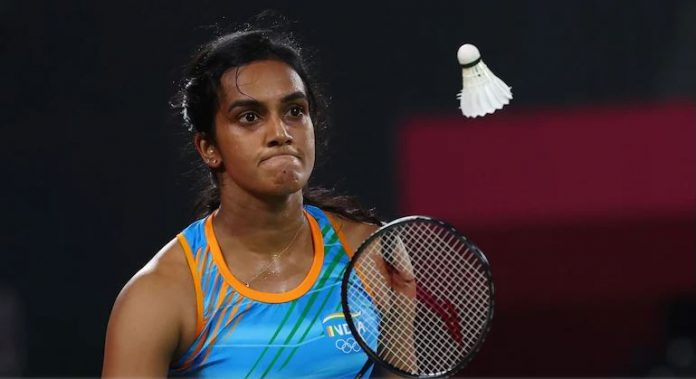
-BADMINTON: Current world champion P V Sindhu made an excellent start to her Olympics this year, thrashing Israel’s Ksenia Polikarpova in straight games in the women’s singles group J match here on day-2.

The 26-year-old Indian seeded sixth, beating the 58th ranked Polikarpova 21-7 21-10 in a lop-sided opening match. She defeated her in just 37 minutes.

-TABLE TENNIS: 11 minutes into her second-round match, Manika Batra seemed to be much tensed. Rarely does she betray any emotion, but the cameras managed to catch her frown, as she silently sipped water, trying to figure out how to overcome the 2-0 deficit at the hands of World No 32 Margaryta Pesotska 2-0. The answer wasn’t what she was doing wrong. Rather it was what she wasn’t doing.

In the first two games, it was the second part of her game that she didn’t follow. In a match that lasted 57 minutes at the Tokyo Metropolitan Gymnasium, the World No 62 ended up overcoming the deficit to pull off an upset 4-3 (4-11, 4-11, 11-7, 12-10, 8-11, 11-5, 11-7) win for Batra understood the changes she needed to bring into the match from the third game. She started rallies slowly, soaking in Pesotska’s shots and sending them back with plentiful spin but not much speed – placement was key. Just when it seemed the Ukrainian was about to find a footing in the rally, Batra would start whipping in faster backhands and forehands.

That’s what happened when the Ukrainian hit a forehand long on match point to send Batra into the third round in the Olympics.

-BOXING: Mary Kom began her Tokyo 2020 campaign with a round of 32 wins in the 51kg category but fellow boxer Manish Kaushik (63kg category) faced an early exit with a loss in the round of 32. She entered the pre-quarters. 

 -Women’s 10m air pistol: Indian shooters struggled under a lot of pressure for a second successive day as Manu Bhaker and Yashaswini Singh Deswal failed to make the finals of the women’s 10m air pistol event in the Tokyo Olympics here on Sunday.

But she was not consistent enough to challenge the top guns, bowing out in 13th place with scores of 94, 98, 94, 97, 96, and 95 for an aggregate of 574.

Having started with an impressive 98, including five 10s in the first series, Manu finished the event in 12th place with a total score of 575.

The problem with her gun saw her lose five minutes but she came back to manage a 95. The cut-off was 577.

-TENNIS: Top-ranked Ash Barty has been upset by 48th-ranked Spanish opponent Sara Sorribes Tormo 6-4, 6-3 in the first round of the Tokyo tennis tournament.

It was Barty’s Olympic singles debut. She won a doubles match with Australian teammate Storm Sanders on Saturday. Sania and Raina were running away with the contest after bageling their opponents but in a dramatic turnaround, the Kichenok sisters came back from the dead to pull off a 0-6 7-6(0) 10-8 win at court 11 of Ariake Tennis Centre. But disappointed India by losing the very first game.

-GYMNASTIC: India’s lone gymnast at Tokyo Olympics, Pranati Nayak failed to qualify for the All-Round finals of the Artistic Gymnastics competition here on Sunday.

The 26-year-old from West Bengal recorded a total score of 42.565 over the four categories — floor exercise, vault, uneven, bars, and balance beam — at the Ariake Gymnastics center.

-TABLE TENNIS MEN’S SINGLES: Indian table tennis player G Sathiyan suffered an upset defeat at the hands of lower-ranked Siu Hang Lam to make an early exit from the men’s singles competition at the Tokyo Games, here on Sunday.

Ranked 38 and seeded 26th, Sathiyan had a commanding 3-1 lead but lost four games in a row to lose 3-4 to the 95th ranked Hong Kong player. The first game was tight but the Hong Kong player pulled away from 6-6 with his forehand at work.

Sathiyan switched gears after the opening game with ease. He hit a forehand out to be down by match point. Lam sealed it when Sathiyan made a big error and resulted in a loss.

SWIMMING: Nethra Kumanan 27th overall after two races (out of 10). : Divyansh and Deepak bow out as they finished 32nd and 26th respectively. Maana Patel clocked 1:05.20 in the women’s 100m backstroke heats, finishing 39th overall. She failed to qualify for the semis.

Srihari Nataraj finished 27th overall in the men’s 100m backstroke heats and failed to qualify for the semis. He clocked 54.31s.

Also Read- Digitalization in Space Industry

Digitalization in Space Industry

0
Digitalization in Space Industry

The Space Industry is growing and getting advanced day by day as it uses advanced technologies to be successful in its missions or operations. Almost 60 to 70 percent of the space industry has started moving towards full digitalization. There is a company named, RUAG Space, has expanded its business to the United States as the US is known as Hub of Innovation and Technology. RUAG Space has shifted its business to the US because they need complete robust engineering and technology.

The power of Digital Electronics is incredible as satellites onboard computer processes up to 4000 million of instructions per second.

The onboard computer is one of the fine digital products that has been made till now and it has been only installed in RUAG Space. This Onboard computer controls all central functions of a satellite or rocket and it also helps to provide significant data for mission control.

The Senior Vice President Electronics at RUAG Space has stated that “Our aim is not just to drive a digital mindset, our products are – in essence – purely digital. And this is the experience that we are sharing with our customers, a combined total of 2,900 failure-free years of our equipment in orbit”

The Digital Paradox

Focusing more on access to the internet, mobile connectivity, and autonomous cars is like a paradox. The infrastructure of satellites enables digitalization on Earth, the space industry has started adopting advanced technologies at an early stage.

Linder said, “The space industry can take more time to fully embrace new engineering or production patterns, but there is too much for the industry to gain. Having rich and advanced technology in digital products and we want to further upgrade the technology that helps to build high-performance spacecraft infrastructure that in turn connects the world”.

Apart from the Onboard computers, RUAG Space also manufactures different mission equipment such as Antennas for NASA’s James Webb Telescope or microwave products for new space companies like Astranis. RUAG’s navigation systems are now flying on environmental satellite ICESat- 2 to localize the satellite at all times.

Leveraging digital processes

Digitalization is not only about getting advanced with technology or digital products. Nowadays, On-board computers are much smaller in size than the older version. With the use of 3D printing as a digital method, the parts for mechanical and electronic products are now being manufactured with an increasing amount of flexibility.

Ready to manufacture in mass

Advancement in technology helps us to deliver a large number of electronic products at a very low cost and duration.

Linder said that “We are now one of the few companies in the market, that can manufacture in mass — which is a critical capability when it comes to supplying constellations and new space projects,”

“We are leveraging our development findings from one area to the other – but most importantly, we are ready to create new technology that will enable our customers to be at the forefront of the industry”

Powerful hardware for AI

Nowadays this is a hot topic that is going on in the news i.e. how AI can be a powerful tool for the space industry.

Connecting mechanical and electronics competence

RUAG Space connects its mechanical and electronics experience and has made its name in the space market key suppliers. They supply mechanical dispensers, satellite panels, and thermal components for the OneWeb mega constellation project. RUAG Space is also a key supplier for NASA as they make a special component for the NASA space launch system. RUAG Space will be exhibiting its capabilities at the 35th National Space Symposium, at booth #729.

Also, Read – 4.2 magnitude earthquake jolts Sikkim

4.2 magnitude earthquake jolts Sikkim

0
Earthquake Jolts Sikkim
Earthquake jolts Sikkim, parts of Northeast

An earthquake of moderate intensity in the Richter Scale jolted Assam on Sunday at 8:39 PM. Tremors were also felt in several other parts of the Sikkim.

The magnitude of the earthquake has been measured to be 4.2 in the Richter Scale, as per the National Center for Seismology.

The earthquake was felt at 8:39 PM. 

Moderate mag. 4.0 earthquake – 12 km west of Gangtok, East District, Sikkim, India, on Sunday, 25 Jul 2021 8:39 pm (GMT +5:30) According to the sources. 

The tremor was recorded in the evening on Sunday 25 July 2021 at 8:09 pm local time, at a very shallow depth of 5 km below the surface.

The event was filed by India’s National Center for Seismology (NCS), the first seismological agency to report it.

Based on the preliminary seismic data, the quake was probably felt by many people in the area of the epicenter. 

In Singtam (pop. 6,100) located 1 km from the epicenter, the quake should have been felt as light shaking.

Weak shaking might have been felt in Gangtok (pop. 30,700) located 15 km from the epicenter, Kalimpong (pop. 43,000) 19 km away, and Darjeeling (pop. 123,800) 32 km away.

Other towns or cities near the epicenter where the quake might have been felt as very weak shaking include Kurseong (pop. 46,400) located 45 km from the epicenter, Siliguri (pop. 515,600) 59 km away, Bagdogra (pop. 17,400) 63 km away, and Naxalbari (pop. 57,300) 68 km away.

Also Read – SPYF voice for rural Sikkimese amid Restriction, call it harassment