Tuesday, August 25, 2026
Home Blog Page 81

Exercising regularly can decrease deaths from natural causes

0
"Regular Exercise"

Healthy Eating has Visible effects:

Our body is a mechanism that functions on eating and moving physically from one place to another. To keep this living mechanism fit and active you have to take care of what you put inside it. Whatever goes inside is completely visible in the outer appearance of your body. If you will eat healthily and exercise properly, it would be visible in outer appearance. If you don’t you will look like an unhealthy lazy potato. Keeping our body fit and active by engaging it in any kind of physical activity is crucial. 

How important is Exercising?

A study found that exercising regularly for at least 25 minutes can decrease deaths from natural causes to some extent. The study also indicates that a higher level of regular physical exercise compared to inactivity was advantageous. This was even in contaminated areas, although the lower exposure to pollution was better. Regardless of whether you are exposed to air pollution or not, ordinary exercise will reduce the risk of death. Therefore, habitual exercise should be used to improve health. The strategy is promoted to include people living in relatively polluted areas.

It was found that high levels of habitual exercise and low exposure to air pollution were linked to a lower risk of death from natural causes. While low levels of routine exercise and high exposure were linked to a higher risk of death. This study complements several other smaller studies conducted in the United States, Denmark, and Hong Kong that found that regular exercise is beneficial even in contaminated areas.

According to the researcher, further research is needed in areas with high levels of air pollution to verify the applicability of the results. The research emphasizes the importance of controlling air pollution, such as reducing the harmful effects of air pollution and maximizing the positive effects of regular exercise.

Also, Read| Young Indians at a higher risk of Cardiovascular Diseases

Young Indians at a higher risk of Cardiovascular Diseases

0
Cardiovascular Diseases

Cardiovascular Diseases:

There used to be a time when heart-related diseases were only associated with old people or age 30 plus. Here comes the time when all age groups are equally targets of cardiovascular diseases. In India, every third person is suffering from high cholesterol issues and obesity. We can’t only blame wrong eating habits for resulting in this as stress and lack of time to take care of our bodies equally contribute to making our hearts unhealthy. India already records one-fifth of deaths worldwide, caused by cardiovascular diseases. This reflects in the younger population as well, with an age-standardized death rate of 272 per 1,00,000 population as compared to the global average of 235.

A busy and hectic life schedule has become new normal for both children and adults. The pandemic has also contributed a lot to unhealthy lifestyles. People spend more time sitting online rather than doing physical movement of their bodies. Especially being an Indian we all love extra oil and butter in our food which doubles the risk of heart-related problems. The increased intake of junk food in today’s generation has made them more prone to cardiovascular diseases.

A 2019 study by Saffolalife found that in top cities, age groups between 30 and 40, 58% of people who do not exercise regularly have a higher risk of heart disease. Even so, 92% of them do not think that lack of exercise is one of the three major risk factors for heart disease. This lack of awareness makes the problem worse.

What can be done?

Fortunately, we can control our health to some extent. After all, it’s your own body and you can try your level best to keep it fit and healthy. It is not difficult to take care of your heart. Once you understand the risk factors, you can take the right steps to reduce their effects. Simple changes in your diet and lifestyle can indeed make a difference. 

The easiest and first step to ensure good health is to get regular check-ups done so that you can know about the disease at its earliest. This allows you to recognize symptoms earlier and take corrective actions immediately. Develop healthy lifestyle habits, such as walking briskly for about 20 minutes a day, drinking more water and avoiding food that contains more oil than usual. Try to take a break between working hours and perform deep breathing exercises.

Exercising doesn’t mean you have to spend money on expensive gyms. Doing some yoga, walking or any other physical activity such as dancing will do wonders for your health. Try doing exercises that help to reduce stress. Start doing activities that interest your soul to make you happy from the inside. Sleep on time get up early and schedule your lifecycle. Make simple and easy changes to your diet, such as B. Eat a serving of raw fruits and vegetables at snack time every day. Try adding heart-healthy ingredients such as nuts, leafy green vegetables, avocados, and oats. Using heart-healthy oils can also be a great and easy change.

The day we will learn to run our mind and body in the correct order, will be the day our heart will win!

Also, Read| WOMEN UNDER THREAT IN THE NAME OF ISLAM

THE TRUMAN SHOW| TV & ENTERTAINMENT

0
THE TRUMAN SHOW

At some point in our lives, we all wanted to be a part of reality shows like The Truman Show. Even at least, say we all wanted to be popular, we want people to watch us. Many of us in our childhood would have believed that we all are a part of reality shows and people are watching us – no worries, no one is judging us. 

However as we all grew up world’s reality hit us hard, we realized that was all just our childish imagination. 

Truman Show Delusion:

I know you all are a little mesmerized by my lines above. Well, I am not sure how many of you are aware of the term “Truman Show Delusion”.

Truman Show Delusion: The Truman Show, a comedy-drama film made in 1998, directed by Peter Weir. In this movie, there is a man with an ordinary life, an ordinary wife and ordinary neighbors but one day he found out that his life is a TV show and all people around him was mere actors.

Many people have liked this movie while other people relate them to this movie. “Truman Show” syndrome is a psychological condition in which people are convinced that they are living in a reality TV show world, that everybody around them is an actor with scripts to enact their lines. They believe that their whole life is a reality show and people are watching them every second. 

The syndrome name comes from the movie The Truman Show. It was coined by Joel Gold and his brother Ian gold, NYU psychiatrist, in 2008.

Gold said he first came across a patient with what he and his brother would later label the “Truman Show delusion” at Bellevue Hospital in New York City around Halloween 2003.

“The first time I experienced it, I was fascinated but didn’t think much of it,” he said. “By the time we got to five patients, I said, ‘this is something unusual.'” 

Gold spent the next 11 years studying the phenomenon – a type of paranoid psychosis. He and his brother published a book, “Suspicious Minds,” in 2014 that details the ways delusion manifest in psychiatric patients.

[businessinsider.in]

·      WHY DO PEOPLE FEEL LIKE THIS?

Ever wondered what are factors caused people to think like that? Well, according to researchers, these delusions are more likely to happen to those who wants to stand out in a crowd, who loves to become the centre of attention. 

Above all, such delusions make the lives of people suffering from the more difficult. Treatment options are also limited as there is no particular diagnosis for it. The treatment for this delusion is the same as the treatment for schizophrenia or bipolar disorder which is hospitalization, medication, close observation. However, there is no guarantee of recovery.

Also, Read| WOMEN UNDER THREAT IN THE NAME OF ISLAM

WOMEN UNDER THREAT IN THE NAME OF ISLAM

0
Women Under Islam
Women’s Rights and lives at risk under the new Taliban’s Islam Law

Women in this world have been discriminated against in the name of Islam for decades. And the current situation in Afghanistan or any Muslim majority country is no more exception than that. In Muslim-majority countries, women’s inclusion and status have not always improved as a country’s economic condition improves. Gender inequality affects both richer and poorer Muslim-majority countries. Women’s rights, already harmed by tradition and social conservatism, are now being targeted even harder by radical Islamists. They want to remake communities in the image of what they consider to be immaculate Islam in earlier ages. Traditionalist Muslims and Islamists have questioned the Western ideal of full participation of women in public life, particularly politics, for decades.

SHARIA LAW

The current Taliban lead Afghanistan is all set to implement Saria Law in Afghanistan. This will take all the freedom of women in Afghanistan. After taking Kabul, when Taliban were considering giving rights to women, even then they shot and killed a woman for not wearing a hijab. After conquering Afghanistan, Taliban groups are hunting for sex slaves and are targeting youngsters as young as 12 years old. Taliban leaders are said to regard unmarried — or widowed — women and girls between the ages of 12 and 45 as spoils of war and they are to be distributed among their warriors. Although the situation of women in Afghanistan is highlighted, the situation of women in almost all the Muslim majority countries is the same.  

HUDOOD LAW

If we look at our neighbor Pakistan, the Hudood law has suppressed women for quite a long time. Hudood means “boundaries” in Arabic. According to this law prohibited sexual practises, such as rape, were transformed into religious offences. With separate evidentiary standards and punishments, as well as the appellate authority of Islamic higher courts. These controversial Hudood Ordinances were enacted by General Ziaul Haq’s military administration in Pakistan in 1979. According to this, rape was no longer covered by the regular penal law. But by the Offence of Zina Ordinance, a subtype of the Enforcement of Hudood Ordinance of 1979, as a result of these modifications. 

QURAN AND JIHAD 

This law was brought in the name of the Quran. However, the law makers mislead them in the name of Jihad. The Quranic language is simple and straightforward. But there are many rules in Quran too which are very radical and conservative and needs to be revised. The draconian rule has made it difficult for women to compete with the opposite gender in the 21st century. 

FEMALE VICTIM 

In Pakistan, the Hudood code has made it impossible for a rape victim to receive justice. According to this law, the courts demand four “adult male” eyewitnesses to rape under the Hudood Ordinance. The Quran also requires the production of four witnesses, not merely male witnesses, to prevent false allegations of fornication against women. Although the Quran does not require four male witnesses, General Zia’s Hudood law does, requiring “at least four Muslim adult witnesses, about whom the Court is satisfied.” 

The four males witnessed can only be provided if the rape is committed in public and nude is it conceivable to present four witnesses who had explicitly witnessed the sexual act. When a female victim cannot produce four male eyewitnesses, she is charged under false report under Tazeer. If a woman falls pregnant as a result of rape, the rapist or rapists are given a free pass. But the woman is charged with fornication using pregnancy as evidence. 

Safia Bibi’s case:

Well-known example of this law seen in 1983 when Safia Bibi, an 18-year-old blind girl, was raped by her landlord and his son. As a result, Safia got pregnant. Surprisingly, she was charged with fornication after failing to establish her allegation of rape. After not proving her charges, she was found guilty, and sentenced to three years in prison. Along with 15 lashings and was fined Rs 1000 under the draconian Hudood Ordinance islam.

While no one had been sentenced to death or had their hand or foot under severe charges, as a result of the law. Critics claimed that the ordinance made it unsafe to submit rape allegations. As women may be punished under Tazeer if they failed to establish the allegation of rape.

Jehan Mina’s case:

Another frightening rape case again came into the mainstream of the media in the same year of 1983. Jehan Mina, a 13-year-old orphaned girl, was similarly raped by her uncle and his son. She, too, became pregnant. Zina was sentenced to 100 lashes and three years of harsh imprisonment after failing to persuade the court that she had been raped. The fact that she was pregnant was used by the court to prove that she had engaged in sex outside of marriage.

NATIONAL COMMISSION ON THE STATUS OF WOMEN

Before the scary Hudood ordinances were enacted in 1979, there were 70 women imprisoned in Pakistani jails. This number soon became 6000 by 1988. According to a 2003 report by the National Commission on the Status of Women (NCSW), “80 percent of women” were imprisoned because “they failed to substantiate rape claims and were thus convicted of adultery under Tazeer.” 

In Pakistan, rape has become very common. According to the Human Rights Commission of Pakistan’s 2002 annual report, “one woman is raped every two hours, and one woman is gang-raped every eight hours.” Due to social taboos and the stigma that the heinous conduct brings against a woman, the vast majority of cases go unreported.

CONCLUSION

The main question that arises here is how long humanity will tolerate such inhuman behaviour on women in the name of Islam and Jihad. We are currently living in the 21st century, still the condition of women in the Muslim majority countries is worst. In few Muslim majority countries, the woman is not allowed to cast vote or go outside their house without Hijab. On one side, we talk about woman empowerment. Yet on the other hand, we keep silent seeing such conditions of women in Islam.

Also, Read| TRANSPARENCY AROUND PHONEPE TRANSACTION DATA, MADE PUBLIC

CORONA: AN ABYSMAL DISEASE OF WAR (ONCE IN A LIFETIME)

0
CORONA: AN ABYSMAL DISEASE OF WAR (ONCE IN A LIFETIME)

The silent killer corona has changed everything. Fundamentally what we do and what we don’t in life. It has modified the normal course of human activity and behaviors. We are facing a crisis that we have never faced before such scale and rampage. Thus, it’s a testing time for everyone to contemplate and review rather than hearsay. Remember always that ‘whatever goes around, will come around’. I think the pandemic was caused because humans made superfluous and redundant activities. These directly affected the fragile environment of nature where all living sentient beings coexist together. 

However, on the other hand, this ongoing pandemic is rapidly sprouting into a global political and economic crisis. It has broken down all activities including political and economic mobilization; borders sealed caused panic and it’s not less than a war in itself. 

ANECDOTE OF PANDEMIC

Corona is an appalling unprecedented pandemic; hence, we are today in life and death situations. This consequence is the biggest human crisis ever happened.

Though the past shows that there have been several unnerved pandemics that happened in the human realm and affect human lives. These including plague, smallpox, cholera, dengue, HIV&AIDS, SARS (severe acute respiratory syndrome, tuberculosis, influenza, and West Nile disease (WHO,2011b). In principle, such infectious disease are not alleviated unless the vaccine is developed. 

Without a vaccine, the COVID 19 will not work as an incurable and entrenched phenomenon. However, people might be fine after testing positive based on his /her immune system. Age bar and even ethnic background, some factorial reasons given by health experts. However, in the case of the corona virus, it’s not a new phenomenon. It surfaced at different interval periods since the first case corona virus was notified as cold in the 1960s (229E) 1967(OC43). But never considered it as a fatal disease followed by 3003(SARS-CoV-1) 2004(NL63) 2005(HKUI) 2012(MERS-CoV) and 2019(SARS-CoV2) from many developed countries including the USA. For the first time WHO declared ‘state emergency’ when the cases flared up excessively.

This COVID 19 is a new and the most dangerous pandemic comparing to the other epidemics. It still has scientists and medical professionals all across the world working dedicatedly on a vaccine. But not being able to come with some tangible solutions. A million lives across the globe put to rest and the other lives still at stake. Sorrow and suffering are enormous as psychological stigma and anxiety; resources exhausted, all government and non-government establishments are almost dysfunctional and overall everything brought to a halt.

Transmission:

The virus transmitted from human to human via droplets coughed or exhaled by infected persons. Then by touching droplet contaminated surfaces or objects, and then moving the eyes, nose, or mouth (ECDP 2020). The most common symptoms reportedly found are fever, dry cough, dyspnea, sore throat, headache, and myalgia or arthralgia even diarrhea and vomiting. 

However, various conspiracy theories and political rumors flouting in media everywhere. It’s still unknown that how it developed and spread. Except primarily it was first identified in Wuhan, the capital of Hubei province, China in December 2019. The outbreak began to spread out all across the world fast and furious. US president Trump calling Corona as the ‘Chinese virus’ is nothing but the political war to put everything on China. Since America is the most affected country in the world both in fatality and infected cases of the virus.

Infected cases and fatalities numbers from the affected countries as per official records such as WHO, CDE, ECDP websites are mindboggling. But remember the real numbers are much higher than the official numbers. Hence the present corona cases of infected and death number is contentious in almost all the countries because of different reason. 

On the 30th of January 2020, WHO officially declared COVID 19 as an epidemic of public health emergency of international concern (WHO2020). Expert sources put on India the most susceptible to Corona. It may become like the USA, UK, Italy, Spain, Brazil, if the guidelines in place are not followed strictly. Considering India’s dilapidated medical infrastructure and unorganized sectors, and importantly the 1.38 crore dense populations are impracticable. 

IMPACT OF CORONA ON BUSINESSES 

COVID 19 has brought immense hardship to everyone irrespective of poor and rich. As poor struggling with their livelihood who survive on a day to day earnings. While rich are facing off economic hardship due to lockdown. Though the world economy is crushed at low, Internal and external politics is flared up, security is threatened, lost millions of jobs globally. Also, the health care system is creeping especially in the less developed and most populated countries like India, Pakistan, Bangladesh, and African countries. As a result, these countries are struggling to cope with the fast increasing cases of corona outbreak.

 In the case of India’s poor health infrastructures and resources such as doctors, healthcare workers, gear, medicines, ventilations status are bizarre in government hospitals. On the other hand, private hospital rates are skyrocketing. The mental health aspect deteriorated the scale of media hysteria is gone out of political and religious fanaticism that worsen the situation for 1.30 Billion. Indians show the biasness of Indian media, which are politically corrupt, morally bankrupt, and ethno-religiously prejudiced. The departure of Indian informal workers unexpectedly left them jobless in a day. They abruptly started moving to their homes from cities on foot in harsh hot weather with their children and belongings. This was disheartening and many who lost their livelihood and lives due to starvation in this pandemic crisis. 

EASING MEASURES

Lockdown means complete shutdown and restrictions of movement. With hard rules in places like an emergency measure to ease the pandemic. So as a preventive measure, people were informed to go through various protective appliances. Following safety measures both within and outside the vicinity such as face masks, hand gloves, washing hands often, social distancing etc. 

Domestic abuse is on the rise, a lot of discontentment among the people. More importantly it’s catastrophe for the tourism sector as hotels, pubs, café businesses all shut down. Opening lockdown partially or fully at this stage particularly country like India would be an absolute blunder when cases are flaring up faster. 

However, on the other side, the level of frustration is high, great agony for people at home, they want to go back to work and send children to school. However, instead of all these crisis experts, views say that prolonged lockdown helps India.

The government guidelines measure is to implement social distancing as social restrictions to curb down the COVID 19 menaces. Using various processes such as wearing face mask or face covering made essential in public spaces to hoard from the infectious and severity of the virus. But still people vaguely breaching social distancing rules. Moreover, social distancing almost looks impossible in India, considering the demographic contour and different ethnic backgrounds.

The other problem of wearing protector gear in monsoon bond areas. This makes the situation worse especially hotspot cities like Mumbai, Assam, Delhi, Ahmadabad and many other places. They may turn into New York and London because it’s highly potential looking at the present pathetic situation as what experts say so.

MEASURES TO MINIMIZE RISK  

The government held accountable for these difficult circumstances and unprecedented time that prevailing since February 2020. For their casual attitude for not coping with this pandemic virus at the initial stage of spreading in December 2019 was a horrendous mistake or an error of judgment on the part of the government and concerned agencies. Those countries quick in their action done it in time like China, Taiwan, Japan, Korea, Thailand, Sri Lanka, Hong-Kong, Singapore New Zealand, Australia, Mongolia, and many others but rest of the world done nothing and their callous attitude cost many lives and put the entire human life at risk.

 The apparent government complacency shows that the government has no preparedness for this global pandemic no detailed action plan like necessary restrictions in place and easing strategy etc. right from the pre and post-pandemic crisis nobody knows except people holding nerves and held head high as one’s self-defence in such worst-case scenario as said rightly ‘Mind is the maker of one’s destiny’. 

With no coordination, no collective views, how will one fight against the pandemic which is a global problem and needs global solutions. This now is a big challenge for the government at the center where India’s cases of corona running like a bullet train. Hence, social distancing will continue to remain for long until the virus is not eliminated. Whereas lockdown may ease slowly while keeping in mind the economy which is the lifeline.

Also, Read| WHY NEGATIVITY ATTRACTS MORE THAN POSITIVITY?

TEXTILES SECTOR INCENTIVE SCHEME APPROVED BY UNION CABINET OF RS 10,683 CRORE

0
Textiles industry in India

The Textiles Sector Incentive Scheme approved by the Union Cabinet for Rs 10,683 crore. On Wednesday, the Union Cabinet approved a Rs 10,683 crore textiles production-linked incentive scheme.

Companies that create more than 50 man-made fibre textiles and fabrics, as well as some technological textile items, eligible for this programme. The telecom industry’s five-year plan is part of a PLI plan for essential sectors valued at about Rs 2 lakh crore.

OFFER

The Minister of Textiles, Commerce, and Industry, Piyush Goyal, planned to offer it as part of a larger package of initiatives for the industry. This included fee refunds and other incentives recently agreed by the Cabinet.

The bulk of textiles produced in India made of natural fibres. Such as cotton, although man-made fibres produced throughout the world account for the majority. The goal is to increase India’s share of this market. Presently it is less than 3%, according to Textiles Secretary Upendra Prasad Singh.

INVESTMENT

Entities that invest more than Rs 300 crore in the plant, machinery, equipment, and civil works for the production of chosen commodities eligible for a 15% bonus based on turnover. It will require Rs 600 crore in the third year. It will decrease by one percentage point each year until it is phased out after the fifth year. But only if incremental turnover is achieved. There is another option for people who want to invest.

The programme, according to Goyal, will give priority to institutions that open stores in underserved areas and create more jobs. The Ministry of Textiles intends to announce the scheme in the coming days. As well as the guidelines, by the end of the month. According to Singh, companies should be able to apply in November and December.

Over the next five years, the government expects fresh investments of Rs 19,000 crore, resulting in a total turnover of Rs 3 lakh crore and additional employment opportunities for roughly 7.5 lakh people.

Also, Read| WHY NEGATIVITY ATTRACTS MORE THAN POSITIVITY?

WHY NEGATIVITY ATTRACTS MORE THAN POSITIVITY?

0
POSITIVITY?
POSITIVITY?

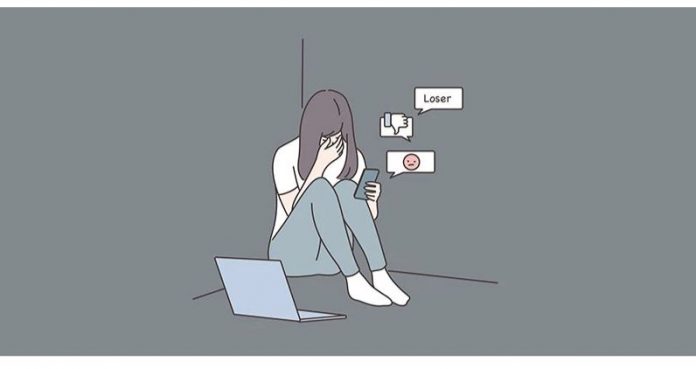
NEGATIVITY is just one word to spell but the effects it has on people are disastrous. Have you ever been stuck on the things or feelings that you just cannot cope up with? Like an insult, or thoughts about making things right, fixing your mistakes.

Negative things are more likely to impact you as compared to positive things. We take criticisms more seriously than compliments. This is because negative energy or events impacts more on our brain than positive ones. Negative thoughts are strong.

NEGATIVITY BIAS:

The negative bias is our tendency not only to register negative stimuli more readily but also to dwell on these events. Also known as positive-negative asymmetry, this negativity bias means that we feel the sting of a rebuke more powerfully than we feel the joy of praise.

This psychological phenomenon explains why bad first impressions can be so difficult to overcome and why past traumas can have such long lingering effects. In almost any interaction, we are more likely to notice negative things and later remember them more vividly.

[verywellmind.com]

As human beings, we tend to think more about our past traumatic events even if the present is going well enough. If someone is praising us and on the other hand if someone is insulting us we react more towards the negative one. This shows that negativity attracts more.

Now let us take an example,

Suppose you are in your college taking classes and enjoying yourself with your friends and suddenly you caught up in a fight which spoils your mood. After returning home from all this chaos your mom asks you about your day and you reply with the word- terrible.   

Now you considered your day terrible because of all the fight even though it was a quite good day. That thing dwells on your mind after then. This is negativity bias.

WHAT RESEARCH SAYS ABOUT THIS:

· Psychological research says that negative bias encourages motivation to achieve something. If someone works to gain something then they lack the motivation to work on that thing but on the same hand if people are working because of losing something then they are more likely to work hard on that particular thing.

· Additionally, studies have shown that negative news is more likely to be perceived as truthful. Since negative information draws greater attention, it also may be seen as having greater validity. This might be why bad news seems to garner more attention. [verywellmind.com]

In studies conducted by psychologist John Cacioppo, participants were shown pictures of either positive, negative, or neutral images. The researchers then observed electrical activity in the brain. Negative images produced a much stronger response in the cerebral cortex than did positive or neutral images.

[verywellmind.com]

HOW TO OVERCOME NEGATIVE BIAS:

·   Start thinking positive things or thoughts. Stop negative self-talk. Try to focus on the good things in your life rather than dwelling on your negative thoughts.

·   Try to engage yourself in the activities that you enjoy. Shift your focus to the things that you like to do or that gives you pleasure.

·   Try to talk to someone close. Whenever you have negative thoughts, share them with someone with whom you are comfortable. Do not limit it to yourself.

·   If things do not seem well, consult it with a concerned doctor. 

TRANSPARENCY AROUND PHONEPE TRANSACTION DATA, MADE PUBLIC

0
PhonePe

ABOUT THE COMPANY

The PhonePe company is based in Bangalore, India, and offers digital payments and financial services. PhonePe founded by Sameer Nigam, Rahul Chari, and Burzin Engineer in December 2015. A mobile application based on the United Payments Interface (UPI) launched in August 2016 by PhonePe. In August 2014, PhonePe authorized by the Reserve Bank of India to issue and operate a semi-closed pre-paid payment system with Authorization Number: 75/2014.

BRIEF

In an announcement titled “PhonePe Pulse”, the company announced its interactive website that offers insight and trends on digital payments in the country. An interactive map of India on the website shows more than 2,000 Cr transactions by consumers, according to the fintech unicorn. Since the outbreak of the pandemic, UPI transaction in India has increased. NPCI data shows that UPI transactions in India grew 9.5% by volume and 5.4% by value over the previous month in August 2021. With over 45% market share of the UPI segment in India, PhonePe claims its data represents the country’s digital payment habits.

PULSE REPORT

 In addition, unicorn has released ‘Pulse Report’, a study that examines the evolution of digital payments over the past five years. The report describes how digital payment adoption has progressed across India since 2016 and includes detailed information on geographical and category trends.

Above all, content in the Pulse Report includes digital payments landscape in India, fintech journey, digital payments use cases, opportunity for growth, future of digital payments and more.

Also, Read| INDIA, THE UNSC AND THE CHANGING WORLD ORDER

INDIA, THE UNSC AND THE CHANGING WORLD ORDER

0
INDIA, THE UNSC AND THE CHANGING WORLD ORDER
UNSC

In the last, we discussed about UNSC and India’s contribution in UNSC. This article, discusses the shifting world order and new challenges. As well as how India can make the most of its two-year UNSC Non-Permanent Membership.

For the third time since the end of the Cold War, India admitted to the United Nations Security Council (UNSC). The current world order, however, is substantially different from India’s previous UNSC tenure in 1991-92 and 2011-12.

The question posed by the current world order is whether a peaceful agreement can result in the redistribution of power among the various superpowers.

In this setting, India should make the most of its two-year term as a non-permanent member of the UN Security Council to advance national interests and global peace.

CHANGING WORLD ORDER IN THE RECENT TIMES

  • New Cold-War: With the disintegration of the Soviet Union in 1991, the world order shifted from bipolar to unipolar. The current world order, on the other hand, lacks a systemic balance, which is necessary for maintaining international stability.

This is owing to the advent of a New Cold War between the United States and China. This amounts to a struggle for a new political, economic, and military power distribution.

Furthermore, the disparities between the United States, China, and Russia have become insurmountable.

  • Retrenchment of US: The United States’ withdrawal from global affairs is a key aspect of the contemporary international order. This seen in the United States’ withdrawal from the Paris Climate Agreement, the JCPOA, and other agreements. Multilateralism and globalization have taken a serious hit as a result of this retreat.
  • Indo-Pacific as a New Sub-System: The development of China has shifted the power balance in the South China Sea. As a result, countries such as the United States, India, Japan, and others have collaborated. Inorder to define the Indo-Pacific as a new sub-system in international politics.
  • Declining Role of UN: The UN Security Council (UNSC) is the UN’s principal executive body in charge of ensuring international peace and security.

The UNSC’s five permanent members, on the other hand, utilize their veto powers to protect their geopolitical interests, regardless of the devastating implications for victims of armed conflict, as seen in Syria, Iraq, and elsewhere.

  • UNSC resolution 2593: It was proposed by the United States, the United Kingdom, and France, and was enacted after 13 council members voted in favor.

The resolution states that Afghan land should not be used to threaten or attack any country. Nor should it be used to house or train terrorists, or to organize or finance terrorist operations.

It notably mentions the Lashkar-e-Taiba (LeT) and Jaish-e-Mohammed groups, as well as people and entities named by UNSC Resolution 1267. (JeM)

The permanent members Russia and China didn’t vote (they do not have veto power). While the other 13 members voted in favor.

CURRENT CHALLENGES FOR INDIAN FOREIGN POLICY

· Aggressive China: At the end of the Cold War, India should boost its multilateral cooperation with China in order to help create the conditions for settling the boundary dispute and expanding bilateral cooperation sectors.

This tactic, however, has proven ineffective, since China has adopted an aggressive posture toward India. Recent Galwan Valley Clashes demonstrate this.

Furthermore, China shields Pakistan from international pressures that India has attempted to mobilize through various forums.

· Compromising Non-Alignment: To confront China, India formed the Quad grouping with like-minded countries (US, India, Japan, and Australia).

However, India’s non-alignment image has been tarnished. As a result of its convergence with the US, and relations with former allies such as Russia have deteriorated.

· The Taliban Takeover: The re-establishment of Taliban control in Afghanistan poses some very major security threats to India.

The difficulties range from safeguarding the country’s development infrastructure to properly removing Indians stranded in Afghanistan.

WAY FORWARD: LEVERAGING NON-PERMANENT MEMBERSHIP

·    Becoming Part of the Great Game: The UNSC allows for long-term diplomatic dialogue between major powers, reducing tensions and opening up new avenues for collaboration.

Even in the midst of a broad-based confrontation, the US and China could explore potential common ground, much like the US and USSR did on nuclear proliferation issues during the Cold War.

In this environment, India has the potential to play a larger role in the face of renewed great power rivalry.

In addition, now that India has joined the UN Security Council in the midst of a continuous military stalemate. India may finally expose Chinese aggression in the Ladakh region.

· UNSC Reforms: Since the conclusion of the Cold War, India has demanded that the UNSC be made more “representative.”

In this context, India should continue to work with the G4 (Brazil, Germany, and Japan) to increase the United Nations Security Council and become a permanent member.

· Deepening International Collaboration: India will be able to enhance its new coalitions, such as the Quad, by engaging with peace and security concerns at the UNSC.

In addition, India might utilize its UNSC term to strengthen security cooperation with European partners such as France and Germany.

Despite Russia’s deteriorating troubles with the West and closer links to China, India must maintain an intense conversation with Russia on all international matters.

·         Engaging With Global South: India needs to revitalize its engagement with its traditional partners in the “global south” by articulating their peace and security concerns in the UNSC. In this context, two sub-groups of the global south should be of particular interest.

1.      Small Island States: Global warming and increasing sea levels are posing existential threats to several small island states across the world. They also find it difficult to maintain control over their vast marine holdings. Supporting the island republics’ sovereignty and viability is a critical political task for India.

2.      Africa: Peace and security in Africa is the subject of nearly half of UNSC sessions, 60% of UNSC publications, and 70% of UNSC resolutions. The African Union holds three seats in the UN Security Council (Kenya, Niger, and Tunisia), and there is regular consultation between the UNSC and the African Union’s Peace and Security Council (PSC) (AU). The UNSC term provides an excellent opportunity for India to step up its bilateral, regional, and global participation on African peace and security challenges.

CONCLUSION:

In addition, India’s foreign policy stance has moved from reactive to proactive. As a result, India’s new tenure in the UN Security Council should be more deliberate and realistic.

Purposefulness entails tying India’s UNSC participation to the country’s larger national objectives. Pragmatism necessitates responding to changing circumstances at the UNSC while also avoiding unduly ambitious ambitions.

In the next article, we will be discussing about UNSC Reforms in detail and its significance for India.

Also, Read| AS A PRETEXT TO DISREGARD RELIGION, SECURITY IS BEING USED

AS A PRETEXT TO DISREGARD RELIGION, SECURITY IS BEING USED

0
Religion

Coming from India, a country known for its diversity, I feel that all cultures should be valued equally. India is a country with many religions, there are many religious conflicts that occur on a regular basis. Taking a look at the country where love is most revered. The Taj Mahal in India is one of the most revered symbols of love.

SNATCHING OF BHAGWAT GITA

But, can you imagine that disagreements can escalate to disrespect? On Monday, a man named Rohit Kumar Choudhary tweeted that he encountered an extremely disrespectful circumstance. When passing through the security check at the Taj Mahal’s gate. He was carrying a pocket-sized Bhagavad Gita in his purse when the CISF snatched it from him and tossed it in the trash.

RELIGION AND MORALS:

The security worry is acceptable, but what about the issue of religious respect? Is this how people should treat one another’s religion or is it how people are disrespecting one another’s faith in the name of security?

Many others responded with things like, “What is done in the name of religion should be valued, not despised,” and “What is done in the name of religion should be valued, not ridiculed.”