Saturday, October 17, 2026
Home Blog Page 93

Should we pay full fees amid Pandemic?

0
Private school fees

Covid-19 has had caused nationwide lockdown, which has been extending since the last one and a half years. It resulted in shutting down of every school and college for the sake of protection. However, confronting everything for such a long time, things turn out to be new normal. Hoping to carry everything in the right way, education sector saw a drastic change. It majorly transformed from learning to e-learning. As the school and colleges are closed teaching is online. However, the only thing that is constant is the students’ fees. Do you think it is right in the time of this crisis where everyone is experiencing economic losses?

The University says:

Well-known University of Delhi is close for the last one and a half year for any kind of physical access. Everything had been running online. The University Grant Commission (UGC) announced to permanently make the major part of academic exercise digital. Still several students coming from a marginalised background who don’t have access to the new practices. They raise their voice against it but the authorities have been ambivalently about it.

Others concerned:

However, a University doesn’t only consist of students. There are professors, non-teaching staff, workers, and organization teams. All those associated with schools and Universities are to paid for their work. However, their efforts make to build the organization are appreciable but would it be fair to reduce their payment? All the staff, workers, organization heads are being paid by the fees. Hence, not charging any fees will potentially affect their payment. Consequently, this will hinder the functioning of the   system and all involved will be unsatisfied. As not paying individuals for the hard work that perform will also not be in good taste.

AISA:

AISA has also highlighted this issue through a Facebook post. The University of Delhi has been shut for the last one and a half years. By this time any kind of physical access has not been provided by them. They have faced a new dimension of online teaching and learning. They call it the new normal of education. 

The process of online learning continues, but the students are charged full fees of the college. They are not receiving any resources from the college. The libraries are closed, the physical classes have stopped. Also the digital classes are inaccessible because of network issues and gadgets, thus the classes have become irregular. AISA believes that charging full fees for the students is unfair as many of the student’s families have lost their jobs because of this they are under the burden of paying fees.

“AISA brings to you this survey to put forward to the University authorities. We seek to underline the conditions of the students and build a movement against the collection of fees in the University, demanding refund of previously paid fees” they added in the post.

They even released a Google form to let the community come forward and stand in support this. AISA had released a survey to look through this issue more clearly and put this forward to the university authorities. So that they could build a movement against the collection of fees in the University.

Read: THE MUCH-AWAITED RESULT: CLASS 10TH

THE MUCH-AWAITED RESULT: CLASS 10TH

0
CBSE Result class 10

CBSE declared class 10th result today- 3rd August 2021 at noon. Class 10th – a stage from where a student takes his/her first step towards their career path. Let’s talk about this furthermore. 10th board exams make a person calmer and mentally strong. It teaches you how to conquer stress. Don’t think of it as an exam rather think of it as a preparation for a new path. These exams evaluated by teachers which make you understand your ability and performance. The motive behind all this is to make you understand that these marks did not determine your career.

Student’s reactions on delaying of result:

We all have been aware of the delay of the class 10th results. To start with, CBSE firstly declared the result was expected by July 20th but later the board announced that the results might get delayed. Frustrated and tense students have their own opinion on this.

  • “The delay in declaration of results in adding up to the excitement and nervousness with each passing hour.”- Yashika Gupta, a student of Allahabad’s Maharishi Patanjali Vidya Mandir (MPVM).
  • “We are keeping our fingers crossed. It’s not about clearing the exams for us, it’s about how well we fare as compared to our friends and expectations.”- Shivansh Tripathi of Ganga Gurukulam School 

                                                                                          (HINDUSTAN TIMES)

Result details:

The much awaited result is here. Central Board Of Secondary Education (CBSE) declared its class 10th result on 3rd August, 2021 at 12 a.m. Unlike before, the CBSE made the announcement without any meme. Keeping the pandemic in mind, the board had cancelled all the exams and the students have been evaluated on the basis of internal assessment. The Result is spectacular as nearly all students have passed the exam. We can call it the best result of CBSE class 10th.

The result is available on the following websites:

cbse.nic.in

cbseresults.nic.in

digilocker.gov.in

Students can also check results at mobile apps including UMANG app, digilocker App, IVRS. To check results via SMS, students need to send cbse10 their roll number to 7738299899.

Passing Percentage:

  • As compared to the last year over 99.04% of students have passed out of 21,467 students.
  • 2, 00,962 students have scored more than 90%.
  • 57,824 students have scored 95% and above.
  • Talking about region-wise, Trivandrum is the champion of all regions as it has the highest pass percentage with over 99.99% of students clearing the exam.
  • Bengaluru is the second highest region with 99.96% pass percentage.
  • The Kendriya Vidyalaya (KVs) has a 100% pass percentage while Jawahar Navodaya Vidyalaya (JNVs) has a 99.99% pass percentage.
  • Once again girls have outrun the boys by 0.35%. 99.24% of girls have cleared the exam while 98.89% of boys have passed the exam.

26841 students out of 21.5 lakh students who have enrolled in private mode, their results are not out yet. Furthermore, about 16639 students’ results are under process.

It is not at all possible that all students are happy with their results. CBSE has a way for them. For all the students who are not satisfied with their results, they can apply for special exams. The registration process for the same will begin soon at cbse.nic.in. the exam schedule for these exams will be released very soon.

Asia must “buckle to battle” the possibility of a Third Covid-19 wave

Asia must “buckle to battle” the possibility of a Third Covid-19 wave

0
Asia must “buckle to battle” or COVID-19

The rise of COVID-19 cases with regards to the waves visibly seen varying from state to state in India. Amidst extended lockdowns to slow the transmission, Jammu state has seen the surge of the second wave. While, the cases in Kerala are now on the rise. The fear and anxiety with emergence of third wave of COVID-19 sweeping across Germany to Canada. Rise in Kerala Cases can be early signs of India being in Deep Waters again.

ASIAN’S NATION’S COVID-19 CASES ON RISE

Kerala has higher number of districts with positivity rate approximately 13.6%, half of the total caseloads in the country. Malappuram amongst other 13 districts is with 27,335 active cases contributing the most to the state’s active caseload. Moreover, the other Southern Nations, Indonesia’s positivity rate is close to that of India’s state of Kerala at 13.7%. According to seven days rolling average, there is a steep rise in Thailand, Vietnam, Malaysia. Thus, raising certain concerns and important questions.

COVID-19 appropriate behaviour concerns:

           1 Regular health check-ups

           2 Isolation of infected people to control the spread

           3 Double masking

           4 Widespread Public awareness

           5 Social Distancing

          6 Washing Hands Regularly

Internationally, the COVID-19 appropriate behaviour followed when the cases are on the rise. Amidst Virus spread, we also witnessed rally’s; protests held globally.

After warnings from the government banning mass gatherings on Eid al-Adha. Muslim populated country Indonesia seems to replace India as Asia’s COVID-19 hot spot. Bangladesh paused its lockdown and people went shopping and travelling the positivity rate was touching 29% from 3%. India’s North-eastern states Meghalaya, Assam, Tripura, Mizoram, and West Bengal bordering Bangladesh also highly affected by the virus spread. This sums up why appropriate behaviour should followed strictly. A need to understand why citizens tend to take emerging variants lightly and time to time reminders and strictness should follow.

Sluggish Vaccination process:

   1. Kerala: 39.90% of the population vaccinated. 38 per cent of the adult population has received at least one dose of vaccine. Kerala Model known for excellence in public health is being questioned the COVID19 surge handling.

“The present circumstance is that we are facing an acute shortage of the jab. That is the truth” news agency PTI quoted the chief minister.

Majority of the population aged 18-44 has not received the vaccination. Thus, flags acute shortage of vaccine supply. Kerala health care is also fighting the Zika virus.

2. Indonesia’s vaccine rate with 1 dose is 15% fully vaccinated. Not fully 10% which tells us that the slow vaccination rate and the surge of Delta variant is a concern.

UN Secretary General argues ”there is lack of Global Solidarity”. Also adding that only 1.1% of low-income countries received the first dose of vaccine. Making it evidently clear a need to push for equitable access to vaccines.

PREVENTION IS BETTER THAN CURE

Apart from developing health infrastructures, providing vaccines as grants and supplies, the testing (RT-PCR) must increase to keep a check on the “R” Reproductive Rate. It’s the basic reproduction ratio or rate or the basic reproductive rate, is an epidemiologic metric to describe the contagiousness or transmissibility of infectious agents. Greater R level means that the disease will grow fast wherein R level lower than 1 will subsequently die out.

Further, Kerala’s R level is hovering around 1, which means one patient is affecting one other person at least currently. The R value in India is currently below 1. Hence, they need to sort to lockdowns to make sure transmissibility rates stay lower.

The R value of Covid in Indonesia has been between 1.2- 1.4 during second wave outbreak. Indonesia is strictly implementing PPKM level 4 alongside accessing its vaccination drive.

The Implementation:

The implementation of level 4 and level 3 PPKM (PUBLIC ACTIVITY RESTRICTION) assessed based on three main factors. Namely the indicator of transmission rate and the response of the health system based on the WHO guidelines. The third indicator is the socio-economic condition of the community,” Pandjaitan told a virtual press conference.

Vaccine development goes through several phases and years process before its ready to for public use. Government, Private Firms, Multilateral organisations- the agents involved in the making of the vaccine. International efforts like COVAX– A Vaccine pillar of the Access to COVID-19 Tools (ACT) Accelerator.

Dozens of vaccines approved for emergency usage globally. Apart from slow vaccine process demand due to vaccination myth’s, we comprehend that uneven rollout of vaccines is a concern. Not every country has the capacity to produce and supply vaccines. The lower income countries must be kept in mind while fighting the way out of this epidemic. The severity of diseases can be controlled with a strong and fast pace of vaccination process and delivery.

“The efforts like testing, social distancing, cough etiquette, isolation if facing any symptom, most importantly it has to be the awareness campaigns, hygiene” the World Health Organization (WHO) regional director strongly advices.

Day-10 Tokyo: Women’s Hockey Made History

Day-10 Tokyo: Women’s Hockey Made History

0
Hockey India Team
  • Day-10 preview: The day started on a good note for team India. Indian discus thrower Kamalpreet Kaur finished in 6th place by throwing her best throw of 63.70m. The rain there created a lot of interruption.
  • Indian equestrian finished 23rd in the individual jumping event.
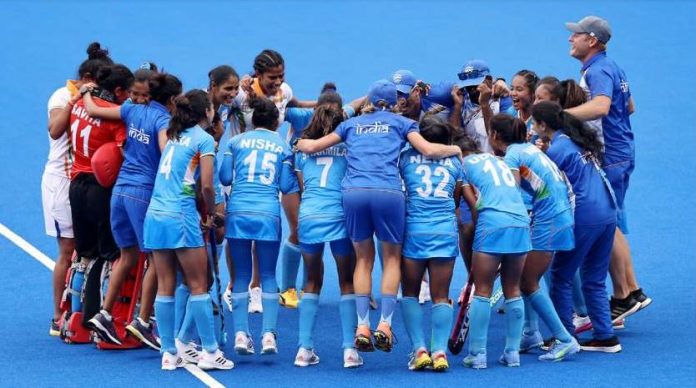
  • Meanwhile, Indian women’s hockey team stepped into the semi-finals by defeating Australia from 1-0 in Olympic Tokyo 2020. This dawned as another good news for the followers.
  • Though, Dutee Chand clocked her best time of 23.85 seconds. Yet, she couldn’t make up to the semi-finals in the 200m race.
  • The Indian shooters again they gave a disappointing performance. Aishwary Pratap Singh Tomar and Sanjeev Rajput failed to reserve their place on three positions left in 50m air rifle.

-About the Matches

  1. DISCUSS THROW: Indian thrower Kamalpreet Kaur finished in 6th place in Olympic Tokyo 2020. Heavy rain was a cause interruption but she gave her best by throwing in the distance of 63.70m in rain. The performance could have been better if there was no rain.
  • EQUESTRIAN: Indian equester Fauood Mirza finished at 23rd place in individual the jumping event in Tokyo Olympics 2020 with his horse Seigneur Medicottm. He was the only equestrian in the two decades who participated in the Olympic games. Scores for the final round included penalties incurred in the qualifying rounds too. Mirza, with an aggregate of 47.20 points from the three stages of eventing didn’t make to the podium. Germany’s Julia Krajewski eventually took gold in the event, making her the first female Olympic champion in eventing’s history. Great Britain’s Tom McEwen and Australia’s Andrew Hoy took silver and bronze respectively.
  • WOMEN’S HOCKEY TEAM: The Indian women’s hockey team made history on the 10th day of the Tokyo Olympics as they beat Australia 1-0 in the quarterfinals. Drag-flicker Gurjit Kaur rose to the occasion when it mattered. Kaur converted India’s lone penalty corner in the 22nd minute to surprise the Australians. Indian women’s made the whole of India proud once again.
  • RACE: Sprinter Dutee Chand ran her season’s best in 200m but it was not enough for a semifinals berth. She made a disappointing exit from the Olympics after finishing last in her heat race here on Monday. Dutee, who had also crashed out of her pet event 100m in the first round. She clocked 23.85 seconds to finish seventh and last in Heat 4.
  • 50m AIR RIFLE: Indian shooters had another disappointing day, with Aishwary Pratap Singh Tomar and Sanjeev Rajput failing to qualify for men’s 50m rifle three positions final. Tomar finished 21st in the qualification, while Rajput in 32nd position at the Asaka Shooting Range. The Indian shooting team returned without a medal for the second straight time at the Olympics.

Also, Read- Opposition Parties Shooting In The Dark On ONORC: SKM

Opposition Parties Shooting In The Dark On ONORC: SKM

0
onorc sikkim

At the very outset on ONORC, the Sikkim Krantikari Morcha Government under the leadership of Hon’ble Chief Minister, Shri PS Golay would like to categorically state that it firmly abides to uphold the sanctity of the sacred Article 371 (f) of the Constitution of India, a culmination of the salient 8th May Tripartite Agreement.

While a formidable opposition and constructive dissent is the key to a vibrant Democracy whereas obstructive politics will weaken the very fabric that binds our society. Politics should not be practiced just for the mere sake of staying relevant in the public domain by cooking up imaginary cuisines to feed the fanciful state of mind. Sikkim is today traumatized by the lousy opinions concocted by feeble intellectuals and politicos who are working with an aim to confuse the masses and weaken the Democratic foundation where our State proudly stands. Yesterday, they were smothering the public with a different issue and today they are smudging the people with the deliberate One Nation One Ration Card (ONORC) smear campaign.

▪︎One Nation, One Ration Card (ONORC) is a flagship scheme of the BJP led NDA Government aimed at enabling migrant workers and their family members to buy subsidized ration from any fair price shop anywhere in India under the National Food Security Act (NFSA), 2013.

▪︎ONORC will also put an end to the misuse of ration cards and fraudulent beneficiaries. It will promote transparency and accountability for the distribution of food grains under the public distribution system.

▪︎ Migrant workers residing away from their native place can avail themselves of the benefits. The Sikkimese who are residing anywhere in India will be entitled to avail themselves of the benefits.

The Supreme Court had set July 31st, 2021 as the deadline for the implementation of ONORC, directing the Centre and the States.

In a suo motu matter titled ” In Re: Problems and Miseries of Migrant Labourers” a case in close conjunction with the difficulties faced by migrant workers who were stranded in the different parts of the country amid pandemic Covid 19. The apex court had pronounced the following judgement, ” A Government cannot abdicate its duty to feed migrant workers especially during a pandemic, merely because they don’t have a ration card”. Therefore directing States to quickly implement ONROC by 31st July 2021 vide judgement directing all States and Union Territories to register all establishments and license all contractors under the Act, 1979 and ensure that statutory duty imposed on the Contractors give particulars of Migrant workers is fully complied with.

The SKM Government is not only following the judgement of the Hon’ble Supreme Court but it is also implementing a rather humanitarian approach in dealing with migrant labourers and their basic fundamental rights particularly in conjunction with episodes of pandemic Covid 19 which is here to stay.

We would like to humbly request the people of Sikkim to not be influenced by master manipulators who will go to any extent to further their political agenda. The public of Sikkim are capable enough to carry out their own research and understand the situation pertaining to ONORC and 371(f). 371 (f) is the soul of Sikkim and no force on Earth can detach it.

Originally written by Milan Basnett, who is also Head SKM Social Media Cell. He can be contacted on Facebook.

Also, Read – USA – Taliban: A Historical Background

USA – Taliban: A Historical Background

0
Taliban
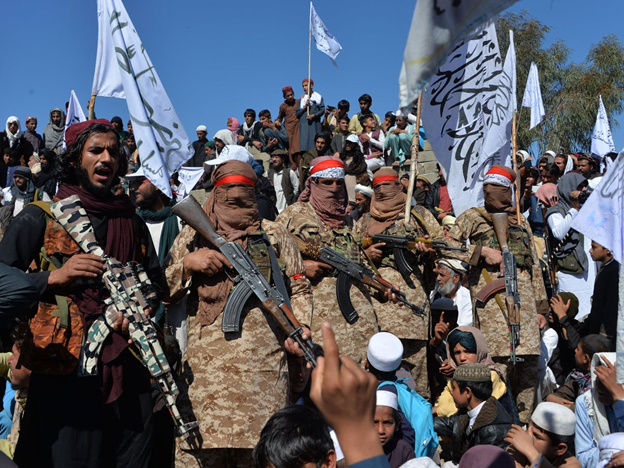
  • Recently, USA signed a deal (at Qatar’s capital-Doha) with the Taliban. It will pave the way towards a complete withdrawal of foreign soldiers from Afghanistan over the subsequent 14 months. Consequently, this represents a step towards ending the 18-year-war in Afghanistan. Besides, a separate joint declaration also signed between the Afghan government and the US at Kabul.
  • Further, the peace deal is predict to kick off two processes- a phased withdrawal of troops and an ‘intra-Afghan’ dialogue. The deal may be a fundamental step to deliver a comprehensive and permanent ceasefire. Therefore the future political roadmap for Afghanistan social process and the Central region.

In this article, we are going to discuss how this all started.

WHO IS THE TALIBAN?

  1. The Taliban, “students” in the Pashto language, emerged in the early 1990s, in northern Pakistan. Surfaced following the withdrawal of Soviet troops from Afghanistan. The Pashtun movement predominantly first appeared in religious seminaries. Mostly purchased by money from Saudi Arabia which preached a hardline sort of Sunni Islam.
  2. Taliban’s promise, in Pashtun areas straddling Pakistan and Afghanistan – was to revive peace and security. Also, to enforce their own austere version of Sharia, or Islamic law, once in power.
  3. From south-western Afghanistan, the Taliban quickly extended their influence. In September 1995 they captured the province of Herat, bordering Iran. Exactly one year later they captured the Afghan capital, Kabul, overthrowing the regime of President Burhanuddin Rabbani. One among the founding fathers of the Afghan mujahideen that resisted the Soviet occupation. By 1998, the Taliban were on top of things of just about 90% of Afghanistan.
Taliban

HOW DID THE CONFLICT START?

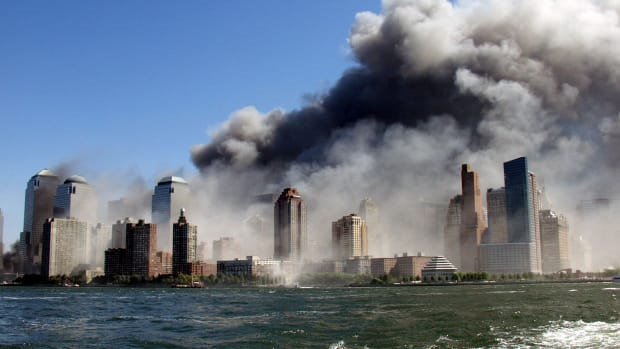
  1. On 11 September 2001, terrorist attacks in America killed nearly 3,000 people. Osama Bin Laden, the head of Islamist terror group al-Qaeda, identified as the man responsible. The Taliban, radical Islamists who ran Afghanistan at that time, protected Bin Laden, refused to hand him over.
  2. A month after 9/11, the US launched airstrikes against Afghanistan. The US joined by an international coalition and quickly removed the Taliban from power. However, they turned into an insurgent force and continued deadly attacks, destabilizing subsequent Afghan governments. Since then, the US is fighting a war against the Taliban.

INDO-TALIBAN RELATIONS

  • India and the Taliban share a bitter history. IC-814 hijack in 1999 (India’s passenger plane once hijacked and brought to Kandahar in Afghanistan. Under the control of them) made India to release terrorists — including Maulana Masood Azhar.
  • Masood founded Jaish-e-Mohammed carried out terror attacks on Parliament (2001), in Pathankot (2016) and in Pulwama (2019). Also, the Taliban perceived India as a hostile country, as India had supported the anti-Taliban force after the 9/11 attacks.
  • Significantly, India never extended diplomatic and official recognition to the Taliban when it had been in power during 1996-2001.
  • However, as their role in the Afghan peace process becomes inevitable, India started to make some strides. Earlier, India was a part of the Moscow-led talks with the Taliban in November 2018. The two former Indian diplomats attended as “non-official representatives”.
  • India is now moving to diplomatically engage with the Taliban. India’s presence at the agreement-signing ceremony is that the first sign of a possible diplomatic opening.

In the next article, we will be discussing the peace process in detail with features and challenges.

Also Read – Fight Against Pandemic: Global Vaccine Diplomacy

Day 9: India Finally Secures Its Second Medal

0
Day 9 of India in Tokyo

Day-9 preview of India in Tokyo 2020:

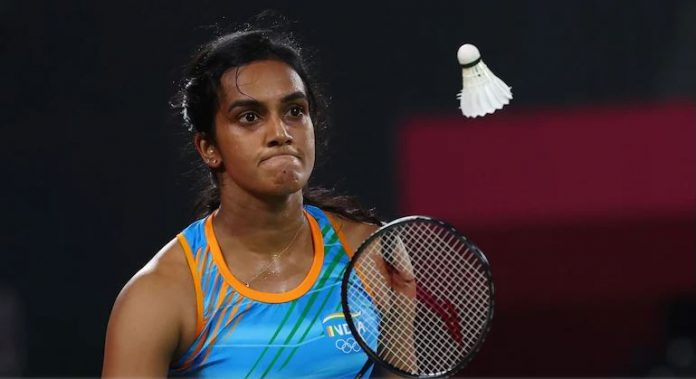
Team India started on a very good note. Men’s hockey team defeated Great Britain by 3-1 and stepped into the semi-finals of Olympic games after 49 years. It was a proud moment for them and their followers that they created history after over 5 decades. Another good news for India PV Sindhu won bronze in Olympics today. This too added up one more medal in India’s tally. She defeated China’s He Bingjiao in singles by 21-13, 21-15.

Before badminton and hockey, boxer Satish Kumar went down 0-5 to reigning world champion Bakhodir Jalolov today in heavyweight superfinals. Fouaad Mirza and his horse Seigneur Medicott are at 22nd after the cross country round in Tokyo Olympics 2020 in the day 9.

-ABOUT THE MATCHES

-MEN’S HOCKEY:

After 49 years, team India stepped in the semi-finals in the Olympics games. India defeated Great Britain by 3-1 today. The first goal made by Dilpreet Singh on (7th minute), the second goal by Gurjant Singh on (16th minute). Finally, the third goal to mark the win came from Hardik Singh on (57th minute). Great Britain’s only goal made by Sam Ward on (45th minute). The last time India reached the semi-finals was the Olympics of 1972 where they lost 0-2 by Pakistan. Now team India will see world champion Belgium on Tuesday.

-BADMINTON:

Another medal in India’s tally by PV Sindhu in Olympic today in day 9. She defeated Chinese He Bingjiao in singles and grabbed bronze medal. Sindhu became the only woman in India who won two medals in Olympic games. Previously, in Rio Olympics where she lost in the finals and now in Tokyo where she defeated He Bingjiao.

-MEN’S HEAVYWEIGHT:

A badly bruised Satish Kumar put up a gutsy performance against reigning world champion Bakhodir Jalolov. However, Satish Kumar couldn’t make it up to win against him. Returning to the ring with a lot of injuries after the pre-quarters Indian boxer Satish lost 0-5. The score line was not reflective of his brave performance. Satish was two times Asian games bronze winner and many times national champion. He intensely injured himself with 13 stitches above his eye and on his chin. He still decided to fight against the world champion to show his strength, courage and patriotism.

-EQUESTRIAN:

Fouuad Mirza India’s only equestrian in the Olympics in over 20 years and his horse Seigneur Madicott will be in the 25th position in the jumping show qualifier on Monday. Fouuad Mirza took 11.20 penalty points and is on 22nd after the cross country. His total points were 39.20. He completed the country run in just 8 minutes. He started late due to technical issue, had to incur the penalty of 11.20 for going over the allotted time. Further, Mirza has another event left where he has to finish in top 25. Then he will qualify for the evening individual jumping final.

Also Read- Fight Against Pandemic: Global Vaccine Diplomacy

Fight Against Pandemic: Global Vaccine Diplomacy

0
Sikkim to begin covid-vaccination for children aged 15-18

The pandemic destroyed the socio-economic lives of people across the globe. We have had epidemics like – Black Death, Spanish flu, HIV aids, Cholera pandemic, etc. Coronavirus along with its emerging variants is a newly developed infectious disease. Most people infected with the COVID-19 virus are set to be experiencing mild to moderate respiratory illness. Some may require special treatment for recovering others might not. Older people and people would underline medical problems namely cardiovascular disease diabetes respiratory diseases are likely to develop serious illnesses.

There is no full cure to this disease yet but slowing down transmission requires correct and full information about, how it spreads, preventive measures possible. One of the most resorted solutions that the nations around the globe sorted to was temporary or partial lockdowns amid Pendemic.

A controversial outbreak

On 31st December 2019, China reported a cluster of cases of pneumonia in Wuhan, Hubei province, identified as coronavirus. On the following days of the week WHO had reported on social media and its website about the pneumonia cases taking place. Published on 5th of January the disease outbreak of the new virus which can actually and adversely affect public health. From the human-to-human transmission, the COVID-19 virus also said to be a zoonotic disease.

The USA had been pushing inquiries to determine the origins of coronavirus whether it leaked from a Wuhan lab. While the USA has been holding China responsible for the emergence of the virus and spreading it across the globe. Chinese officials from the Wuhan lab have been repeatedly stating the Wuhan Lab Staff tested negative with COVID-19 antibodies. Getting back at the USA by responding that emergence of the virus took place elsewhere in the world. Possibly frozen food imports or USA military operations led to the spread.

A CURE FOR THE CAUSE

Keeping aside the global political debate in regards to the origin of COVID-19, nations started looking for a cure. Covid-19 vaccination on the roll to fight the efficacy rates against the different variants emerging – The alpha, beta, gamma, and delta variants considered variants of concern by the WHO. The WHO classified lambda as a global “variant of interest” — a step below variant of concern.

The Mutations accumulating in the original strain have emerged as the dominant strain in almost all geographical regions. At least 13 different vaccines have administered, few of them for Emergency Use Listing are–

1.The Pfizer/BioNTech Comirnaty vaccine

2.  The SII/Covishield and AstraZeneca/AZD1222 vaccines (developed by   AstraZeneca/Oxford and manufacturer – the State Institute of India and SK Bio respectively).

3. The Moderna COVID-19 vaccine.

4. The Sinopharm COVID-19 vaccine.

5.The Sinopharm vaccine produced by Beijing Bio-Institute of Biological Products Co Ltd, a subsidiary of China National Biotec Group.

6. The Sinovac-CoronaVac.

“All the above-cited vaccines have variation in their efficacy rates in regard to the asymptomatic and severe cases in different regions and against different variants of novel coronavirus ranging from 65% to 95% pre and post-vaccination dose(s).”

VACCINE DIPLOMACY

The vaccine development further led to the new term “Vaccine Diplomacy”.  

INDIA emerging as the “World’s biggest exporter” following its “Neighbourhood First “policy, we could see other countries ramping up the process to the “low-level income countries” in their surrounding geographical regions while the supply of vaccines to other countries will take time. Following “Made in INDIA” and The Vaccine Maitri initiative, Vaccines supplies are in lakhs as grants and commercial supplies and earning goodwill to countries like Commonwealth of Dominica, Bangladesh, Myanmar, Bhutan, the Maldives, Mauritius, Seychelles, Sri Lanka Bahrain, Oman, Afghanistan, Barbados.

GERMANY’s decision to 20 percent of its donations directly to individual states. Recipients are to include Ukraine, Armenia, and Namibia. The decision when the supply will begin is not clear yet.

USA Strategy for Global Vaccine Sharing, Announcing Allocation Plan for the First 25 million Doses for sharing globally. In the view of ending of pandemic globally the USA would be supplying – Approximately 6 million for South and Central America, approximately 7 million for Asia, approximately 5 million for Africa, and to regional priority areas.

RUSSIA’s Sputnik V vaccine is gaining ground in Latin America, Eastern Europe, Asia, and Africa. This is also a chance for Russia to strengthen its relationship with allies giving it a Geopolitical advantage.

PATH TO FIGHT COVID

The vaccination drive from nation to nation is not less controversial unless the intent to willingly provide its support to poor countries like Africa where only 1% of the population is vaccinated to fight against pandemics.

WHO’s The Global Vaccine Action plan is a framework to prevent millions of deaths by 2020 through more equitable access to existing vaccines for people in all communities an effort that brought together development, health, and immunization experts and stakeholders. The global economies show commitment to achieving the ambitious goals following campaigns on a larger scale.

An efficient approach in this regard required while the countries supplying vaccines are also being criticised for the slow pace of DOSE 1 and DOSE 2 Jab’s within their own regions/country.

It should not be a “Who Wins” rather “A Global Win” against the epidemic that has forced us to live a New Normal life of wearing masks, public restrictions, and lockdowns during this Pendemic time.

The WHO website quotes “New Global Dashboard on COVID-19 Vaccine Equity finds low-income countries would add $38 billion to their GDP forecast for 2021 if they had the same vaccination rate as high-income countries. Global economic recovery at risk if vaccines are not equitably manufactured, scaled up and distributed”.

“Vaccine inequity is the world’s biggest obstacle to ending this pandemic and recovering from COVID-19,” said Dr. Tedros Adhanom Ghebreyesus, Director-General of the World Health Organization.

Also, Read – Tokyo 2020 Day-9 , a Bit Disappointment for India

Tokyo 2020 Day-9, a Bit Disappointment for India

0
India In Tokyo 2020 Olympic

Tokyo 2020 Day-9 Perview.

  • Indian shuttler PV Sindhu loses in the semi-finals to Chinese Taipei’s Tai Tzu-Yung. This came as a big heartbreak for team India. However, the game isn’t over, India still has hopes for another medal in the tally.
  • The weekend didn’t start on a great note. Colombia’s Yurberjen Martinez stunned boxer Amit Panghal in his round of 16 against. Indian archer Atanu Das also went down in men’s individual pre-quarters.
  • While on the brighter side, Kamalpreet Kaur made it to the finals after qualifying. The women’s hockey team defeated South Africa in the group of 8 and finished at fourth. Indian shooter Anjum Moudgil and Tejaswini Sawant failed to make the women’s 50m rifle after completing on 15th and 33rd positively in qualification.

ABOUT THE MATCHES

BADMINTON:

  • A big loss for team India on weekend. The reigning world champion PV Sindhu losses from Chinese Taipei Tai Tzu-Yung. She was India’s hope for a gold medal in Tokyo Olympics but she didn’t make it. Sindhu will fight for a bronze medal on Sunday.

BOXER:

  • Colombia’s Yurberjen Martinez stunned boxer Amit Panghal in his round of 16 against. Boxer Amit Panghal, the world No. 1 in men’s 52kg, crashed out of the Tokyo Olympics, losing to Yuberjen Herney Martinez. Panghal, India’s biggest hope in this section, lost 5-0 on points, starting the day on a disappointing note for boxing. This came after the high of Lovlina Borgohain reaching the semifinals and assuring a medal for the country.

ARCHERY:

  • India had lost their hope for a medal in archery. Indian archer Atanu Das who defeated Oh Jin Hyek in the last 32 failed to make to finals. Takaharu Furukawa defeated him and he lost 4-6 in a serious and intense match. Atanu Das exits from pre-quarterfinals of the Olympic 2020.

THROWING:

  • Indian thrower Kamalpreet Kaur made it to the finals after finishing 2nd in Tokyo Olympics 2020, it was good news on a very rough day for team India. She sent the discus at a distance of 64m in her 3rd and final attempt. She secured her slot for the finals to be held on Monday. India hopes for the gold medal by Kamalpreet Kaur on Monday.

WOMEN’S HOCKEY:

  • Indian women’s team got their second win over South Africa by 4-3 in the group of 8 and they finished at 4th. This win still keeps the hopes for hockey in Tokyo Olympics. Striker Vandana Katariya the star player scored the hat-trick which makes India win and keeps their place safe in Olympics. It is India’s second consecutive win after Argentina.

AIR RIFLE:

  • Anjum Moudgil, Tejaswini Sawant in women’s rifle failed in shooting. Moudgil was in the top 8 but she could not sustain it. The Indian shooting team’s disastrous outing at the Games continued. With only Saurabh Chaudhary qualifying for the finals. Having entered Tokyo on the back of some stunning performances and soaring expectations.

Also, Read – YUVA and Suruchi Prakashan to organise a 15 day: Akhand Bharat capsule

YUVA and Suruchi Prakashan to organise a 15 day: Akhand Bharat capsule

0
Independence-Day

YUVA and Utkarsh Bharat in collaboration with Suruchi Prakashan are celebrating this 75th Independence Day. Suruchi Prakashan publishes books related to freedom fighters and society. In this initiative, many of books on freedom fighters will be read. It is a 15 days series of learning and growth.

Each year YUVA organizes a social campaign in August to create awareness amongst the youth about a social topic. Students from the University of Delhi, GGSIPU participate in the same via different avenues and platforms.

Though we remember many freedom fighters, still a few are not. They lost their lives fighting against the Colonial-imperialist forces and one needs to acknowledge their supreme sacrifice.

YUVA’s quiz competition, urges each student and youth to know about these freedom fighters and enhance their knowledge. The campaign is titled Akhand Bharat and will be conducted as a series, “Prabodhan 15 days, 15 stories“.

In the quiz competition, they will give you 5 questions each day for fifteen days from (1st August-15th August). You will also be provided with reading material and books on the concerned topics to make the quiz competition interactive.

The quiz scheduled on Utkarsh Bharat AAP. All the information regarding the freedom fighters will be available on the Utkarsh Bharat app. You have to read the articles and books by Suruchi Prakashan, also watch some short videos and answer 5 questions daily. Students will also be provided with the certificates after the successful completion of this competition. Due to COVID-19, the campaign will take place via online medium only.

The preservation of freedom is not the task of soldiers alone. The whole nation has to be strong.

 – Lal Bahadur Shastri

Also, Read – PV Sindhu loses from Tai Tzu-Ying in her semifinals