Monday, August 24, 2026
Home Blog Page 10

Why Putin’s India Visit Matters the Most: The Secret Defence Talks and the Manufacturing Push

0

India has just concluded one of its most strategically important diplomatic engagements as Prime Minister Narendra Modi hosted Russian President Vladimir Putin for a two-day visit that kept the world watching. While public discussions focused on trade and cooperation, the real attention—especially among defence watchers and netizens—remained on the S-400 systems, Su-57 fighter jets, engine collaborations and the possibility of deeper manufacturing integration between the two countries. The significance of this moment becomes clearer when we look back fifty-four years to a defining chapter in India’s strategic history.

In 1971, during the India-Pakistan war, the United States sent its powerful Task Force 74, led by the nuclear-powered aircraft carrier USS Enterprise, into the Bay of Bengal in an attempt to pressure India. The Soviet Union, under the leadership of Leonid Brezhnev, responded instantly, dispatching nuclear-armed submarines and cruisers from Vladivostok. They shadowed the American fleet, making it clear that Moscow would not allow interference. The US task force, despite its might, quietly withdrew. That moment cemented Russia as India’s most dependable strategic ally—one that stood by India when it mattered the most.

Fifty-four years later, in 2025, President Vladimir Putin’s visit to India revived that legacy of trust. Wrapping up his two-day trip on December 5, Putin proposed the localisation of Su-57 fifth-generation fighter jet production in India, a move that has the potential to reshape India’s defence manufacturing landscape. Modi and Putin oversaw the signing of sixteen agreements covering defence, nuclear cooperation, energy, trade and technology, with a shared ambition of touching $100 billion in bilateral trade by 2030. Although the official joint statement avoided any new defence deal announcements, the real depth of the conversations lay behind closed doors, where both nations focused on accelerating defence manufacturing, technology transfer and long-term cooperation.

Putin’s arrival in New Delhi marked his first visit to India since 2021, at a time when Russia is also exploring a peace framework with Ukraine based on a draft proposed by US President Donald Trump. India, meanwhile, continues to depend heavily on Russian-origin platforms, including fighter jets, submarines, tanks and air defence systems. During the meeting, Indian officials reviewed ongoing procurements, including additional S-400 systems—which played a crucial role during Operation Sindoor—and discussed the maintenance and support required for India’s extensive Russian-built inventory.

One of the most important developments during the visit was Russia’s announcement that it is prepared to set up a full production line for the Su-57 in India. The plan involves initial deliveries from Russia while India builds up local assembly capability, with the goal of delivering the first twenty to thirty aircraft within three to four years and completing a full order of seventy to one hundred jets by the early 2030s. Moscow has also offered localisation of UAV manufacturing, including the production of the battle-tested Lancet drones, along with the transfer of engine technologies, sensors and stealth materials. HAL’s Nashik division is being considered as the potential hub for both fighter-jet and UAV manufacturing.

Defence analysts in India have welcomed the proposal, calling it a major breakthrough that aligns with the government’s Make in India and Atmanirbhar Bharat initiatives. A retired IAF official described the offer as transformative, noting that it allows India to acquire fifth-generation capability while simultaneously building domestic expertise in avionics and stealth technologies. This cooperation could also provide momentum to the AMCA project, which remains in its early stages.

As Putin and Modi met in New Delhi, the Su-57 offer loomed large in the background, with Kremlin spokesperson Dmitry Peskov confirming that Russia is ready to meet any requirements India may have. Although no new defence agreement was publicly signed, the visit marks a deeper strategic shift. It signals Russia’s willingness to co-develop next-generation systems with India and India’s determination to emerge as a global defence manufacturing hub. At a time of changing global power dynamics, sanctions, wars and shifting alliances, the India-Russia partnership—born in the Cold War and tested in the flames of 1971—continues to shape the future of Asian and global geopolitics.

NSE Strengthens MSME Ecosystem in Jammu & Kashmir Through Strategic MoU

0

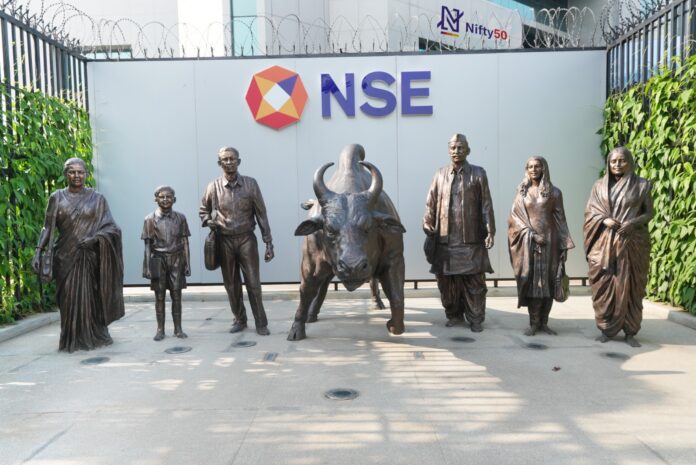
India’s leading stock exchange, the National Stock Exchange (NSE), and the Government of Jammu and Kashmir have signed a Memorandum of Understanding (MoU) to spread awareness amongst MSMEs of the Union Territory regarding fund raising via the IPO mechanism using NSE Emerge, which is the SME platform of NSE.

The MoU was exchanged between Shri Arun Manhas, Director, Industries and Commerce – Jammu, Shri Khalid Majeed, Director, Industries and Commerce – Kashmir, and Shri Krishnan Iyer, Senior Vice President, National Stock Exchange, recently in Jammu, in the presence of Shri Omar Abdullah, Chief Minister of Jammu and Kashmir. As part of the understanding, NSE, with the support of the Government of Jammu and Kashmir, shall conduct awareness drives through seminars, MSME camps, knowledge sessions, road shows, and workshops to guide corporates across the state on fund raising via the NSE Emerge platform and handhold companies in the listing process.

Shri Vikramjit Singh, Secretary, Industries and Commerce, said, “Under the leadership of Honorable Chief Minister of Jammu and Kashmir, Shri Omar Abdullah, we have been striving to provide a conducive ecosystem for the MSMEs of our Union Territory to further grow their businesses and create attractive business models that attract investment opportunities globally. Recently, as a step to propel this growth story, we signed an MoU with the National Stock Exchange to encourage MSMEs from the Union Territory of Jammu and Kashmir to tap capital markets via the NSE Emerge platform and raise funds via IPO. NSE Emerge as a platform provides an alternate source of investment-raising opportunities for growing SMEs. NSE Emerge provides MSMEs access to public capital along with an opportunity for enhanced visibility and credibility. As part of the MoU, the Government of Jammu and Kashmir and NSE shall jointly conduct awareness sessions and campaigns amongst MSMEs to help them better understand the process of listing on the stock exchange and its related benefits.”

Shri Sriram Krishnan, Chief Business Development Officer, NSE, said: “The Government of Jammu and Kashmir and the National Stock Exchange have entered into an MoU to collaborate and support the growth of MSMEs via the NSE Emerge platform. NSE Emerge enables SMEs to raise capital in an efficient manner and increase their visibility through listing on the stock exchange. We shall organize awareness sessions for MSMEs of Jammu & Kashmir in collaboration with the Government and provide a walk-through of the fund-raising process. We urge the MSMEs in the Union Territory to come forward and avail themselves of this new source of financing through NSE Emerge.”

As on today, 690 companies from various sectors are listed on the NSE Emerge platform and have collectively raised over INR 20,759 crore. The total market capitalisation of these companies is approximately INR 2,00,000 crore.

NSE, India’s largest stock exchange and a global leader in derivatives trading, is a technology-driven marketplace offering integrated services across trading, clearing, settlement, indices, and investor education.

India Set for Strong Economic Momentum as Deloitte Projects Up to 6.9% GDP Growth

0

India’s economy is poised for robust expansion this fiscal year, with Deloitte’s October 2025 outlook projecting GDP growth in the range of 6.7% to 6.9%. The report credits a combination of strong domestic fundamentals—rising direct tax exemptions, steady GST reforms, and an accommodative monetary policy—for sustaining confidence and supporting broad-based growth. Deloitte also notes that a possible trade agreement between India and the United States could act as a major external catalyst, potentially accelerating economic activity further.

The fiscal year began on an upbeat note with GDP expanding 7.8% in the April–June quarter, surpassing market expectations. This performance was powered by a 7% rise in private consumption and a 7.8% increase in investment activity, signalling renewed optimism among consumers and businesses. The services sector continued to be the backbone of the economy, recording 9.3% growth, while manufacturing posted healthy gains, reinforcing signs of a comprehensive recovery.

A key highlight of Deloitte’s report is the growing strength of India’s Micro, Small, and Medium Enterprises (MSMEs). Describing them as the “bedrock” of India’s growth story, the report praises their rapid formalisation, expanding digital footprint, and world-class adoption of digital payments—all of which are helping MSMEs climb the value chain and boost export competitiveness.

SLDB’s 38th Board Meeting Highlights Renewed Commitment to Protect Siri Cattle

0

Sikkim Livestock Development Board (SLDB) successfully convened its 38th Board Meeting at the Office of the Chief Executive Officer, SLDB Deorali. The meeting was chaired by Dr. Sharman Rai, Secretary AH&VS–cum–Chairman, SLDB, and attended by senior officials and key stakeholders of the department.

The meeting saw the presence of Principal Directors Dr. Sandeep Gurung and Dr. K.T. Bhutia, along with Directors Dr. Sanjay M. Gazmer, Dr. D.P. Pradhan, and Dr. A.L. Rai.
Dr. Pratik Sharma, Chief Executive Officer SLDB Cum Member Secretary, delivered the welcome address and later proposed the vote of thanks.

A major highlight of the meeting was an intensive discussion on the conservation strategy for the indigenous Siri cattle, a breed unique and culturally significant to Sikkim. The Board also reviewed potential support mechanisms for Siri cattle rearers across the state to strengthen the breed’s sustainability and productivity.

The meeting resolved to formulate a comprehensive breeding policy and regulatory framework specifically for the Siri belts of Sikkim, ensuring scientific and long-term conservation of the breed.

Additionally, the Board approved the establishment of a genetic-level laboratory at SLDB, marking a significant advancement toward genomic research and improvement of indigenous cattle.

The 38th Board Meeting marks a promising and progressive way forward for livestock development in Sikkim, especially in the genomic enhancement and conservation of native cattle breeds.

Trekker Dies of Suspected High-Altitude Illness on Goechala Route in West Sikkim

0

A 38-year-old trekker, Shri Suman Debnath, Superintendent of CGST & Customs, West Bengal, died during the Goechala trekking expedition in West Sikkim late on 18 November 2025. The group was ascending the high-altitude trail when Debnath reportedly developed a severe headache, nausea, extreme fatigue and breathlessness.

Despite assistance from fellow trekkers, his condition worsened rapidly. He lost consciousness and passed away around 2105 hours at Phedang, a high-altitude point approximately 25 km from Yuksom.

Upon receiving the alert, rescue personnel and porters were immediately mobilised. Due to challenging terrain and altitude, retrieving the body required nearly a full day. The mortal remains were transported to Yuksom and later to Gyalshing District Hospital, where an inquest and autopsy were conducted as per legal procedures.

The body has been handed over to the family for transportation to West Bengal.

Preliminary assessment suggests high-altitude medical complications, though a UD case has been registered. Authorities are conducting a detailed investigation to determine the exact cause of death and verify all circumstances surrounding the incident.

Tour De Sikkim Soon: Supercar Rally Set to Bring Lamborghinis and Porsches to the Sikkim

0

A high-profile coordination meeting for the upcoming Super Car Rally was held last day at the mini hall of the District Administrative Centre (DAC), Gangtok. The event is being supported by the Black Cat Division under the Trishakti Corps of the Indian Army in collaboration with the Government of Sikkim.

The meeting was co-chaired by District Collector Gangtok, Mr. Tushar G. Nikhare, Additional Political Secretary Gangtok, Mr. Tshering Wangchuk Lepcha, and representatives of the Indian Army. The rally will be led by the Mumbai-based Super Car Route group and will feature some of the world’s most iconic high-performance vehicles, including Lamborghinis, Porsches, and other supercars. Conceptualised as a self-funded, self-driven initiative, the event aims to position Sikkim as one of India’s most breathtaking and premier driving destinations.

The Trishakti Corps is supporting the rally to promote Bharat Ranbhoomi Darshan, a Ministry of Defence initiative developed with the Ministry of Tourism. One of the key highlights is Cho La Pass (5,420 metres), a strategic site from the 1967 Indo-China skirmishes, now emerging as a major destination for battlefield tourism enthusiasts.

Scheduled from 11 to 15 December, the rally will flag off from Sukna, West Bengal, and proceed through Siliguri–Gangtok–Cho La–Natu La–Gnathang–Zuluk, showcasing Sikkim’s dramatic border terrain and pristine mountain roads.

Organisers requested administrative and logistical support, which the District Collector assured would be provided. The Additional Political Secretary suggested integrating state government schemes into the rally’s digital outreach.

In his vote of thanks, OSD to HCM Mr. Rewaj Chettri expressed confidence that the rally would significantly boost Sikkim’s visibility and promote its world-class road network.

“It’s India, Not Japan!” Discover Why Anand Mahindra Hails Sikkim as the Country’s Civic Role Model

0

Sikkim, one of India’s most scenic northeastern states, is once again making headlines—this time for its remarkable civic discipline and urban cleanliness. The conversation began when travel vlogger shared a viral video showing Sikkim’s spotless streets, calm neighbourhoods, and surprisingly disciplined traffic. The visuals quickly caught the attention of business leader Anand Mahindra, who praised Sikkim as a true example of what urban spaces in India can achieve.

Responding to the video, Mahindra remarked that Sikkim does not need to be compared to Japan or any foreign country. Instead, it deserves to be recognised as India’s own civic role model—a state that proves cleanliness, orderliness, and good public behaviour are entirely achievable within the country.

What sets Sikkim apart is not just its natural beauty, but the way its urban spaces are planned and maintained. Nestled in the Eastern Himalayas, the state borders Nepal, Bhutan, and Tibet and is known for its rolling hills, deep valleys, and towering snow-capped mountains.

Cities like Gangtok and Pelling offer a unique blend of modern urban planning and traditional aesthetics. Clean footpaths, organised traffic, and well-maintained public areas are complemented by colourful murals, local temples, and a strong sense of community responsibility.

This combination creates a visually appealing environment that feels both peaceful and inspiring for travellers. It also positions Sikkim as a benchmark for other Indian states hoping to enhance their civic infrastructure and public discipline.

When it comes to travel, Sikkim is at its best between March–June and September–November, with pleasant weather, clear skies, and vibrant landscapes. Spring showcases lush green hills and blooming flowers, while autumn offers crisp mountain air and majestic views of the Himalayan peaks. Travellers are generally advised to avoid the monsoon months due to heavy rainfall and challenging road conditions.

Investors accounts cross the milestone of 24 crore (240 million) on NSE

0

The National Stock Exchange of India (NSE) reached another milestone in November 2025, with total unique trading accounts surpassing 24 crore (240 million). This comes just over a year after crossing the 20-crore mark in October last year. Unique registered investors stand at 12.2 crore (as of October 31st, 2025), after crossing 12 crore on September 22nd, 2025.

Investors may hold accounts across brokers, resulting in multiple client codes. Maharashtra leads with over 4 crore investor accounts (17%), followed by Uttar Pradesh (2.7 crore), Gujarat (2.1 crore), West Bengal (1.4 crore) and Rajasthan (1.4 crore). The top five states hold ~49% of all investor accounts, and the top 10 together exceed 73%.

Assam has close to 50 lakh registered users (3% share). The North East stands out for gender-inclusive investing. Mizoram ranks second nationally with ~32% women investors, Goa leads at 33%. Sikkim follows with 31%, and Assam ranks sixth with ~30%, reflecting rising financial awareness among women.

Investor education has become vital amid the rise in post-pandemic participation. As of September 30th, 2025, individual investors hold 18.75% of NSE-listed companies—a 22-year high. Over five years, the Nifty 50 and Nifty 500 have delivered strong annualised returns of 15% and 18%.

Several investor protection measures, increasing digitalisation, innovation, a growing middle class and progressive policy measures under the leadership of Prime Minister Shri Narendra Modi and Hon’ble Finance Minister Smt. Nirmala Sitharaman have strengthened market confidence. NSE, SEBI, and the Government remain committed to investor awareness and financial inclusion.

NSE has significantly expanded its Investor Education efforts. In the first half of FY26 alone, NSE conducted 11,875 Investor Awareness Programs (IAPs) reaching nearly 6.2 lakh participants, compared to 14,679 in all of FY25. The Investor Protection Fund (IPF) grew 19% YoY to Rs 2,719 crore as of October 31st, 2025.

Shri Sriram Krishnan, Chief Business Development Officer, NSE said:
“Retail investors continue to be optimistic about Indian capital markets, given the robust measures that have been implemented in the past few years including the standardization of mobile-based trading solutions, the implementation of a more streamlined Know Your Customer (KYC) process and strengthened investor awareness initiatives. These measures have helped sustain steady investor participation amid shifting global trade patterns and rapidly evolving geopolitical conditions, while also improving market accessibility, especially for investors residing in tier 2, 3, and 4 cities. Investors now have access to a broad spectrum of instruments—equities, debt securities, exchange-traded funds (ETFs), real estate investment trusts (REITs), infrastructure investment trusts (InvITs), government bonds, and corporate bonds—reflecting the evolution of a technology-driven and inclusive financial ecosystem.”

As one of the world’s largest stock exchanges, the National Stock Exchange of India Ltd continues to play a pivotal role in deepening India’s capital markets and fuelling the country’s economic growth.

Bangladesh Imam’s Kidnapping Exposed as Hoax to Incite Communal Violence

0

Authorities in Bangladesh have uncovered that the alleged abduction of Imam Md. Muhibullah Miyaji was a fabricated drama designed to provoke communal hatred against Hindus and ISKCON. Miyaji’s disappearance triggered nationwide Islamist protests, where radical groups blamed “Hindu extremists” and escalated anti-India sentiment.

Police investigations, supported by CCTV footage, ticket records and witness accounts, revealed that the imam voluntarily travelled nearly 400 km to Panchagarh. Footage showed no ambulance, no abductors, and no forced movement. After being confronted with evidence, Miyaji confessed to staging the incident, including chaining himself to a tree to fake torture marks.

According to law-enforcement officials, the motive was to spark sectarian violence at a time when extremist networks are actively pushing disinformation. The episode coincides with intelligence warnings on increased radical activity linked to visits by controversial preachers, including figures associated with Zakir Naik and Hafiz Saeed’s network, raising fresh concerns over rising radicalization and regional instability.

Rights groups say the hoax not only endangered religious minorities but also exposed how quickly false communal narratives can mobilize mobs. Authorities have announced further investigations to identify whether Miyaji acted alone or at the behest of larger extremist groups.

Gyalshing Police Nab Notorious Criminal ‘Spider-Man’ in ₹16.9 Lakh Theft Case

0

Gyalshing District Police have arrested a notorious thief, Rakesh Rai alias “Spider-Man”, in connection with the theft of gold ornaments and cash worth nearly ₹16.98 lakh.

The case was filed on October 29, 2025, after a complaint by Ram Hang Limboo, RTO of the Motor Vehicle Division, Gyalshing. Following swift investigation, police first arrested Zigmee Sonam Bhutia of Pelling on November 1, recovering a large portion of the stolen property.

Acting on leads from Bhutia’s disclosure and using technical surveillance, a special team led by PI Roshan Gurung, SHO of Gyalshing Police Station, travelled to Siliguri, where — with help from Pradhan Nagar Police — they apprehended the main accused, Rakesh Rai, from Methibari.

Rakesh Rai, infamously known as “Spider-Man” for his burglary methods, is a habitual offender active since the 1990s, previously convicted in multiple theft and robbery cases by courts in Sikkim and Siliguri.

The successful arrest marks a major victory for the Gyalshing District Police and reflects their commitment to cracking down on repeat offenders and protecting citizens’ property.

A press note regarding the arrest was officially released by SP (in-charge) Nikhul Pradhan, Gyalshing Police.