Saturday, October 17, 2026
Home Blog Page 83

TRANSPARENCY AROUND PHONEPE TRANSACTION DATA, MADE PUBLIC

0
PhonePe

ABOUT THE COMPANY

The PhonePe company is based in Bangalore, India, and offers digital payments and financial services. PhonePe founded by Sameer Nigam, Rahul Chari, and Burzin Engineer in December 2015. A mobile application based on the United Payments Interface (UPI) launched in August 2016 by PhonePe. In August 2014, PhonePe authorized by the Reserve Bank of India to issue and operate a semi-closed pre-paid payment system with Authorization Number: 75/2014.

BRIEF

In an announcement titled “PhonePe Pulse”, the company announced its interactive website that offers insight and trends on digital payments in the country. An interactive map of India on the website shows more than 2,000 Cr transactions by consumers, according to the fintech unicorn. Since the outbreak of the pandemic, UPI transaction in India has increased. NPCI data shows that UPI transactions in India grew 9.5% by volume and 5.4% by value over the previous month in August 2021. With over 45% market share of the UPI segment in India, PhonePe claims its data represents the country’s digital payment habits.

PULSE REPORT

 In addition, unicorn has released ‘Pulse Report’, a study that examines the evolution of digital payments over the past five years. The report describes how digital payment adoption has progressed across India since 2016 and includes detailed information on geographical and category trends.

Above all, content in the Pulse Report includes digital payments landscape in India, fintech journey, digital payments use cases, opportunity for growth, future of digital payments and more.

Also, Read| INDIA, THE UNSC AND THE CHANGING WORLD ORDER

INDIA, THE UNSC AND THE CHANGING WORLD ORDER

0
INDIA, THE UNSC AND THE CHANGING WORLD ORDER
UNSC

In the last, we discussed about UNSC and India’s contribution in UNSC. This article, discusses the shifting world order and new challenges. As well as how India can make the most of its two-year UNSC Non-Permanent Membership.

For the third time since the end of the Cold War, India admitted to the United Nations Security Council (UNSC). The current world order, however, is substantially different from India’s previous UNSC tenure in 1991-92 and 2011-12.

The question posed by the current world order is whether a peaceful agreement can result in the redistribution of power among the various superpowers.

In this setting, India should make the most of its two-year term as a non-permanent member of the UN Security Council to advance national interests and global peace.

CHANGING WORLD ORDER IN THE RECENT TIMES

  • New Cold-War: With the disintegration of the Soviet Union in 1991, the world order shifted from bipolar to unipolar. The current world order, on the other hand, lacks a systemic balance, which is necessary for maintaining international stability.

This is owing to the advent of a New Cold War between the United States and China. This amounts to a struggle for a new political, economic, and military power distribution.

Furthermore, the disparities between the United States, China, and Russia have become insurmountable.

  • Retrenchment of US: The United States’ withdrawal from global affairs is a key aspect of the contemporary international order. This seen in the United States’ withdrawal from the Paris Climate Agreement, the JCPOA, and other agreements. Multilateralism and globalization have taken a serious hit as a result of this retreat.
  • Indo-Pacific as a New Sub-System: The development of China has shifted the power balance in the South China Sea. As a result, countries such as the United States, India, Japan, and others have collaborated. Inorder to define the Indo-Pacific as a new sub-system in international politics.
  • Declining Role of UN: The UN Security Council (UNSC) is the UN’s principal executive body in charge of ensuring international peace and security.

The UNSC’s five permanent members, on the other hand, utilize their veto powers to protect their geopolitical interests, regardless of the devastating implications for victims of armed conflict, as seen in Syria, Iraq, and elsewhere.

  • UNSC resolution 2593: It was proposed by the United States, the United Kingdom, and France, and was enacted after 13 council members voted in favor.

The resolution states that Afghan land should not be used to threaten or attack any country. Nor should it be used to house or train terrorists, or to organize or finance terrorist operations.

It notably mentions the Lashkar-e-Taiba (LeT) and Jaish-e-Mohammed groups, as well as people and entities named by UNSC Resolution 1267. (JeM)

The permanent members Russia and China didn’t vote (they do not have veto power). While the other 13 members voted in favor.

CURRENT CHALLENGES FOR INDIAN FOREIGN POLICY

· Aggressive China: At the end of the Cold War, India should boost its multilateral cooperation with China in order to help create the conditions for settling the boundary dispute and expanding bilateral cooperation sectors.

This tactic, however, has proven ineffective, since China has adopted an aggressive posture toward India. Recent Galwan Valley Clashes demonstrate this.

Furthermore, China shields Pakistan from international pressures that India has attempted to mobilize through various forums.

· Compromising Non-Alignment: To confront China, India formed the Quad grouping with like-minded countries (US, India, Japan, and Australia).

However, India’s non-alignment image has been tarnished. As a result of its convergence with the US, and relations with former allies such as Russia have deteriorated.

· The Taliban Takeover: The re-establishment of Taliban control in Afghanistan poses some very major security threats to India.

The difficulties range from safeguarding the country’s development infrastructure to properly removing Indians stranded in Afghanistan.

WAY FORWARD: LEVERAGING NON-PERMANENT MEMBERSHIP

·    Becoming Part of the Great Game: The UNSC allows for long-term diplomatic dialogue between major powers, reducing tensions and opening up new avenues for collaboration.

Even in the midst of a broad-based confrontation, the US and China could explore potential common ground, much like the US and USSR did on nuclear proliferation issues during the Cold War.

In this environment, India has the potential to play a larger role in the face of renewed great power rivalry.

In addition, now that India has joined the UN Security Council in the midst of a continuous military stalemate. India may finally expose Chinese aggression in the Ladakh region.

· UNSC Reforms: Since the conclusion of the Cold War, India has demanded that the UNSC be made more “representative.”

In this context, India should continue to work with the G4 (Brazil, Germany, and Japan) to increase the United Nations Security Council and become a permanent member.

· Deepening International Collaboration: India will be able to enhance its new coalitions, such as the Quad, by engaging with peace and security concerns at the UNSC.

In addition, India might utilize its UNSC term to strengthen security cooperation with European partners such as France and Germany.

Despite Russia’s deteriorating troubles with the West and closer links to China, India must maintain an intense conversation with Russia on all international matters.

·         Engaging With Global South: India needs to revitalize its engagement with its traditional partners in the “global south” by articulating their peace and security concerns in the UNSC. In this context, two sub-groups of the global south should be of particular interest.

1.      Small Island States: Global warming and increasing sea levels are posing existential threats to several small island states across the world. They also find it difficult to maintain control over their vast marine holdings. Supporting the island republics’ sovereignty and viability is a critical political task for India.

2.      Africa: Peace and security in Africa is the subject of nearly half of UNSC sessions, 60% of UNSC publications, and 70% of UNSC resolutions. The African Union holds three seats in the UN Security Council (Kenya, Niger, and Tunisia), and there is regular consultation between the UNSC and the African Union’s Peace and Security Council (PSC) (AU). The UNSC term provides an excellent opportunity for India to step up its bilateral, regional, and global participation on African peace and security challenges.

CONCLUSION:

In addition, India’s foreign policy stance has moved from reactive to proactive. As a result, India’s new tenure in the UN Security Council should be more deliberate and realistic.

Purposefulness entails tying India’s UNSC participation to the country’s larger national objectives. Pragmatism necessitates responding to changing circumstances at the UNSC while also avoiding unduly ambitious ambitions.

In the next article, we will be discussing about UNSC Reforms in detail and its significance for India.

Also, Read| AS A PRETEXT TO DISREGARD RELIGION, SECURITY IS BEING USED

AS A PRETEXT TO DISREGARD RELIGION, SECURITY IS BEING USED

0
Religion

Coming from India, a country known for its diversity, I feel that all cultures should be valued equally. India is a country with many religions, there are many religious conflicts that occur on a regular basis. Taking a look at the country where love is most revered. The Taj Mahal in India is one of the most revered symbols of love.

SNATCHING OF BHAGWAT GITA

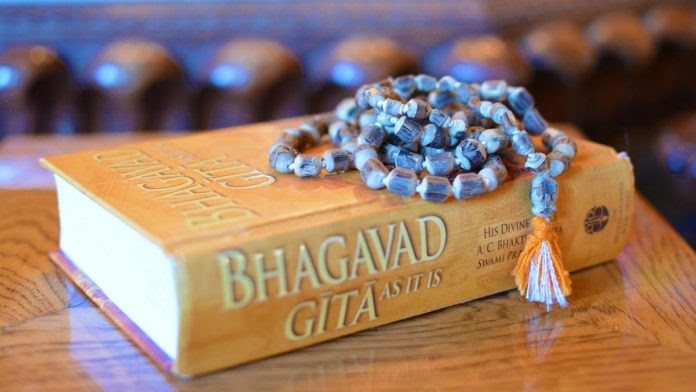
But, can you imagine that disagreements can escalate to disrespect? On Monday, a man named Rohit Kumar Choudhary tweeted that he encountered an extremely disrespectful circumstance. When passing through the security check at the Taj Mahal’s gate. He was carrying a pocket-sized Bhagavad Gita in his purse when the CISF snatched it from him and tossed it in the trash.

RELIGION AND MORALS:

The security worry is acceptable, but what about the issue of religious respect? Is this how people should treat one another’s religion or is it how people are disrespecting one another’s faith in the name of security?

Many others responded with things like, “What is done in the name of religion should be valued, not despised,” and “What is done in the name of religion should be valued, not ridiculed.”

Launching of Suravee Thakuri’s Midnight Gossips

0
Suravee Thakuri's Midnight Gossips

19-year-old Suravee Thakuri rocked Darjeeling’s literary scenario by publishing her debut book Midnight gossips. Suravee Thakuri is a 19-year-old teen who is pursuing her graduation from Salesian College Siliguri in mass communication and journalism. The event arranged on 4th September inside the warm ambiance of Amar Deep Samaj, Ghoom, Darjeeling.

Guests of the day:

The event presided by Sachin Rai Dumi, along with the guest of honor and chief guests Sahitya Akademy Awardee Krishna Singh Moktan, Sahitya Akademy Awardee Dr. Nanda Hankhim, Kashyap Awardee Dr. Gokul Sinha, and Kiran Thakuri respectively.

Event’s Highlights:

Commencing from prayers chanting Akhanda Deep Prajwalan, event manager and president of Amar Deep Samaj, Roshan Thakuri gave the welcome speech. Eminent poets Mahendra Syangbo and Pravat Chiso Rai spoke about the book in depth. The proprietor of Clifton Hall School Mrs. Indira Shah gave insights of who the poet is. Then the event followed by the poetry recitation by some of the eminent poets in and around Darjeeling. Chief guests, guests of honour, and the President of the event gave their speech about the literary scenario of Darjeeling, simultaneously they gave this young poetess abundance of blessings. The event was hosted by Poet and writer from Darjeeling Lubina Kritika.

Poet’s words:

Also, when in conversation with Suravee, she said she wanted to express her gratitude towards every hand who supported her in this biggest step of her life, and for budding writers and poets she said:
“Leap that you’re afraid to take because what’s going to make you stand out”.

Also, Read| WHAT ABOUT SOME BLUE AND PINK FOOD?

WHAT ABOUT SOME BLUE AND PINK FOOD?

0
Blue and pink

Have you heard of color psychology? I mean who haven’t- yes, of course you have heard, right. Color psychology is an important aspect of what we think and how we behave. It affects our thinking, our day to day decisions.

We do know that every market uses different color psychology to promote its brand like blue and pink. It is a part of marketing strategy.

Now let us talk about an interesting fact. Did you know that colors can affect your appetite? Yes, you heard it right. Two colors scientifically proven to suppress your appetite – pink (baker-miller pink) and blue. 

BAKER-MILLER PINK: 

A few years ago there was news published with the title- “Kendall Jenner says this paint color is a Natural Appetite Suppressant”. And guess what that color was- Pink. Following was the statement she gave:

I decided to paint it pink because while I was trying to figure out what I wanted to do with the room, I went to dinner with friends and they had just gone to the “Human Condition” exhibition at a former hospital in LA,’ Kendall explained.

‘They were telling me there’s a pink room at the exhibit that had an explanation of the color choice.

‘Baker-Miller Pink is the only color scientifically proved to calm you AND suppress your appetite. I was like, “I NEED this color in my house!” I then found someone to paint the room and now I’m loving it!’

[dailymail.co.uk]

Studies conducted in the 1960s proved that the pink color could lower people’s heart rate and pulse rate and can also reduce hostility. Another research has been also done and that studied the impact of the color- Baker-Miller Pink and also found evidence that this color can also help in suppressing appetite.

However baker-miller pink is not the only color with those magical powers.

BLUE COLOR:

Blue color can be considered and is considered as an appetite suppressant. Many weight loss plans suggest eating your meal on a blue plate.

Fun Fact: Put a blue light in your refrigerator and watch your munchies disappear. 

Or here’s another tip: Dye your food blue! A little black will make it a double whammy.

[colormatters.com]

There is not anything bizarre behind this. The reason is very simple. Have you ever seen blue leafy vegetables or blue meats? No? Not yet. Apart from blueberries, there is maybe not a single vegetable in blue color or any vegetable with a significantly natural blue food color.

A million years ago, when our earliest ancestors were foraging for food, blue, purple and black were “color warning signs” of potentially lethal food.

[colormatters.com]

Basically majority of people like their food to look appealing. Most people do not like their food just because their eyes do not find the food appealing. 

Now would you rather enjoy normal looking food or some blue food with blue bread or something on your plate? And do not confuse food with desserts.

However, if you ever wanted to try a full blue meal go ahead and try it. No one is stopping you.

Also Read| JNU Campus to reopen from 6 September onwards in a phased manner

JNU Campus to reopen from 6 September onwards in a phased manner

0
Jawaharlal Nehru University, JNU

Who is allowed to visit the JNU Campus?

The education sector has completely shifted from offline to online mode in past one and a half years. Since the Covid situation is under control, Delhi based colleges are reopening after a long time. Jawaharlal Nehru University (JNU) is one of them. The University said on Saturday that its campus will reopen in phases starting from 6 September onwards. According to the official statement, in the first phase, doctoral researchers who must submit their doctoral dissertations on or before December 31, including 9B students, will be allowed to visit the university.

Teaching and learning activities will continue to take place online. All schools and the central library will remain closed except for Dr. BR Ambedkar’s central library. Dr. BR Ambedkar’s central library will be sanitized before reopening and will be seated at 50% of the reading room capacity.

Who isn’t?

Students, teachers, and employees living in the containment zones are not allowed to enter the university campus. Psychological counseling sessions will be held on campus for students. Campus communities to prepare them for the new normal of strict physical health and provide psychological trauma support. 

The university stated that students must submit not older than 72 hours of negative COVID19 RTPCR test reports. Also, they will sign a self-declaration form upon arrival on campus. Students, faculty and staff who live in the asylum area cannot visit the university. The university stated that students, teachers, staff and guests are not allowed to enter the university campus without wearing masks. Above all, the Delhi government allows educational institutions to reopen to students of grade 9 and above and strictly abide by the COVID19 protocol. 

The Delhi Disaster Management Authority (DDMA) Although JNU has decided to reopen the campus in phases; the University of Delhi has not yet received a call regarding this matter. An official told PTI that the DU campus may reopen next week, but an announcement is expected. It was stated that educational institutions can be reopened at 50% capacity.

Also, Read| MASCULINITY AND FEMININITY: AN OVERVIEW

MASCULINITY AND FEMININITY: AN OVERVIEW

0
MASCULINITY AND FEMININITY: AN OVERVIEW

MASCULINE AND FEMININE:

We always put these words under the column of men and women. Masculinity always associated with the term ‘men’. While others were more forward and said that the word masculine meant men or the male gender. When searching up the word feminine it came up with similar results.

Talking about masculinity and femininity are not the same things as gender. They are considered as a trait such as masculinity includes being dominant, strong, independent, assertive, brave and innovative. On the other hand, femininity considered as emotional, nurturing, vulnerable, Caring, humble and collaborative. When looking at these traits, I don’t see any gender here.

Feminine traits are considered as a weaker trait in comparison to masculine traits. Orthodox perception expect women to have masculine traits at the workplace in order to sustain themselves longer. Now, why is this? Why have we taken these traits and immediately started labeling them?

GENDER AND CHARACTER:

We have seen that most of the times when a woman is being dominant or assertive she is bossy. However, if a man is dominant or assertive he’s a boss and is trying to take control over things. Also, when a man is seen crying or being caring, he is considered weak. While if a woman is emotional or caring it is considered good or the way she is supposed to act. Equality is yet to come. As society with this perception needs to understand that masculinity and femininity are not traits depending on gender. They rather depend on the character.

To be balanced, I believe we need to have both masculine traits and feminine traits according to the situation. We all are social animals and our brains are formed within a culture. The way we all know the difference between femininity and masculinity is imprinted by the cultural environment we grew up in.

BEHAVIOR DIFFERENCES:

The cultural views of behavioral differences between men and women continue to be reinforced in our adult lives. Some of the most common belief about male and female behavior is:         

•Men are cold hearted and don’t reveal their emotions while women are irrational and over-emotional.

•Women are more concerned about children and household stuff than men do while men care about practical issues more than women do.

•Women have to teach men how to feel while men have to take care of women.

Such Stereotypes put men and women on opposing sides and are downright disrespectful of both genders. The fact that society supports these biases strengthens them but it does not make them accurate.

CONCEPTUALIZED MASCULINITY AND FEMININITY:

We have seen many times in films and television series that if a girl is in danger she usually shouts for help and men being men, shown with their strong forearms protect them. Also, many times they also portrayed that a woman taking care of her household, not working, having children at the age of twenty five. Further not speaking back to her husband as cultured and well settled. The traits of femininity and masculinity compared with the term gender needs to be stopped.

 A woman can be financially independent, strong, and practical and can still indulge with feminine traits. Whereas, a man who is emotional, caring, collaborative can also have masculine traits in him. Traditionally, masculinity and femininity have been conceptualized as opposite ends of a single dimension, with masculinity at one extreme and femininity at the other.

CONCLUSION:

Therefore, Masculinity in the mind of society is where social gender roles are clearly distinct, Men are supposed to be tough, focused and assertive on material success. On other hand, women are supposed to be more modest, tender, and concerned with the quality of life. Femininity stands in a society where social gender roles overlap. Dimension focuses on how extent to which a society stresses achievement or nurture.

Also Read| UNSC AND INDIA’S NON-PERMANENT SEAT

UNSC AND INDIA’S NON-PERMANENT SEAT

0
UNSC AND INDIA’S NON-PERMANENT SEAT

From this article, we will be starting a new series of discussions that is about India and the UNSC. Starting with, we’ll be discussing a bit about UNSC and the criteria of selection and what are permanent and non-permanent members.

INDIA’S NON-PERMANENT SEAT

All the countries in the Asia-Pacific Group at the United Nations have unanimously supported India for a non-permanent seat at the UN Security Council (UNSC) for a two-year term in 2021-22.

1. Both Pakistan and China have supported India’s candidature.

2. The Asia-Pacific Group consists of 55 members states. They get to nominate one of its members for the June 2020 elections to a non-permanent seat on the UNSC.

3. India has been a non-permanent member of the UNSC seven times, the most recent was for the year 2011-12.

4. Estonia, Niger, Tunisia, Vietnam and St. Vincent and the Grenadines were elected earlier this month.

5. India has been contending for permanent membership at the UNSC for many years and has been a part of the G-4 grouping which is continuously lobbying for UNSC Reforms.

UNITED NATION SECURITY COUNCIL

1. The United Nations Charter established six main organs of the United Nations, including the Security Council.

2. It gives primary responsibility for maintaining international peace and security to the Security Council. They may meet whenever peace is threatened.

3. All members of the United Nations agree to accept and carry out the decisions of the Security Council.

While other organs of the United Nations make recommendations to member states, only the Security Council has the power to make decisions. The member states are then obligated to implement under the Charter.

PERMANENT AND NON-PERMANENT MEMBERS

Significantly, the UNSC is composed of 15 members, 5 permanent and 10 non-permanent.

  • Five permanent members: China, France, the Russian Federation, the United Kingdom, and the United States.
  • Ten non-permanent members: Elected for two-year terms by the General Assembly.
  • Each year, the General Assembly elects five non-permanent members (out of ten in total) for a two-year term. The ten non-permanent seats are distributed on a regional basis.
  • As stipulated in rule 144 of the rules of procedure, a retiring member is not eligible for immediate re-election.

SELECTION OF NON-PERMANENT MEMBERS

  • In accordance with rule 92 of the rules of procedure, the election is held by secret ballot and there are no nominations. Under rule 83 of the rules of procedure, the non-permanent members of the Security Council are elected by a two-thirds majority.
  • Five for African and Asian countries.
  • One for Eastern European countries.
  • Two for Latin American and Caribbean countries.
  • Two for Western Europe and other countries.

Moreover, aspiring member needs the vote of two-thirds of the 193 UN General Assembly members to win a non-permanent seat on the UNSC.

Further, Article 23 of the UN Charter concerns the composition of the Security Council.

CONTRIBUTIONS OF INDIA AT UNSC

India has served seven times in the UN Security Council.

  1.  1950-51: India, as President of UNSC, presided over the adoption of resolutions calling for a cessation of hostilities during the Korean War and for assistance to the Republic of Korea.
  2.  1967-68: India co-sponsored Resolution 238 extending the mandate of the UN mission in Cyprus.
  3.    1972-73: India pushed strongly for admission of Bangladesh into the UN.
  4.    1977-78: India was a strong voice for Africa in the UNSC and spoke against apartheid and for Namibia’s independence in 1978.
  5.    1984-85: India was a leading voice in UNSC for resolution of conflicts in the Middle East, especially Palestine and Lebanon.
  6.    1991-92: Participated in the first-ever summit-level meeting of the UNSC and spoke on its role in the maintenance of peace and security.
  7.    2011-2012: India was a strong voice for the developing world, peacekeeping, counter-terrorism and Africa. The first statement on Syria was during India’s Presidency at the UNSC.

During the 2011-12 term, India chaired the UNSC 1373 Committee concerning Counter-Terrorism, the 1566 Working Group concerning threat to international peace and security by terrorist acts, and Security Council 751/1907 Committee concerning Somalia and Eritrea.

Earlier in 1996, India took the initiative to pilot a draft Comprehensive Convention on International Terrorism with the objective of providing a comprehensive legal framework to combat terrorism.

Also, India worked closely with its partners in the UNSC to ensure the listing of Pakistan-based terrorist Masood Azhar under the UNSC’s 1267 Sanctions Committee (May 2019) concerning al-Qaeda and ISIS and associated individuals and entities, which was pending since 2009.

CHALLENGES AT UNSC

China Challenge:

· India is entering the UNSC at a time when Beijing is asserting itself at the global stage much more vigorously than ever. It heads at least six UN organizations and has challenged the global rules.

· China’s aggressive behavior in the Indo-Pacific, as well as the India-China Border, has been visible in all of 2020.

· China has tried to raise the issue of Kashmir at the UNSC.

Post-Covid World Order:

As the global economy is in shambles with various countries facing recession and health emergencies. To handle all these situations need a careful strategy to move the world out of this burdening challenge.

Balancing USA and Russia and Unstable West Asia:

Above all, with the situation deteriorating between the USA and Russia and increasing tensions between the US and Iran, it will be a tough situation to handle for India. In conclusion, India needs to uphold rule-based world order with due respect to human rights ensuring the national interest.

With this, we end this article. In the next article, we’ll be discussing the need for UNSC reforms and India’s stand as a Permanent Member.

Also, Read| EMERGENCY IN SRI LANKA

EMERGENCY IN SRI LANKA

0
Emergency in Sri lanka

Sri Lanka declared a state of emergency on 31ST August. This came due to food shortages, as private banks ran out of foreign currency to fund imports.

President Gotabaya Rajapaksa enacted emergency regulations under the Public Security Ordinance. It authorize government officers to remove food inventories held by traders and arrest anyone who hoards vital food.

WHAT GOVT IS DOING NOW?

Officials have been instructed to guarantee that necessary products such as paddy, rice, and sugar are sold at government-mandated prices or prices based on import charges at Customs, and those supplies are not hidden.

As food prices rise and the country’s foreign exchange reserves fall due to unsuccessful bond auctions. The president has chosen a Major General to oversee food distribution.

Long lines to buy milk powder, sugar, and cooking oil reported around the country. As COVID-19 cases are rising, a 16-day curfew imposed until 8th September.

Udaya Gammanpila, the country’s Energy minister, has urged citizens to utilize gasoline carefully. So that the country can spend its foreign cash on important medications and vaccines.

WHAT HAPPENED TO FOREX RESERVES?

Sri Lanka’s foreign reserves dropped to $2.8 billion by the end of July 2021. Down from $7.5 billion when the administration assumed office in November 2019. For years, the country’s financial problems exacerbated by a large trade deficit.

To save on its dwindling FX reserves, the country banned or licensed hundreds of foreign-made commodities last year, including toothbrush handles, Venetian blinds, strawberries, vinegar, wet wipes, sugar, and even the staple spice turmeric.

Since the 1970s, the country has been subjected to the strictest import regulations. The sole important source of foreign exchange revenues was tourism, which was also harmed by the coronavirus outbreak.

FOREIGN DEBT

Sri Lanka still has two more $1.5 billion foreign loan payments coming in the next 12 months this year. So far, it has paid out $1.3 billion. This is in addition to the debt owed by the local government. Future payments will be more expensive as the Sri Lankan currency depreciates to an all-time high.

The central bank announced in July that it would use currency reserves to partially repay $1 billion in bonds that were due to mature at the end of the month. According to a central bank announcement, the country’s reserves were $4 billion at the time.

PRINTING CURRENCY

213 billion Sri Lankan rupees were utilized to service foreign debt, depleting currency reserves, out of the 650 billion rupees printed in 2020.

Following a failed Treasury bill auction on August 22, the central bank produced 29 billion Sri Lankan rupees and hiked interest rates to 6%, making it the first country in Asia to do so during a pandemic.

Even if the upcoming auctions fail, the apex bank increased the statutory reserve requirement from 2% to 4% on September 1, which is projected to absorb about a billion rupees of surplus liquidity this week. Meanwhile, it failed to sell 92 percent of a 50 billion rupee bond sale on August 30.

Economists believe that printing money to pay off foreign debt results in an instant loss of currency reserves. If economic output fails to support demand, it could lead to a rapid spike in inflation.

CONCLUSION

Sri Lanka is in serious peril and will need to take a comprehensive approach to solve the crisis, putting citizens’ rights first. Before China begins its Cheque Book Diplomacy, India should step forward to lend a helping hand to Sri Lanka in this difficult time.

Also, Read| Banks in India are starting to Relax Restrictions on Cryptocurrency Investments

Banks in India are starting to Relax Restrictions on Cryptocurrency Investments

0
Cryptocurrency Banks: Is it actually the currency of future

Overview:

Indian banks have relaxed the rules on acquiring Bitcoin and other cryptocurrencies through their channels. The action came after the Reserve Bank of India stated banks could no longer use its April 2018 circular. To advise against cryptocurrency investments after invalidated by the Supreme Court. The recent decision will aid in the growth of cryptocurrency usage in the country, which is already gaining traction.

What is Cryptocurrency?

Cryptocurrencies are binary data formatted for use as a medium of exchange. They maintain individual coin ownership records in a database as a form of a computerized ledger, encrypting their transactions. Further controlling the creation of new coins, and verifying the transfer of ownership. Cryptocurrency not issued by a central authority and does not exist in physical form (like paper money).

Brief:

Indian banks have removed restrictions on the purchase of Bitcoin and other cryptocurrencies through their channels in accordance with government laws. This is a huge relief for cryptocurrency investors in the nation. The move in, Indian banks came as a result of the Reserve Bank of India’s (RBI) earlier ruling. Stating that banks may not use its April 2018 circular to advise against cryptocurrency investments and reject cryptocurrency services. The RBI issued a circular in 2018 stating that due to the dangers involved, organisations regulated by the RBI shall not deal in virtual currencies. Also, nor shall they provide services to assist anyone in dealing with or settling virtual currencies (VCs).

Future Perspective:

Above all, cryptocurrencies have the potential to make it easier to move funds between two parties. This done without the use of a trusted third party such as a bank or credit card provider. Instead, these transfers protected by the use of public and private keys. As well as other incentive systems like Proof of Work and Proof of Stake. A user’s “wallet,” or account address, in modern cryptocurrency systems, has a public key. While the private key only known to the owner and is used to sign transactions. Users can avoid the high fees charged by banks and financial institutions for wire transfers by completing fund transactions with minimal processing expenses.

Also, Read| AS A HOMAGE TO KALYAN SINGH, UP GOVT ANNOUNCES ROAD NAMED AFTER HIM IN AYODHYA