Friday, May 8, 2026
Home Blog Page 87

US WITHDRAWAL AND REGIONAL DYNAMICS

0
Us Withdrawal of Troops


In the previous article, THE ‘DOHA’ WAY FOR TALIBAN, we discussed the Doha agreement, its provisions and its criticisms. In this article, we’ll be discussing the regional dynamics after the withdrawal.

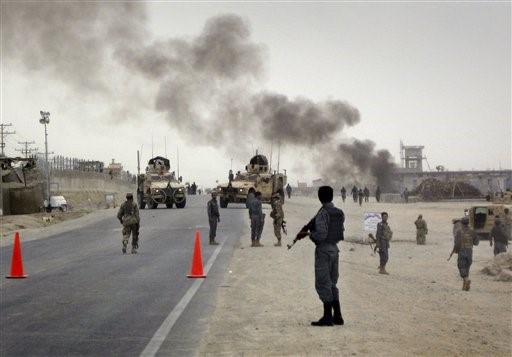
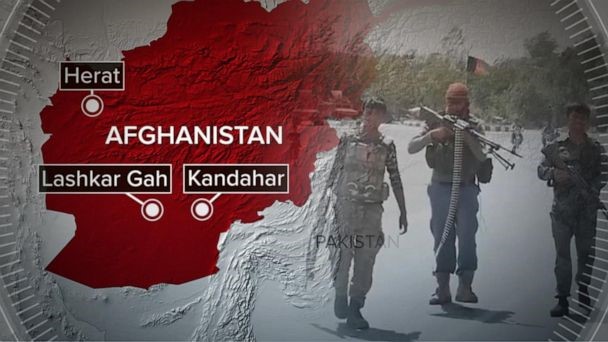
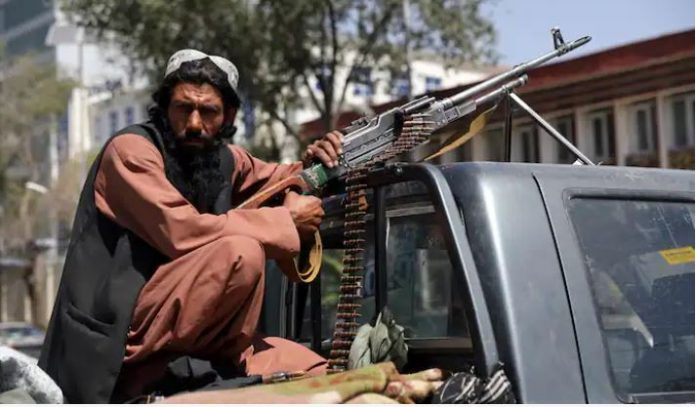
The speedy withdraw of US troops from Afghanistan has been matched by the swift advance of the Taliban across the nation. Although, the US has confirmed that 90% of the withdrawal is done. The Taliban has claimed that it is in control of 85% of Afghanistan territory.

These developments have moved Afghanistan into the court of regional powers that now have the burden of managing the military vacuum created by the US retreat.

The idea of a regional solution to Afghanistan has always had much political appeal. Further, divergent regional strategic perspectives limit the prospects for a sustainable consensus on Afghanistan.

US WITHDRAWAL AND REGIONAL POWERS

  • Taliban: Taliban itself remains a major variable. If the Taliban doesn’t accommodate the Afghan interests, they will simply move towards another round of the civil war.
    • The Taliban is also signaling not to be a proxy for anyone else and that it will pursue independent policies.
  • China: The US withdrawal from Afghanistan today reinforces the strongly held conviction in China that the US is in terminal decline.

    • Additionally, the withdrawal, at a time when China is offering an alternative to the Western model of international governance, seems a great ideological victory to China.
    • However, for China, potential Taliban support to the Xinjiang separatist groups is a major concern.
  • India: India will have three critical areas in dealing with the Taliban.

    • Protecting its investments, which run into billions of rupees, in Afghanistan;
    • Preventing a future Taliban regime from being a pawn of Pakistan;
    • Making sure that the Pakistan-backed anti-India terrorist groups do not get support from the Taliban.
  • Other: None of the regional countries wants to see Afghanistan becoming the nursery of international terror again under the Taliban.

    • Iran can’t ignore the Sunni extremism of the Taliban and its oppressive record in dealing with the Shia, and Persian-speaking minorities.
    • Pakistan worries about the danger of the conflict spilling over to the east of the Durand Line, and hostile groups like the Tehrik-e-Taliban Pakistan (TTP) gaining sanctuaries in Afghanistan.

INDIA’S APPROACH:

  • The era of prolonged peace in Afghanistan secured by the US military presence has come to its end.
    • This would mean new constraints on India’s ability to operate inside Afghanistan.
  • Three structural conditions will continue to shape India’s Afghan policy.
    • One is India’s lack of direct physical access to Afghanistan. This underlines the importance of India having effective regional partners.
    • Pakistan has the capability to destabilize any government in Afghanistan. But it does not have the power to construct a stable and legitimate order in Afghanistan.
    • The contradiction between the interests of Afghanistan and Pakistan is an enduring one.
  • Pakistan likes to turn Afghanistan into a protectorate, but Afghans deeply value their independence. All Afghan sovereigns, including the Taliban, will look for partners to balance Pakistan.
  • India should focus on intensifying its engagement with various Afghan groups, including the Taliban and finding effective regional partners to secure its interests in a changing Afghanistan.

WAY FORWARD:

  • Use of Multilateral Organizations: As Shanghai Cooperation Organization (SCO) should be used in dealing with the Afghan questions and achieve stability.
    • Geography, membership and capabilities make the SCO an important forum to address the post-American challenges in Afghanistan.
  • An independent, sovereign, democratic, pluralistic and inclusive Afghanistan is crucial for peace and stability in the region.
    • In order to ensure the same, the Afghan peace process, as stated by India’s Afghan policy, should be Afghan-led, Afghan-owned and Afghan-controlled.
  • Also, there is a need for the global community to fight against the global concern of terrorism.
    • In this context, it is high time to adopt the Comprehensive Convention on International Terrorism (proposed by India at UN in 1996).
  • Admin and Military Reforms: More militancy witnessed in the region where the state fails to deliver. Thus, Administrative and military reforms within Afghanistan are the need of the hour to tackle the menace of emerging Taliban 2.0.


CONCLUSION:

  • The US’s exit from Afghanistan has triggered Taliban emergence, geopolitical flux and thus, instability in the region.
  • As these factors will increasingly push India into a geopolitical tough spot in the region, smart statecraft. Therefore, is essential to deal with changing dynamics in Afghanistan.
  • If India remains active and patient too, many opportunities could open up in the new Afghan phase.

In the next article, we’ll be discussing “Should India engage in talks with Taliban?” along with the reasons why India is not engaging and reasons of why India should engage. So, stay tuned!!

Also Read| PSEUDO-FEMINISM: Unwinding the Saga

PSEUDO-FEMINISM: Unwinding the Saga

0
PSEUDO-FEMINISM: Unwinding the Saga

UNDERSTANDING FEMINISM:

• We all are very familiar with the topic of feminism. Yet many of us still get bemused between seeking equality and suppressing one gender over another. In simple words, feminism means equal rights and equal treatment for men and women. It is all about social, political, and economic equality for the different sexes.

Also, it indulges in combatting prejudice and discrimination towards women. Feminism isn’t about creating a measuring scale of who is worse off. It’s about learning and understanding the ways that how inequality affect women and men and making it understand that we’re all in this together. True equality leaves no one behind instead all of them to walk together on the same path.

DEVIATIONS TO FEMINISM:

Feminist discourse is an inevitable fragment of the social media experience. Everyone has an opinion to offer and aggressively defend it, regardless of any expertise or knowledge. Where most of the women fight for equality, some of them have taken a wrong turn from it. This has led people to precept that it is absolutely fine to demean men within the society. Even, to suppress them by pondering that they are ‘feminists’ and can do anything as they have the authority to do so. However, bona fide feminism means the advocacy of women’s rights based on equality of all the gender.

Living in a society where women face several problems every day it is worst that some people are damaging the word feminism. To clarify this term further, pseudo feminists say that, ‘we had suffered tons of pain in the past, so to make it even if we demean men, we have the right to do that’. Whereas, equality and not surpassing men, but getting all the rights that are equivalent to men. It was and is the objective of the feminists, then and now.

PSEUDO FEMINISM – CASE STUDIES:

CASE 1-

  • Let’s take a case on pseudo feminism, in Amity University, the incident occurred on a small fight on car parking issue between two boys and a woman. Where the girl, Komal was parking her car in the middle of the road and when the boys, ‘Harsh’ and ‘Madhav’, confronted her. However, she called up her male friends. The gang of goons brutally beat ‘Harsh’ and ‘Madhav’ and later on the girl filed fake molestation charge on them.

All the social media platforms flooded the news and the girl set as an example of pseudo feminism. This case vividly shows how women can take an absolute boon of their gender irrelevant to what they did. Many times, we see people on social media claiming to be a feminist and hardly any of them know what being a feminist is, and they end up being pseudo-feminist.

A pseudo-feminist desires to fabricate a world regime just by being a woman. While a feminist only wants equal treatment and needs respect like any other human being on earth. Another vicious quote on social media that I came across a few days back where the girl captioned her picture, “all men are trash, now they don’t give us butterflies, they are giving us headaches only”. This is where people get perplexed, maybe the men in her life who caused her trauma deserves a punishment. Still they have no right to generalize and put all men in one bucket, minor captions like this can disturb the perception of others.

CASE 2-

  • One of the most renowned and recent cases of Lucknow that went viral on social media. The incident took place at Krishna Nagar locality in the Uttar Pradesh capital where the woman was seen accusing the taxi driver of trying to run her over. She then hit the cab driver at least a dozen times within the presence of traffic personnel. “You’ll run over a woman?” she is heard asking in the video while continuously slapping that driver. However, the cabbie not only denied the allegations but also didn’t lose his cool throughout the incident. He said that she had damaged his mobile phone. “Who will pay for that? It is my employer’s phone. I’m a poor man, it cost ₹ 25,000,” he says.

Even After this incident went viral, the woman defended her by making up the stories. But the most disturbing fact is that how these pseudo feminists scout flaws in everything men do. Finding ways to make men look bad, by portraying them as accused if nothing works for them or consistent with their choices. Only to play the final victim card to protect themselves.

CONCLUSION:

There are so many other incidents that we encounter daily, but the point there is pseudo feminism is all about female supremacy and hatred for men. It’s not about equality but revenge for the atrocities and therefore the dominance and the abuse faced by the ladies at the hands of some petty men, not all of them. The best way to deal with pseudo-feminism is vividly see both sides of the story before jumping onto the actual conclusion.

• Therefore, partial understanding of the concept is a dangerous thing. We have seen many instances where people misuse the word feminism to defend themselves. Half-knowledge is more dangerous than ignorance itself. Every man out there is not a rapist. Feminism is a form of equality whereas, pseudo-feminism is a form of female chauvinism. There is no weighing up.

Also, Read| ARBITRARY FEES HIKE: A MAJOR ISSUE

ARBITRARY FEES HIKE: A MAJOR ISSUE

0
ARBITRARY FEES HIKE

Background on Arbitrary Fees Hike:

School Education is the most important factor of a student’s life. Their parents play a crucial role in providing them with this factor. Considering the malignant situation that all are facing at present it becomes difficult to provide better education. The pandemic has made the country’s economy worse. People unemployed, face a financial crisis and it is ambiguous to say when things will get better. 

Parents give their everything in order to provide their children with a better future. In today’s time schooling is getting more and more expensive especially the private schools. Teaching your children in a private school is not at all an easy task to do. You have to meet the school’s financial expectations every month.

Parents allegations over private schools:

In this Covid times, students are attending virtual classes or online classes. However, the fees paid to the schools is pretty much the same. People are losing their jobs but they are still managing to give their children a good education. The school management does not seem to be concerned about this. 

The Delhi Government has given directions not to hike fees till the time when remains closed and to not levy any charges in the name of annual fees or development fees. 

Some parents have alleged that the authorities have increased the fee w.e.f. August even after Delhi Government’s strict orders.

   “The school is not charging annual or development fees but they have increased the tuition fees. There are some dubious heads mentioned in the new receipts such as operational charges and maintenance charges,” said a parent on the condition of anonymity. “When the schools are closed what are they maintaining? From Rs 9,000, we are now supposed to pay Rs 13,000 just for the tuition fee.”

       Another parent said they sought appointment from the school authorities multiple times to discuss this but there has been no luck. The overall fees had come down during the lockdown after the Delhi Government ordered that only tuition fees can be charged during the period and other heads such as transportation fee, sports fee etc. should not be collected.

       “If the tuition fee has been ultimately raised to almost the same amount as we used to pay before the lockdown then what is the relaxation?” the parent asked. Another parent alleged, “The school has two junior branches — one in Vasant Kunj and one in East of Kailash. How can there be two different fee structures for the two branches of the same school. There should be some parity.”

[NDTV EDUCATION]

Conclusion:

Going through the above statements one can easily agree that the parents’ comments are justified. What are the additional charges for? Do the parents need to pay Rs.13, 000 for the virtual classes? Students are not even using the school’s resources. hey are using internet connection for which their parents have paid.

Fees hike is a major issue. It does not always mean that school management is wrong and the parents are correct. There are always two sides to a coin. However, to every problem there’s a solution- wait till the government’s order.

Also, Read| India’s first gold medal at Olympics Tokyo: The Golden throw from the star player

India’s first gold medal at Olympics Tokyo: The Golden throw from the star player

0
Neeraj Chopra and his Gold Medal in Tokyo 2020

FIRST GOLD:

At Tokyo Olympics 2020, India won its first medal in javelin throw by Neeraj Chopra. Neeraj Chopra in the first attempt threw a distance of 87.58m, also the final winning distancing. This is India’s 7th medal at Tokyo 2020, the best one. Chopra’s Gold is also India’s second-ever individual Gold medal at the Olympics, after Abhinav Bindra in Shooting in 2008. Subedar Neeraj Chopra VSM is an Indian javelin thrower and Junior military officer within the Indian Army.

Neeraj Chopra was on the flight to Rio de Janeiro for the 2016 Olympics. But as fate would have it, his breakthrough performance during the planet Athletics Championship in Bydgoszcz, Poland, in 2016, came just 12 days after the qualification period for the Olympics ended.

However, five years later, the boy from Panipat’s Khandra village scripted history. He became the primary Indian track and field and second Indian athlete to win Olympic gold.

Review of Javelin throw:

In his very first attempt today, Chopra topped the list with a throw of 87.03m. Weber Julian (85.30) of Germany, Vadlejch Jakub (83.98) of the Czech Republic, Vetter Johannes (82.52m) of Germany and Katkavets Aliaksei (82.49) of Belarus.

In the second round, Chopra bettered his first score with 87.58m — the highest within the finals. However, within the third round, he finished at 76.79 m. His score in the second attempt could not be levelled by other competitors. Czech Republic’s Jakub Vadlejch won silver with 86.67m and Vitezslav Vesely claimed bronze with 85.44m.

Neeraj Chopra won the men’s javelin on Saturday with a best throw of 87.58 metres, claiming a historic first Olympic gold in athletics for India.

The Czech Republic’s Jakub Vadlejch won silver with a best attempt of 86.67 metres and Vitezslav Vesely claimed the bronze with 85.44.

Chopra, the 2018 Commonwealth champion, seized the lead after reaching the 87.03 marks together with his first attempt. A distance no other competitor achieved, winning India’s first gold of the Tokyo Games, as his overjoyed teammates and coaches watched from the stands.

Also, Read| Pad Squad In Your Area: Dzongu Chapter

Pad Squad In Your Area: Dzongu Chapter

0
Ugen Gurung, from Dzongu One of the participants of the sanitary distribution team

“Well it just looks like a simple picture with a person walking but it’s so much more than that…but  a group of passionate and  hardworking young people…who traveled on foot in difficult terrain and bad weather for hours on end to deliver those pads to the people there. Pentong is one of the last village at the absolute end of Dzongu and I must say the roads aren’t favorable for travel with numerous landslides and countless obstacles blocking  the  path and not to mention leeches. Watching such people doing their part for the people in need was really inspiring. Not many people know what such inspiring young people are doing and I wanted to do a small part by Sharing this story with people…”

Sikkim Lepcha Youth Association:

Sikkim Lepcha Youth Association or SLYA, Dzongu affiliated to SLYA (parent body) came into existence 7th May 2017. After its formation body has immensely contributed to society in many ways.

With a team filled with energetic, enthusiastic, robust and active youths they come up with many creative and productive ideas.

The organisation have received rousing applause from both the side, Government and civil societies. Their noted programs such as ‘Guiding Junior’ program in the winter breaks in collaboration with ‘Sikkim Youth Federation’ are praise worthy. Further, ‘career guidance program for secondary and higher secondary students & paintings and essay competition for junior and primary students’ are also commendable.

‘Sanitary Pad Drive’:

Collaboration with Nehru Yuva Kendra, the organisation has been able to get to its roots organising numerous student-related events. One of the noted events of the organisation among them is the ‘Sanitary Pad Drive’ program.

With the kind of hardwork and effort they make society a better place. The Government of Sikkim has recognised their efforts. They bestowed upon them the distinguished award of “District Level Outstanding Youth Club Award 2018-19”. The felicitation was on the auspicious occasion of Republic Day, 26th Jan 2020.

Picture courtesy: SLYA, Dzongu (in Pentong)

Miss Marmit Lepcha says:

The Sanitary Pad drive has been one of the major events of the organisation. Miss Marmit Lepcha, Core member and Central Executive of SLYA, Dzongu branch, comments

“It was during the first phase of lockdown, when the young girls of Sangdong, Dzongu gathered to clean up school and was sharing their own challenges and experiences of lockdown as it  was first  of its kind been faced by everyone. So, everything was new. That’s when whole idea of sanitary  pad distribution was born. As, we understand a village only has few shops and even amongst them, there are only few shops that actually keep sanitary pad and those days even Mangan, the nearest main market for Dzongu was running short with many things.

And, that’s when, the girl just talked to some of her friends who were active socially as it was something we had never thought about. There are Govt and some NGOs who would cater to ration, medicine relief or any other help but sanitary pad, haven’t seen or have thought about it.

Sangdong is about 40 minutes drive from Mangan and if the girls from that area had sanitary pad shortage then what about those women and girls who were living in an area that has been totally cut out from the main road connectivity that too for the past few years. That’s when, we thought we got to make it happen even if it were few numbers of girls we could help (it’s said that its easier for people to understand if you have gone through that situation and every woman can relate to this), and that’s when we started pooling money ourselves to purchase sanitary pad and our word got spread through word of mouth from our friends to many friends.”

Picture Courtesy: SLYA, Dzongu (Labi-Sardong)

The initiative has come a long way-

The Association’s initiative of Sanitary Pad Drive has come a long way with everyone pulling in. Beginning with their own people to strangers to big and recognised organisations.

“Well, when we started the Sanitary pad drive a year back in August 2020, it was just us, our friends, our friend’s friends, our siblings’ friends, their friends and their siblings, Uncle and Aunties and their friends. Our circle started growing even amongst strangers. So, there was no collaboration. It was individual good wishes and contribution, that we could provide sanitary  pad for the whole of Dzongu. However, this year (2021) we were fortunate enough to have    been sponsored by two organizations. Women’s Indian Chamber of Commerce and Industry (WICCI)-Sikkim, who provided us with 12 cartoons of Sanitary pad (Sofy) and the Red Sunshine provided us with Cloth Pad.” Thankful Marmit asserts.

Thanking ‘The Red Sunshine’ and ‘WICCI-SIKKIM’

The organisation puts down on its official Facebook page “Words cannot express our appreciation of how much you, ‘The Red Sunshine’ and ‘WICCI-SIKKIM’, have influenced so many lives in such a positive way. Your generous thoughtfulness has truly inspired many young people like us to reach the last village of Dzongu, Sakyoung-Pentong to distribute cloth pads send to us by The Red Sunshine and sanitary Pad by WICCI-SIKKIM…………………………………………………………….. “

Picture courtesy: SLYA, Dzongu

Miss Mayal Lepcha adds:

“Our main focus was villages far away from the road connectivity. Sakyoung Pentong, the last village of Dzongu was first on our list. Next was Bring Katam, Kushel Mangzing, Breingbong, Gnon Sangdong, Ramom, Bay. The whole of Tingvong GPU, Laven, Lingdem, Ruklu Kayem, Leek and  coming down to Lum Gor Sangtok GPU, there too Sagyoung is cut out from both ends be   it from Sangtok side or Gor side.

We visited Ramom too however due to some communication gab we missed out Ship Gyer, which was on the list. Well, this we all covered within mid-August till the end of September 2020. And we did visit Lingthem and Gor School in the month of November. And this year, we just covered some selective places from the previous year and added Kalaw, Nampatam, Noom Panang, Tong Rong Rong, Katong, Upper Mangshila, Labi and Sarong” says Miss Lepcha, when being asked about places they have reached and covered.

Picture courtesy: SLYA, Dzongu.

Learning and understanding has been integral part of life, the organisation does much more than just delivering them. Their drive isn’t just limited to distribution and delivering those hoped stuffs but they even educate the gatherings too.

“Initially, when we started, we just distributed them however, when we reached Tingvong, we met one of the AWW Miss Mayal Lepcha, who advised and taught us through her whole visit of Tingvong GPU as to how we can educate them about the use and disposal of the sanitary pad at home, in school or while travelling. So, after that, there was no looking back.” further comments miss Lepcha.

Picture Courtesy: SLYA, Dzongu (Mangshilla)

Alternative Sanitary cloth pad

With team filled with creative minds, productive and flexible individuals; does not only deliver traditional disposal pads but they have leapt ahead a step further with a sustainable approach. Create awareness about conserving the environment is a little possible. Cloth pads is considered to be highly sustainable, can be reused for almost until the five years or so.

“We must understand that we always come back to where we started, right? Be it fashion, tradition or anything. So that’s how cloth sanitary pad is also on the trend these days and to use cloth pads, what women used historically and so are easy to adopt, we understand, it might  seem a little tricky for those including myself, who have used disposable Sanitary Pads;

Characteristics of a cloth pad:

  • Cloth pad is sustainable and is a one-time expenditure only as one can actually use it for 5 years and so can save money, the best that could help rural women during unfortunate period  like pandemic or when one is cut off from road connectivity during natural disaster which is very frequent news in Dzongu.
  • For environment lover, it’s a give back to the environment for not adding plastic waste to bulge waste in the landfill.
  • Since dumping the used pads and throwing in the Community Dustbin’s takes up to 100 years to decompose in the Landfill. It’s impossible to sort and get it recycled/degraded.
  • To use Sanitary Cloth means you are choosing healthy living.
  • We all have been reusing and changing innerwear so the same goes with the cloth pads, when washed well, dried in direct sunlight and kept properly in a clean place, they are faultlessly hygienic”.
Picture courtesy: SLYA,Dzongu.

SLYA, Dzongu hopes to continue this humanitarian journey even in the years to come. Reassures that organisation will be there always and tells that anyone can approach the team “PAD SQUAD” is needed in your area.

For more, please visit;

  • https://instagram.com/finding_myself_remains_unknown?utm_medium=copy_link
  • https://youtu.be/-1Un5NzOoTM
  • https://youtu.be/tYdh-_ff61g

(Palden Lepcha is a student of NBBGC, Tadong. He writes on environment, soci-cultural related topics)

He can be contacted at: www.instagram.com/palden.official

Delhi University likely to reopen for science students

0
Delhi University

The Shift from Online to Offline in Delhi University:

It has already been about one and a half years since the pandemic has emerged. The education system has completely shifted to online mode. Last year was full of ups and downs as the pandemic was at its peak. Still the situation was managed well by the people and the government. The pandemic resulted in a variety of changes in daily lives and so it did with the education system. Before the pandemic, the traditional method ensured physical presence of students and teachers at schools and colleges. But now, it is completely online. 

Adjusting to the “new normal”:

In the beginning, the sudden shift from traditional to online mode resulted in a bit of difficulty. Both the teachers and students met various obstacles. Such as difficulty in adapting a new way of learning, unavailability of proper internet connection and gadgets. Some even lacked proper knowledge regarding how to use online method etc. However with time, people have now become much familiar with the online mode of teaching. It has become new normal. Online classes were initiated keeping in mind the safety of both staff and students. However, it also has some backdrops such as lack of practical exposure. 

DU to reopen campus:

At present, the COVID situation is in much more control than it was before. Keeping the present situation in mind, Delhi University is likely to reopen the campus for the students of the science stream. As its syllabus consists of a lot of practical and project work. Registrar Vikas Gupta, during a webinar, made an announcement that the university is expected to issue guidelines regarding this issue by next week. He also concluded that students from the arts and commerce stream must keep themselves patient since the guidelines are likely to issue by next week. Before the second wave broke out and prompted DU to suspend all offline activities, the university had allowed students in the last year to enter the lab classes physically while taking theory classes online.

Also, Read| RE-OPENING OF SCHOOLS: A BIG ISSUE

Re-Opening Of Schools: A BIG ISSUE

0
Schools Reopen

Schools- a foremost thing in the life of children. It is a fountain of knowledge being imparted to a child. The school makes a person more confident. It is a medium through which children acquire knowledge.

Now, we all are aware that India is amid a pandemic. We are not in a place where everything is sunshine and butterflies, people are dying although the situation is getting better the main question here is are we ready for the schools to re-open? Is it safe to say that the reopening of schools will not surge the cases? 

GOVERNMENT’S TAKE ON SCHOOL REOPENING:

Firstly we talk about the government’s step towards the reopening of school. The schools in the national capital have been closed since March 2020 and the particular reason for this circumstance is the pandemic. However, the schools had been opened for classes IX to XII for the completion of their project work. 

The closure of schools has led huge loss of learning and the students have also faced problems in virtual learning. So now it is high time to reopen schools. Besides many states have already opened their schools.

  • Punjab has opened all schools.
  • Haryana has opened a school for only classes IX to XII.
  • Bihar and Himachal Pradesh opened a school for only X and XII.
  • Uttrakhand also has opened schools for few classes and the rest of the rest were opened on August 16. 

The Delhi government has come through over 35,000 suggestions on the issue of school reopening. After receiving feedback from all the stakeholders further decisions will be made.

“So far, 35000 suggestions have been received. Over 12,000 of them were received on day one itself. We will soon take a decision taking the feedback from all stakeholders into account,” Mr Sisodia said on the sidelines of an event.                                                                  

[NDTV EDUCATION]

PARENTS’ TAKE ON SCHOOL REOPENING:

When some parents agreed to school reopening few parents are not in favour of this and honestly there is nothing wrong with that. Earlier also when the schools were opened in a phased manner in Delhi for senior students in January, the students were allowed to attend classes with their parent’s consent.  

Following are the views of few parents:

“It is a humble request not to open school now. We all know the situation is under control. However, as a parent, I am apprehensive of sending my ward to school till he is vaccinated,” 

  • “What guarantee can schools offer that the children will not be exposed to the virus? We should postpone the opening of the schools and continue with the online mode until the third wave is behind us and there is some clarity about vaccination for children.”

[THE INDIAN EXPRESS]

Also, Read| Delhi University likely to reopen for science students

THE ‘DOHA’ WAY FOR TALIBAN

0
DOHA Agreement

Doha Agreement, In the last article (https://thesikkimtoday.com/2021/08/02/usa-taliban-a-historical-background/#respond) we discussed the historical background of the USA – Taliban Conflict. In this article, we will be discussing the peace process and its features along with its criticisms. 

DOHA AGREEMENT

  • After months of negotiations U.S. officials and Taliban representatives had signed a final peace deal in Qatar’s capital. To end the US’s longest war, fought in Afghanistan. The agreement signed in Doha in the presence of leaders from Pakistan, India, Indonesia, Uzbekistan and Tajikistan.
  • With this, it has paved the way for the United States to gradually withdraw its troops from Afghanistan.

PROVISIONS OF THE DEAL:

  • Troops Withdrawal: The US will draw down to 8600 troops in 135 days and NATO or coalition troop numbers also brought down, proportionately and simultaneously. And all the troops will be out thin 14 months including “non-diplomatic civilian personnel” or “intelligence” personnel.
  • Taliban Commitment: Taliban’s main counter-terrorism commitment is that it will not allow any of its members, other individuals or groups, including Al-Qaeda, to use the soil of Afghanistan to threaten the security of the US and its allies. The pact is silent on other terrorist groups like Lashkar-e-Toiba or Jaish-e-Mohammed. India, not being a US ally is not covered under this pact.
  • Sanctions Removal: UN sanctions on Taliban leaders to be removed by 3 months and US sanctions by 27 August 2020.

PRISONERS RELEASE:

  • The pact says up to 5000 imprisoned Taliban and up to 1000 prisoners from “the other side” held by Taliban “will be released”.
  • The joint declaration says the US will facilitate discussion with Taliban representatives on confidence-building measures. This including determining the feasibility of releasing significant numbers of prisoners on both sides. 

FACTORS RESPONSIBLE FOR DEAL:

  • War Fatigue: Long drawn out inconclusive war which US along with NATO partners have been fighting in the last 2 decades. The US had war fatigue due to the endless war since 2001.
  • Financial Aspect: That brings the total cost, based on official data to $822 billion since the war began in 2001. It however doesn’t include any spending in Pakistan, which the US uses as a base for Afghan-related operations.
  • Huge War Causalities: Since the war against the Taliban began in 2001, US forces have suffered more than 2300 deaths. Further, around 20,660 soldiers injured in action.
  • Public Pressure: The US citizens don’t want any more wars further and there is huge pressure to disengage from wars.
  • Political Promise: US President Donald Trump in 2016 election promised to draw a peace pact and bring US soldiers home. 

CRITICISMS OF THE DEAL:

  • Side-Lining Afghan Government: The fundamental issue with the US’s Taliban engagement is that it deliberately excluded the Afghan government because the insurgents do not see the government as legitimate rulers. By giving in to the Taliban’s demand, the US has practically called into question the legitimacy of the government it backs.
  • Concessions to Taliban: Second, the US has made several concessions to the Taliban in the agreement. The Taliban was not pressed enough to declare a ceasefire. Both sides settled for a 7-day reduction of violence period before signing the deal. The US with some 14000 troops in Afghanistan, has committed to pulling them out in a phased manner. In return for the Taliban’s assurances that it would sever ties with other terrorist groups and start talks with the Kabul government.
  • Human Rights: Taliban well known for strict religious laws. Such as banishing women from public life, shutting down schools and unleashing systematic discrimination on religious and ethnic minorities. It has not made any promises on whether it would respect civil liberties or accept the Afghan Constitution. Shifting the Power to Taliban: The US withdrawal will invariably weaken the Kabul government, altering the balance of power both on the battlefield and at negotiating table. A weakened government will have to talk with a resurgent Taliban in Doha agreement. The US, in a desperate bid, to exit the Afghan war has practically abandoned the Kabul government and millions of Afghans who do not support the Taliban’s violent, tribal Islamism, to the mercy of insurgents.

CONCLUSION:

An independent, sovereign, democratic, pluralistic and inclusive Afghanistan is crucial for peace and stability in the region. To ensure this:

  1. The Afghan peace process means Afghan-led, Afghan-owned and Afghan-controlled.
  2. Also, there is a need for the global community to fight against the global concern of terrorism. In this context, it is high time to adopt the Comprehensive Convention on International Terrorism (proposed by India at UN in 1996).

Though the deal Doha Agreement is a good step, the road ahead would not be easy. Achieving lasting peace in Afghanistan will require patience and compromise among all parties.

Also, Read| Delhi University likely to reopen for science students

Day 14: Tokyo Olympics 2020 India

0
"Tokyo Olympics 2020 India"

Previews Day 14 in Tokyo : Bajrang 1 win away from a medal. Indian women lose hockey bronze.

Bajrang Punia was one win away from winning a medal. Punia reached the semifinals after winning 2 matches on Friday. Bad luck for him he lost by 5-12 from Israel’s wrestler. But he still has a chance for the bronze medal.

Indian women hockey team lost out on bronze in a spirited performance against Great Britain. The Indian hockey’s Tokyo Olympics campaign came to an in-depth. The women in blue went down 3-4 to defending champions Great Britain in their trophy match. After the lad’s side brought home a hockey medal for the first time in 41 years, the Rani Rampal-led side produced a spirited performance. Even leading at one point before bowing out with the best fourth finish ever.

In the women’s 20-km racewalk, Priyanka Goswami was with the leading pack in the first half of the race, ranked 1st after 8 km. India’s star wrestler Punia began his campaign by narrowly defeating Kyrgystan’s Ernazar Akmataliev within the men’s freestyle 65 kg category. He then ousted Iran’s Morteza Ghiasi by fall to book his place in the semifinals. Bajrang is now one win far away from claiming a medal. It was, however, the top of the road for India’s women wrestlers with Seema Bisla bowing call at her first bout of women’s freestyle 50kg category.

Meanwhile, golfer Aditi Ashok had another adieu, finishing Round 3 in second place. In athletics, Gurpreet Singh dropped out of his 50km race walk early within the morning. While Priyanka Goswami and Bhawana Jat are going to be in action later in women’s 20km race walk event.

About the Matches

Hockey:

It was a tough fight and ended in tears. The Indian women’s hockey team should be proud of what they achieved at the Tokyo Olympics. Despite losing 3-4 during a pulsating bronze-medal playoff against Great Britain on Friday.

Great Britain were the gold medallists from Rio 2016, where the Indians finished 12th among as many teams. That Sjoerd Marijne’s charges fought on level terms with such fancied opponents for many a part of the match tells one everything about the strides this squad of players has made in the last few years.

Wrestling:

Debutant Indian wrestler Seema Bisla couldn’t find how to urge out of the defensive trap of Tunisia’s Sarra Hamdi and lost her 50kg opening round 1-3 at the Olympics Games here on Friday.

The 27-year-old couldn’t make her moves as Hamdi applied the body lock to great effect, never allowing Seema to initiate a robust attack.

Golf:

It all depends on the weather now. India’s Aditi Ashok is poised to win a medal at the of the third and penultimate round of the women’s golf at Kasumigaseki club on Friday.

She finished 12-under 201, three shots below leader Nelly Korda of the USA who is 15-under 198. Aditi is two rounds ahead of four–Lydia Ko of New Zealand, Hannah Green of Australia, Emily Pedersen of Denmark and hosts Imami Mone of the hosts’ Japan – who are tied 10-under 203

Also, Read| THE ‘DOHA’ WAY FOR TALIBAN

JNU Decision does not violate any law or regulation

0
Jawaharlal Nehru University, JNU

Jawaharlal Nehru University ( JNU ) told the Delhi High Court that its decision to allocate 100 percent PhD seats is well considered.

New Delhi’s most popular and prestigious Jawaharlal Nehru University is itself a big reward to the students. They work hard and qualify intense examination conducted by UGC at National level.

The decision:

The university argues that its decision to allocate 100 percent PhD seats to JRF category candidates for the year 2021-22 in select centers in JNU well thought through. Also, added decision made by The Academic Council in conformity with the UGC guidelines, the highest body of academic experts.

JNU stated that allowing relief would disrupt the entire admissions process. It will cause prejudice to hundreds of thousands of aspiring people. The nature of the research is interdisciplinary. No candidate deprived of the opportunity to take the entrance exam for the doctoral program offered by other centers.

Towards a unified enrollment system:

Moreover, it is articulated that JNU is fully capable of formulating the eligibility criteria for admitting candidates on requirements and the pursuit of excellence. The court was informed that JNU is gradually moving towards a unified enrollment system. They are using JRF as a benchmark for high-quality research work to improve the academic environment and standards. JNU further argued that SFI’s petition was to gain political miles and not serve any so-called public interest. They didn’t defend or prove that it violated any statutory norms or regulations.

The Seven Centers:

The seven centers are International Trade and Development Center,  Doctor of Human Rights Studies (HRSH),  English Research Center, Indian Language Center: Doctor of Hindi, Urdu and Hindi Translation; Law and Governance Research Center,  Specialized System Medicine Center and Women’s Studies Center. The notice in the PIL, issued on July 16th by the bench led by Chief Justice DN Patel. This event will take place on August 20th.

Also, Read| Pad Squad In Your Area: Dzongu Chapter